
BTS’s Busan Concert Delayed by Venue Entry Chaos, Prompting Backlash Even as Members Traded Jokes Online

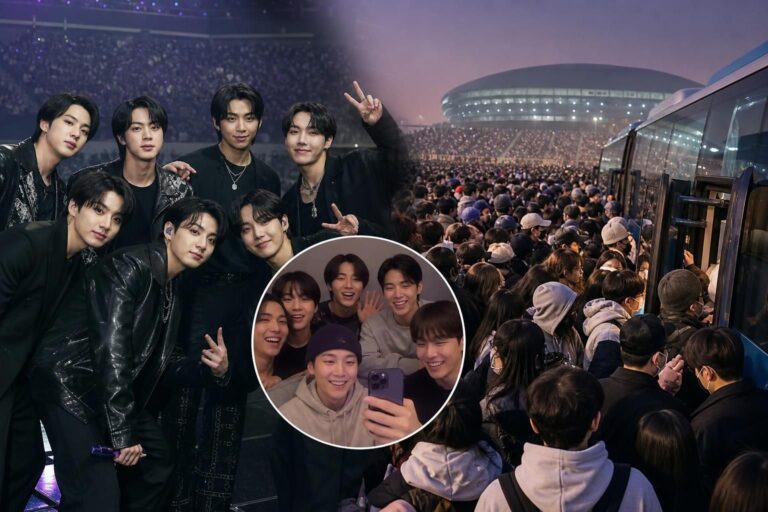
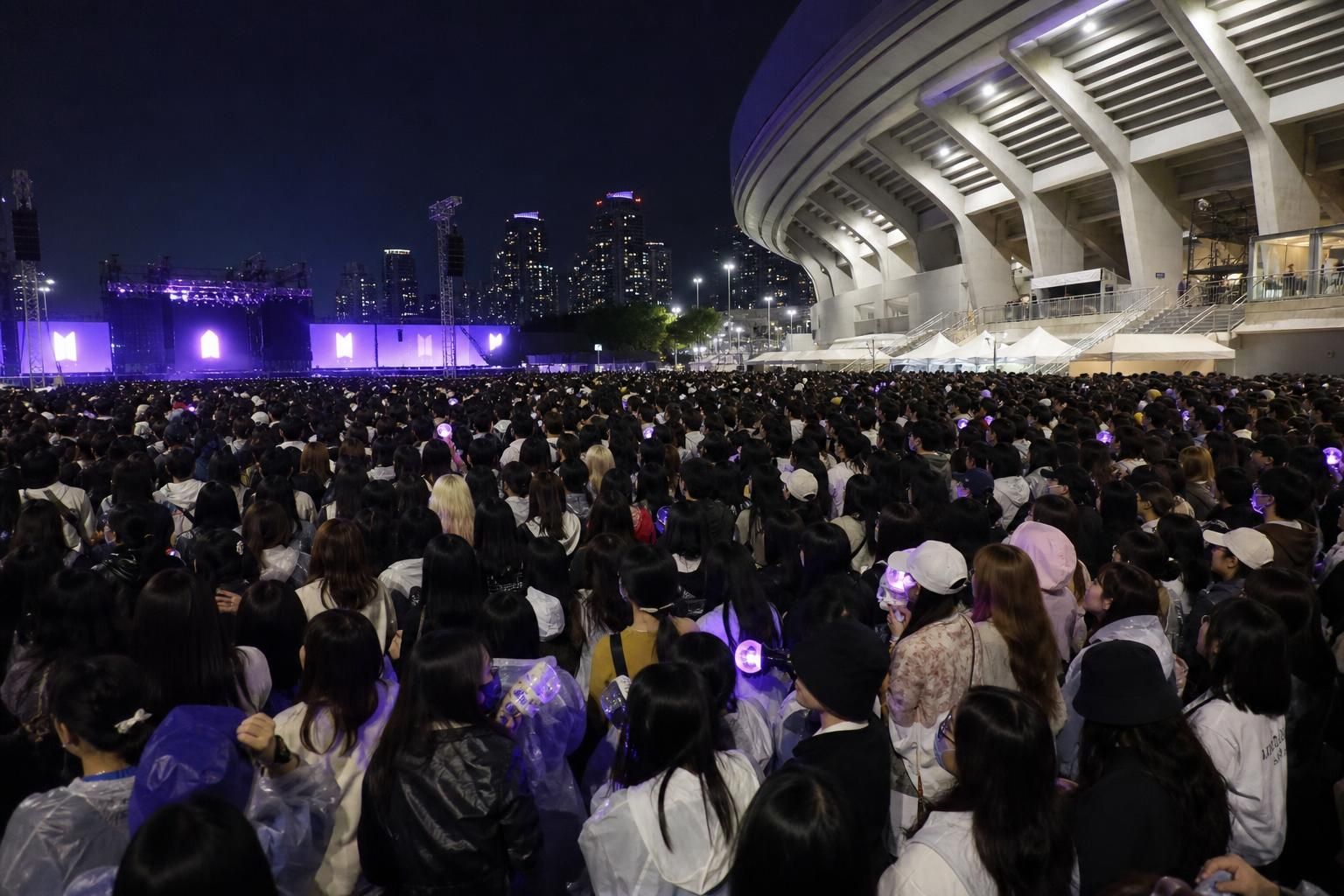
BTS’s ARIRANG tour stop in Busan on June 12 began under mounting controversy after videos and posts circulated online showing thousands of fans stuck outside the venue minutes before the scheduled start time. According to reports summarized by Koreaboo, the show was scheduled to begin at 7:00 p.m. KST, but attendees described lines that looked “insane” shortly before kickoff, sparking anger at event organization and staff handling.
Thousands of fans still outside as 7 p.m. neared
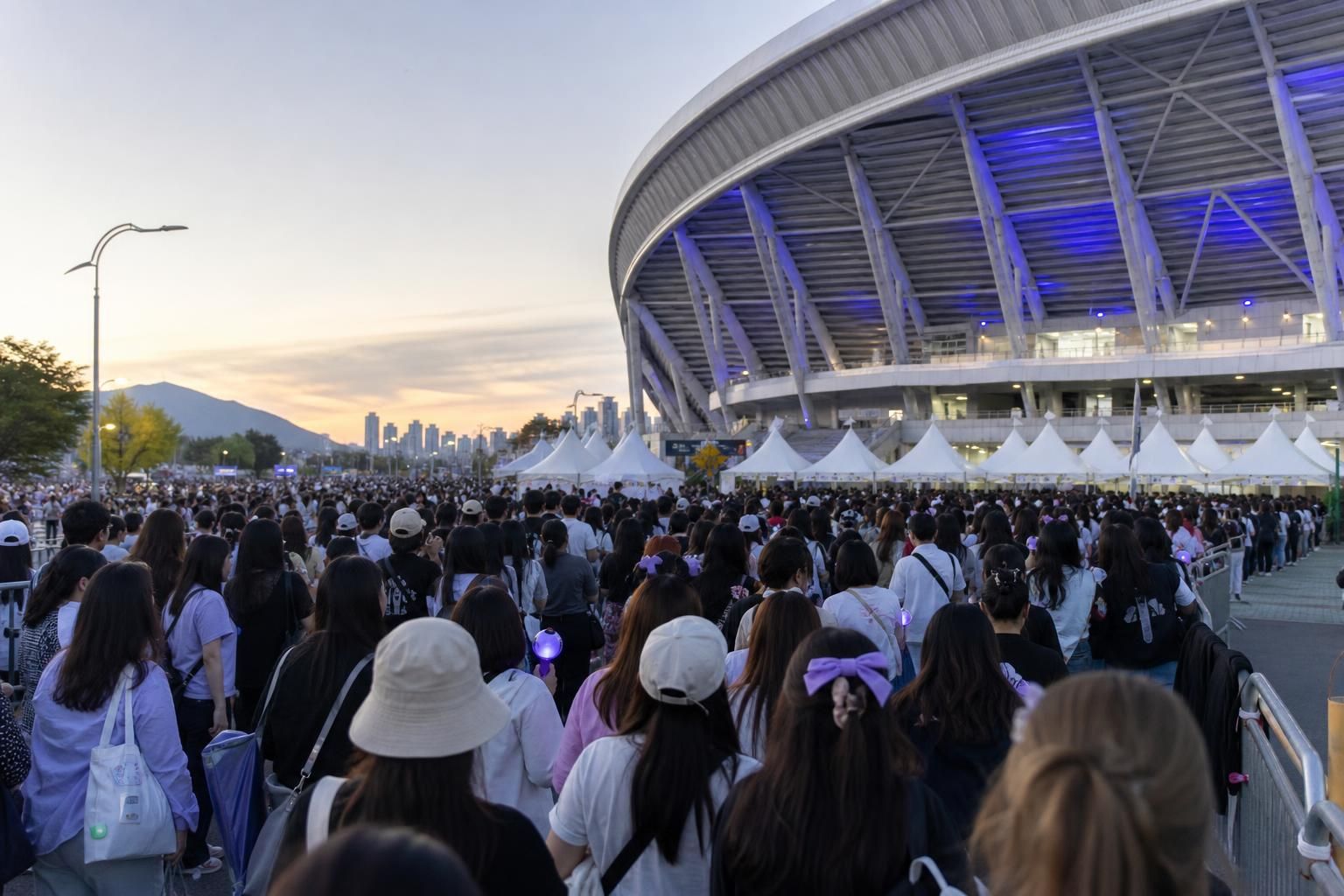
As the concert time approached, fans shared short clips on social media showing long entry queues around the stadium. Several posts emphasized the stress of waiting with limited time remaining—while others said they had to walk around the venue multiple times just to reach key areas. One user account captured the mood in a caption posted around 6:50 p.m. KST, describing the situation as “so stressful” and noting that even reaching the event required additional walking outside the main entrance.
While BTS were scheduled to go on at 7 p.m., the delays stretched long enough to trigger widespread discussion online. Koreaboo reports that the delay was linked to the entry situation, with the crowd apparently not fully processed despite the hour approaching. Fans also compared the experience with previous concerts, with some commenting they had never seen “something like this” for an event they said they had attended dozens of times.
BTS acknowledged the delay in live chat while fans urged patience
Instead of staying silent, BTS members appeared to recognize the problem directly in the show’s live stream chat. According to the same Koreaboo report, members posted messages while waiting—suggesting they had been ready earlier and were waiting for a “go” signal as fans entered the venue.
The messages were notable for their mix of acknowledgment and lighthearted humor. Koreaboo notes that the group’s chat comments included playful banter even as members apologized and indicated they were also waiting. Fans interpreted this as a sign BTS understood the frustration but also attempted to keep the mood from turning worse.
Backlash shifts to organizers after prior claims about handling
Much of the criticism quickly pivoted away from the performers and toward the local organization. In the coverage, Koreaboo and social posts point to broader concerns—suggesting that netizens previously had issues with how certain aspects of planning were handled for ARIRANG tour events. Some comments argued that the Busan operation did not match the scale of attendance, citing both the entry-line problems and additional routing challenges for fans trying to move between merch pickup and entry points.
For those attending, the practical impact of delays was compounded by the logistics. Several posts described the venue layout and staff guidance as difficult to navigate, with fans reporting detours and extended rounds around the stadium. That combination—waiting outside at high volume plus confusion about routes—appeared to intensify online anger even among those who ultimately felt sympathy for BTS themselves.
Concert delays as a test of crowd-management systems
Concerts at global-star scale require tight coordination between venue staff, security, ticketing lanes, and crowd flow—especially when entry processing becomes the bottleneck. In this case, the reported trigger was simple: even a short delay at the front of the queue can cascade into a major kickoff delay once thousands of people are in transit.
What makes the situation more politically sensitive in the social media era is the speed at which evidence travels. The coverage emphasized that fans began posting as soon as they noticed that the crowd had not cleared entry despite the scheduled time. That dynamic creates pressure not only on the organizers but also on artists, who can become the focal point even when the problem originates in operations behind the scenes.
What happens next for BTS’s Busan dates
For the audience and organizers alike, the immediate question is how the next phases of ARIRANG’s Busan schedule will be managed. If BTS have additional sets in the city, crowd-control plans—such as staggered entry, additional staff at chokepoints, and clearer route guidance—will likely be scrutinized by both fans and observers.
Online, reactions also tend to follow a predictable pattern: initial rage at conditions, followed by calls for accountability and improved planning for future dates. Given BTS’s large fandom base, even small operational failures can become major public narratives—meaning corrective steps, transparency, and visible improvements will matter as strongly as the performances themselves.
Separately, fandom attention is not limited to concert logistics. In the same news cycle, South Korean entertainment outlets also covered major K-pop broadcast moments such as tripleS’s second win on Music Bank for “Baby Flower,” underlining how quickly fans move between live-event engagement and music show coverage. But for BTS’s Busan stop, the story driving discussion right now is the breakdown of venue entry and the delay that arrived before the show even began.



Join the Conversation
Log in to share your thoughts and join the conversation with other fans.
This feels like one of those updates where the human side matters most. Hope things move toward clarity soon.
This one feels complicated, but I hope the conversation stays fair and thoughtful.
A story like this lands a little heavier. I hope people give it room for nuance before reacting.