
BTS’s Jungkook Draws Debate After Avoiding Eating On Camera During Late-Night Live

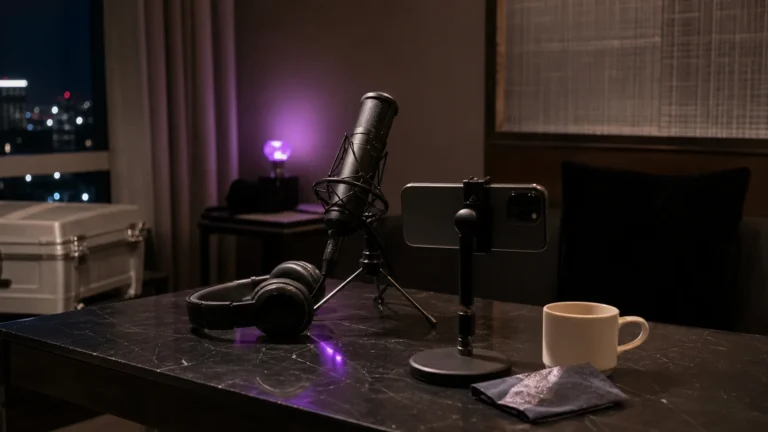
BTS’s Jungkook has again become the center of a fan-culture debate after a late-night Weverse live in which he appeared to avoid eating on camera out of consideration for viewers who said they were vegan. The moment was small, but the reaction around it was large: some fans praised the singer’s attentiveness, while others questioned why an artist holding a casual broadcast should feel responsible for adjusting his behavior around every comment.
The broadcast took place after BTS’s Madrid show, according to the report, and stretched for roughly four hours as Jungkook stayed up to speak with fans. During the live, viewers reportedly brought up veganism while he had food nearby. Jungkook responded by acknowledging that he was not vegan himself, apologizing, and saying he would not show himself eating in front of people who might be uncomfortable watching it.
Fans then noticed that he repeatedly moved out of frame when taking bites. Clips of the moment circulated quickly, with some viewers framing it as a funny and considerate habit and others treating it as an example of the unusual expectations placed on idols during open-ended livestreams.
A Casual Moment Becomes A Public Test
What made the discussion spread was not simply that Jungkook chose to eat off camera. It was the way the moment fit into a broader pattern of fans treating livestream comment sections as a place to make direct requests of idols. On the same broadcast cycle, he had also addressed fans who asked him to speak in English, making the live another example of how quickly an informal fan interaction can turn into a real-time negotiation over boundaries.
For supporters, Jungkook’s reaction showed the detail-oriented side of his communication style. Rather than dismissing the vegan comments, he acknowledged them and tried to reduce discomfort without making the exchange confrontational. In that reading, the gesture was not an obligation but a voluntary act of politeness during a broadcast that already demanded time, energy, and patience from him after a concert schedule.
Others saw the moment differently. Korean online reactions cited in the report included viewers asking whether he really needed to go that far, and questioning why fans felt the need to inform him about their dietary choices in the first place. That response points to a familiar tension in K-pop: the more accessible an idol appears, the more some viewers may treat accessibility as permission to shape the broadcast.
Why Fans Split Over The Reaction
Livestreams are now one of K-pop’s most important intimacy tools. They allow artists to speak without the full structure of a stage, music show, or interview, and they give fans the feeling of sharing unfiltered time with someone they follow closely. But that closeness has a cost. When thousands of comments move across a screen, even ordinary choices such as language, food, posture, or mood can become topics that fans debate and interpret.
Jungkook’s situation is especially visible because BTS operates at a global scale. A single live broadcast can include fans across languages, cultures, ages, and expectations. What feels like a harmless comment from one viewer can look like pressure to another, especially when the artist responds in real time. That is why the eating-off-camera moment drew both affectionate reactions and criticism: it sat at the intersection of kindness, fan entitlement, and the public performance of consideration.
The episode also shows how idol etiquette is often judged in two directions at once. If an artist ignores comments, some fans may call them distant. If the artist responds too carefully, others worry that fans are being trained to expect constant accommodation. Jungkook’s choice landed in the middle of that debate, with praise for his manners sitting beside concern that he should not need to hide a normal meal during his own broadcast.
The Larger Boundary Question
Nothing in the report suggests a major controversy or formal dispute. The significance is quieter: a brief livestream habit became a mirror for how fans think idols should behave when the camera is on but the setting is casual. That question matters because livestreams often blur the line between personal time and public work, especially when they happen late at night after performances.
For Jungkook, the live reinforced an image fans already know well: direct, responsive, and willing to spend long stretches of time communicating. For the wider K-pop conversation, it raised a practical question that will keep returning as idols rely on livestream platforms. Fans can express preferences, but artists also need space to exist without every gesture becoming a request, a test, or a viral talking point.
The divided response around Jungkook’s broadcast is therefore less about one meal than about the rules of closeness in modern fandom. His decision to step aside may have been meant as a simple courtesy. The debate that followed shows how even simple courtesies can become complicated when millions of people are watching, clipping, translating, and arguing over what care should look like in real time.


Join the Conversation
Log in to share your thoughts and join the conversation with other fans.