

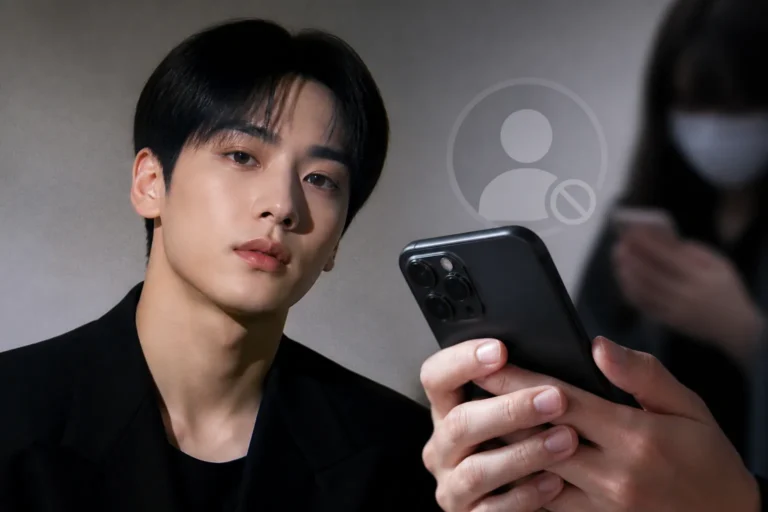
THE BOYZ member Eric has asked people to stop contacting him through his private phone number. The singer said the volume of unsolicited calls and messages had become severe enough to interfere with his work communications and disturb him while sleeping.
Eric addressed the issue directly in messages to fans after holding back for an extended period. He apologized for raising a difficult subject in a space normally used for positive exchanges, but said the situation could no longer be ignored.
He estimated that 20 to 30 people contact him personally over the course of a day. Eric said he does not respond to those messages and asked the senders to stop, presenting the statement as a clear boundary rather than an invitation to continue seeking a reaction.
Private messages begin affecting work
The repeated contact has created a practical problem beyond the invasion of privacy. Eric explained that personal KakaoTalk messages were accumulating to the point that they made it harder for him to check conversations connected to his work.

Messaging applications often combine professional and personal communication in the same interface. When unwanted messages arrive continuously, important notices can become difficult to locate or review promptly. Eric’s account shows how harassment can disrupt ordinary coordination even when the recipient never replies.
He also asked people not to call while he is asleep. That detail indicates that the contact is not limited to appropriate daytime hours and can reach into periods when he is away from schedules and attempting to rest.
The term sasaeng is commonly used for individuals whose pursuit of celebrities crosses personal and safety boundaries. Contacting a private number differs from participating in a public fan event or using an artist’s designated communication service because it relies on access the artist did not offer for fan interaction.
Eric points fans toward an official channel
Eric separated the unwanted contact from supportive messages sent through the proper platform. He told fans that he appreciates kind words and reads the messages THE Bs send through Fromm, the official service he uses for communication with supporters.

That distinction is important because the request is not a rejection of fan engagement. It identifies where engagement is welcome and where it becomes intrusive. Fromm gives fans a designated route to communicate, while Eric’s personal number remains outside that relationship.
By naming an available official channel, Eric offered a straightforward alternative to anyone who genuinely wants to send encouragement. The message therefore sets two rules at once: private calls and texts must stop, and messages sent through the authorized service can still be received and read.
Eric said he intended to address the matter only once. The decision to make a single public warning places responsibility on the people contacting him to respect the boundary without requiring repeated explanations from the artist.
A direct request for basic privacy
The wording remained measured, but the details show why the request was urgent. Dozens of contacts over a full day, interference with work chats and calls during sleep create a continuous burden rather than an isolated inconvenience.
Private contact can also place an artist in a difficult position because any response may encourage further attempts, while silence does not necessarily end them. Eric made clear that he leaves the messages unanswered, removing any reasonable basis for interpreting the lack of a block or reply as permission.
The central request does not depend on a complicated rule: fans should use official channels and should not call or message an artist’s private number. Eric’s statement preserves space for communication with THE Bs while drawing a firm line around the phone access he needs for work and personal life.



Join the Conversation
Log in to share your thoughts and join the conversation with other fans.