

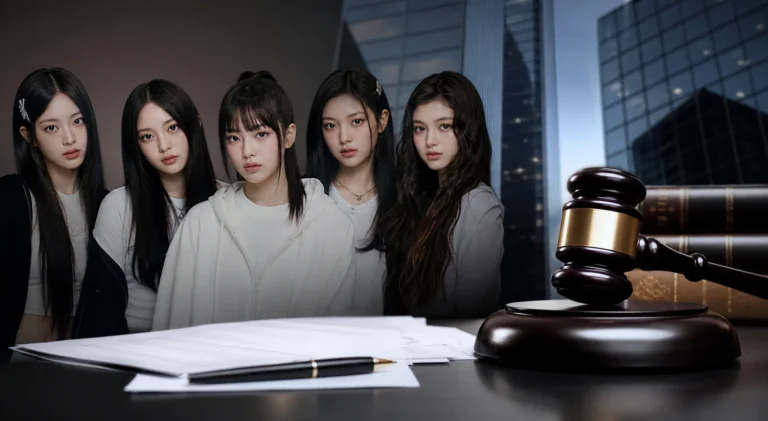
NewJeans and HYBE are facing a new copyright lawsuit over “ETA,” one of the group’s best-known singles, adding another legal issue to an already closely watched period for the act and its label network.
According to a report summarized by Koreaboo, a complaint filed on July 7 claims that “ETA” used musical elements from an earlier dance track titled “Samir’s Theme” without permission or compensation. The report says the filing names HYBE as well as all five NewJeans members: Minji, Hanni, Danielle, Haerin, and Hyein.
The allegation centers on the musical composition and sound recording of “ETA.” The complaint reportedly argues that the NewJeans track contains a combination of elements that are substantially similar to the earlier work. As with most copyright disputes in music, the case is likely to turn on detailed comparisons of melody, rhythm, arrangement, production choices, access, and whether any alleged overlap is legally protectable.
What The Complaint Alleges
The lawsuit, as reported, was brought by a publishing company connected to the earlier track. It claims that elements from “Samir’s Theme” were used in “ETA” without a license. The public summaries of the case do not yet establish whether a court has evaluated the claim, and the filing itself represents one side’s allegations rather than a legal finding.

That distinction matters. K-pop songs are usually built through international songwriting and production teams, with credits that can include topliners, beatmakers, arrangers, publishers, labels, and management companies across several countries. When a dispute reaches court, responsibility can become complicated because creative work, rights ownership, and commercial release decisions may sit with different parties.
“ETA” was released during NewJeans’ rapid rise as one of K-pop’s most commercially visible fourth-generation acts. The song’s minimalist production, punchy rhythm, and performance-focused rollout helped make it a signature track for the group. That visibility also means any legal challenge attached to it draws immediate attention from both fans and industry observers.
Why The Case Is Drawing Attention
The lawsuit arrives while NewJeans’ broader legal and business situation remains under intense scrutiny. The group has already been at the center of disputes involving ADOR, HYBE, management authority, contracts, and public arguments over creative identity. A copyright case involving a hit song now adds a separate question: how the music itself was made and cleared before release.
It also lands in a sensitive conversation about plagiarism claims in K-pop. Fans often compare concepts, choreography, styling, and sound online, but a court case is different from a social media debate. A legal claim must move beyond resemblance and show a basis under copyright law. That typically requires expert analysis, documentation of rights, and evidence about how the contested work was created.

For HYBE and the NewJeans side, the immediate practical issue is likely to be legal response and reputational management. Major entertainment companies are accustomed to defending copyrights and handling claims around songwriting credits, but a lawsuit involving a globally known group can still affect public discussion, investor perception, and the way future releases are reviewed internally.
What Could Happen Next
The next steps may include formal responses from the defendants, possible motions challenging the complaint, discovery if the case proceeds, or a settlement before trial. Many music copyright disputes never reach a final courtroom decision, especially when parties decide that licensing terms, credit adjustments, or confidential settlement terms are more efficient than a prolonged fight.
Until more filings or official statements become available, the most important point is that the complaint is an allegation, not a ruling. NewJeans’ members being named does not by itself prove personal responsibility for the song’s creation or release, and HYBE’s presence in the case does not settle the question of how the disputed musical material was developed.
Still, the lawsuit is significant because it touches a hit single, a top K-pop act, and one of the industry’s largest corporate groups. Whether the claim is dismissed, settled, or litigated further, the case will likely keep attention on how K-pop companies document creative sources, clear rights, and respond when a viral song becomes the subject of a formal copyright challenge.



Join the Conversation
Log in to share your thoughts and join the conversation with other fans.