
Super Junior’s Siwon Faces Backlash After Legal Action Update Against Online Critics

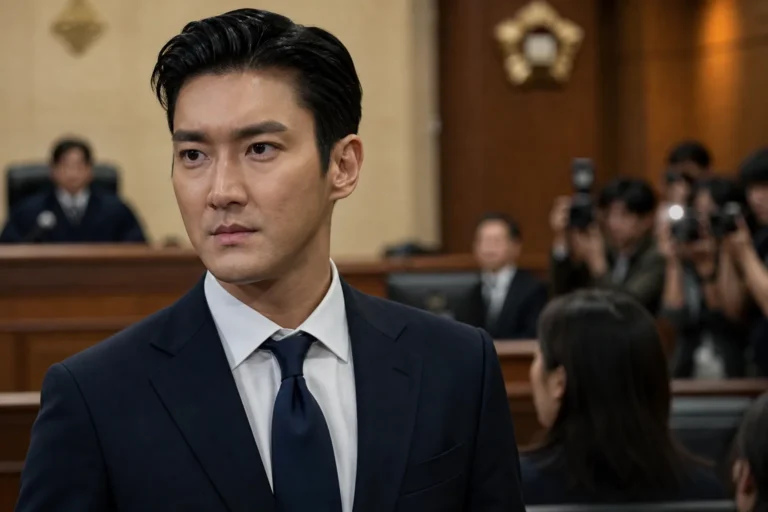
Super Junior member Choi Siwon is facing a new wave of criticism after publicly responding to developments in his legal action against online commenters. The veteran idol and actor, who has recently been the subject of heated debate among K-pop fans, drew attention after a court-related update indicated that efforts to identify certain online accounts had moved forward.
The issue centers on Siwon’s decision to pursue action against what has been described as malicious online behavior. Legal responses to defamatory or abusive posts are not unusual in the Korean entertainment industry, where agencies and artists frequently cite reputational harm, privacy violations, and personal attacks as reasons for filing complaints. In this case, however, the response from parts of the fandom has been sharply divided because the criticism surrounding Siwon is tied not only to ordinary celebrity gossip, but also to wider arguments over his public image and views.
Legal Update Draws Renewed Attention
According to the report, new information emerged after the initial news that Siwon was taking legal steps against critics. The update said a court had accepted a request connected to identifying accounts, a procedural move that suggested the matter was progressing beyond a general warning. Shortly afterward, Siwon posted a message on social media saying his silence was ending and that he would no longer tolerate malicious conduct.
That message, paired with a religious reference, quickly became part of the backlash. Some users argued that invoking faith in the context of a legal dispute was inappropriate given the very criticisms being made against him. Others framed the situation as a conflict between an artist’s right to protect himself from harassment and fans’ desire to criticize a public figure whose actions or statements they believe deserve scrutiny.
The reaction was especially intense because Super Junior is not a newly debuted act with a fragile fanbase still learning its boundaries. The group has been active for more than two decades, and many of its listeners have followed the members through major career shifts, military service periods, variety show success, acting work, and controversies. For long-term fans, the dispute appears to carry a personal sting: some see the legal move as targeting people who have invested years of support into the group but are now voicing disappointment.
A Familiar Industry Tension
K-pop companies often present legal action as a necessary shield against rumors, insults, stalking, and organized attacks. That position has broad support when the behavior involves threats, invasive privacy violations, or demonstrably false claims. The harder question comes when public criticism, political disagreement, religious debate, or fandom frustration is mixed into the same online environment. Fans may agree that abuse should not be tolerated while still worrying that legal pressure could silence legitimate criticism.
Siwon’s case sits directly in that complicated space. The public discussion around him has not been limited to a single post or rumor. Instead, it has grown out of a longer-running debate over his public persona, the values he is perceived to represent, and whether those values clash with what some international fans expect from artists with global platforms. Because of that, even a standard legal update can be read by critics as an escalation rather than a routine anti-defamation measure.
For Super Junior, the controversy also lands at a sensitive point in the lifecycle of a senior idol group. Veteran acts rely on a mix of nostalgia, loyalty, individual member projects, and public goodwill. When one member becomes a recurring flashpoint, it can affect how casual listeners talk about the whole group, even if other members are not involved in the issue. That is why some fans responding to the news emphasized disappointment not only with Siwon personally, but with the effect the controversy may have on their memories of the group.
What Comes Next
The next stage will depend on how far the legal process proceeds and whether Siwon, his representatives, or related parties provide more specific details about what posts or conduct are being targeted. Without that clarity, supporters and critics are likely to continue interpreting the case through their existing positions: one side viewing it as a defense against harmful attacks, the other seeing it as a troubling response to public criticism.
The backlash also reflects a broader shift in idol-fan relationships. Global audiences increasingly expect public figures to answer for beliefs, affiliations, and statements beyond music or acting. At the same time, celebrities are more willing to use legal systems to push back against online abuse. The result is a more adversarial public square, where fandom loyalty, moral disagreement, and legal risk can collide in real time.
For now, Siwon’s statement has not quieted the discussion. Instead, it has intensified scrutiny of how idols respond when criticism crosses from fandom debate into legal territory. Whether the move is ultimately seen as a reasonable boundary or a miscalculation may depend on what evidence emerges, how narrowly the complaint is framed, and whether fans believe the action distinguishes between harassment and dissent.



Join the Conversation
Log in to share your thoughts and join the conversation with other fans.