
SBS Drama Kim Bujang Surges Past 20 Percent Ratings and Tops Netflix Non-English Chart


SBS drama Kim Bujang has moved from promising launch to full breakout hit in less than two weeks, crossing the 20 percent ratings mark in Korea and reaching the top of Netflix’s global non-English TV rankings.
The action series, led by So Ji-sub, premiered on June 26 and quickly built momentum through its first four episodes. According to Nielsen Korea figures cited by Korean media, the fourth episode, broadcast on July 4, recorded a nationwide average rating of 21.6 percent and a Seoul metropolitan average of 22.7 percent. That performance made the drama one of SBS’s strongest Friday-Saturday titles in recent years.
Yonhap reported that the 21.6 percent nationwide figure placed Kim Bujang third among SBS Friday-Saturday dramas, behind only The Penthouse 2 and The Fiery Priest on the same benchmark. The climb has been unusually sharp: the drama opened at 9.5 percent, rose to 15.7 percent for episode two, reached 18.8 percent for episode three, and then broke through the 20 percent barrier with episode four.
A Simple Revenge Story With Broad Appeal
Kim Bujang centers on Kim Bujang, played by So Ji-sub, a seemingly ordinary office worker and father who has hidden a far more dangerous past. When his daughter Min-ji disappears, he abandons the quiet life he has tried to maintain and uses his old skills to track the people responsible.
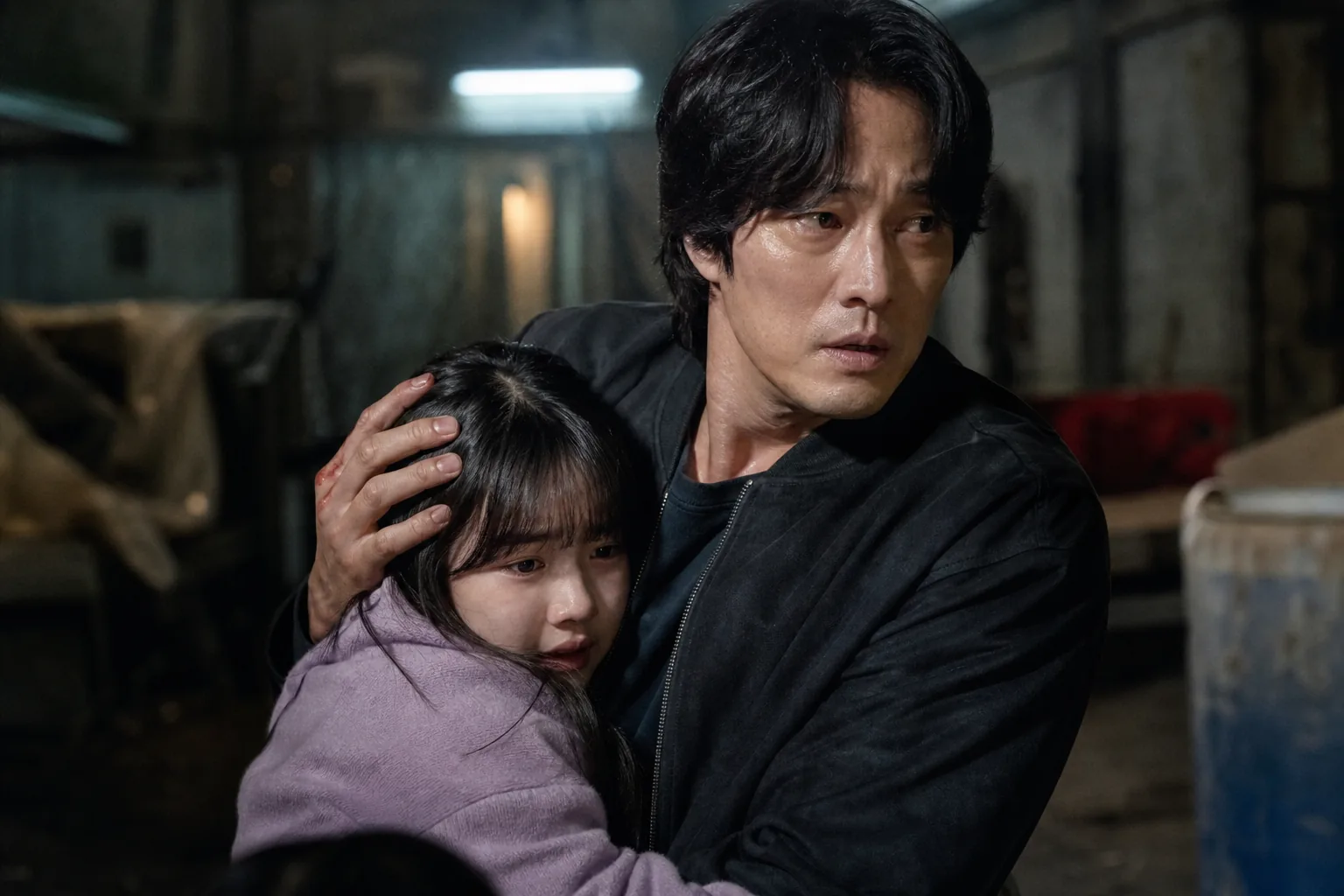
The premise is direct: a father fights to recover his daughter. That clarity appears to be a major part of the show’s appeal. Korean coverage has repeatedly pointed to the drama’s combination of parental devotion, fast revenge, and decisive action as reasons viewers are responding so strongly. The story also draws on a familiar hidden-power fantasy, with Kim Bujang presented as a man who looks powerless in everyday life but is capable of overwhelming force when pushed.
The fourth episode leaned heavily into that formula. Reports described Kim Bujang joining forces with longtime friends Sung Han-soo and Park Jin-cheol as they pursue evidence connected to Min-ji’s disappearance. The episode also escalated the danger around Min-ji and introduced further tension through the appearance of North Korean operative Park Kang-sung at Myeongpo Port.
Domestic Ratings Meet Global Streaming
The success is not limited to Korean television. YTN reported that Netflix’s Tudum rankings for the first week of July placed Kim Bujang at No. 1 among non-English TV shows worldwide, ahead of True Education. Earlier Korean reports also noted that the series had entered Netflix’s global non-English top 10 within days of release, suggesting that domestic word of mouth and streaming visibility are reinforcing each other.
That dual-track performance matters because Korean dramas increasingly need to work across two audiences at once: local viewers watching scheduled broadcasts and international viewers discovering episodes through streaming platforms. Kim Bujang is benefiting from both. Its ratings give SBS a rare recent broadcast hit, while Netflix exposure gives the drama a wider conversation beyond Korea.

Several elements help explain why the series travels. The father’s-mission structure is easy to understand without deep knowledge of Korean social context. At the same time, the show still uses local concerns, including school violence, social hierarchy, workplace humiliation, and the emotional burden of staying silent in unfair situations. Those themes give the action a social edge without slowing the pace.
Critics and commentators in Korea have also noted the role of So Ji-sub’s casting. Because the actor is selective with screen projects, his return to a forceful action-oriented role carries novelty. His image from past works involving restrained, capable men also fits neatly with a character who suppresses his strength until a personal crisis forces him to act.
What Comes Next
Kim Bujang is planned as a 10-episode series, meaning the drama reached its ratings milestone before the halfway point. That leaves room for the show either to consolidate its audience or face the challenge that often follows a fast start: keeping the story intense without becoming repetitive.
For now, the show has given SBS a major win and added another example of a Korean drama turning a straightforward genre hook into broad audience attention. If the remaining episodes maintain the current pace, Kim Bujang could become one of the defining Korean TV successes of the summer.



Join the Conversation
Log in to share your thoughts and join the conversation with other fans.