

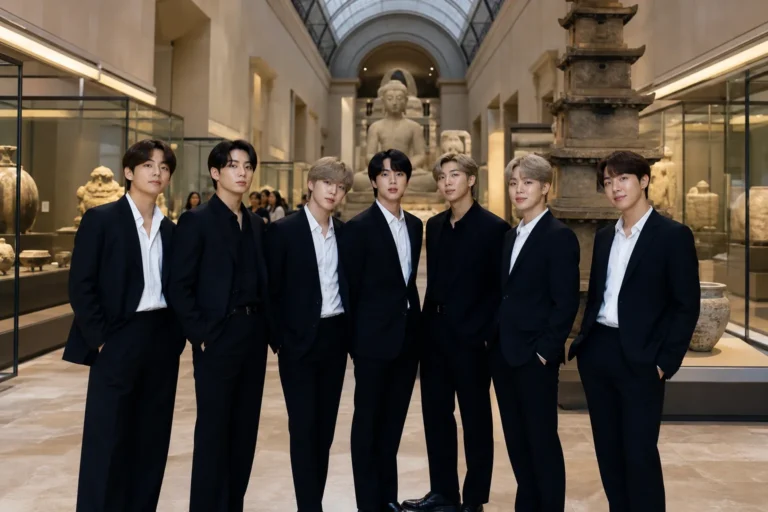
BTS is extending the world of ARIRANG beyond the concert stage, this time through a cultural collaboration with the British Museum in London. The group has launched a Korea Gallery Trail tied to its broader BTS THE CITY ARIRANG-LONDON project, bringing together K-pop fandom, museum storytelling, and Korean heritage in one of the world’s most recognizable cultural institutions.
The trail, reported by The Korea Times on July 8, is presented inside the museum’s Korea Gallery and runs through July 23. Rather than functioning as a standalone pop-up, it uses items from the museum’s existing Korean collection to draw connections between historic objects and the themes of BTS’s latest album, ARIRANG. The project centers on ideas that have followed the album’s public rollout: hope, resilience, belonging, and the continuing emotional power of Korea’s best-known folk song.
From Stadiums to a Museum Gallery
The collaboration arrives as BTS continues its high-profile return as a full group. In London, the ARIRANG era has already been framed as more than a standard album cycle, with citywide programming designed to place the group’s music inside a wider cultural conversation. The British Museum trail gives that strategy a quieter but potentially longer-lasting dimension: it invites visitors to slow down, look at Korean artifacts, and consider how older symbols of craft and identity can speak to contemporary pop culture.
According to the report, selected objects include a traditional sarangbang, or scholar’s room, used to suggest new beginnings; a Joseon Dynasty moon jar, associated here with shared humanity; and Silla-era gold earrings and decorative roof tiles that highlight the sophistication of historical Korean craftsmanship. One detail makes the music connection especially direct: the Silla objects are linked to the sound world of the album because No.29, the sixth track on ARIRANG, samples the bell sound of the Divine Bell of King Seongdeok.
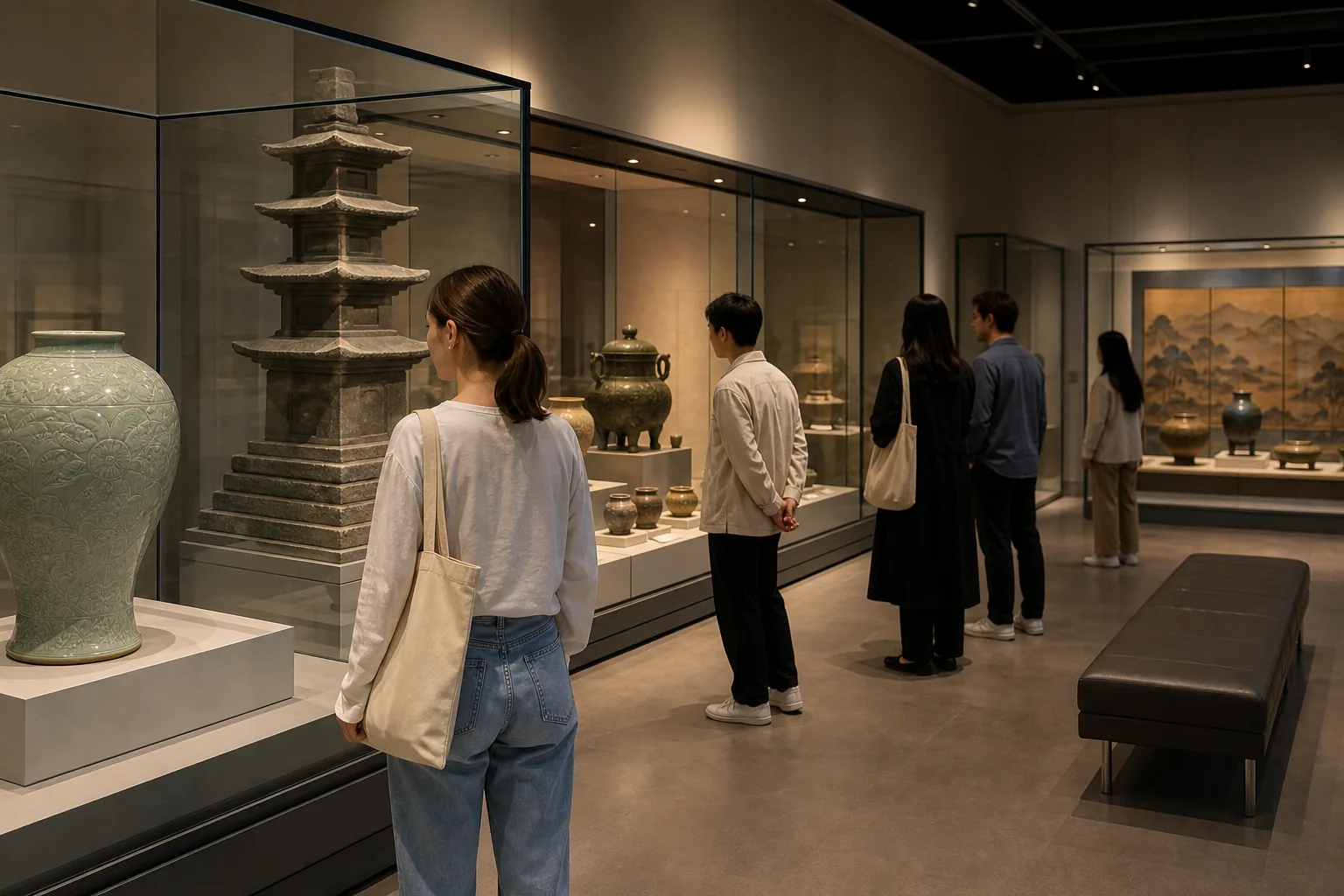
That pairing shows why the project is likely to draw attention beyond the group’s established fan base. Museums often face the challenge of making permanent collections feel immediate to younger visitors, while K-pop companies are increasingly looking for ways to build cultural context around global acts. Here, the overlap is unusually clear. BTS brings an international audience that is already primed to engage deeply with symbolism, translation, and visual storytelling; the museum provides historical depth and institutional framing.
An Interactive Version of ARIRANG
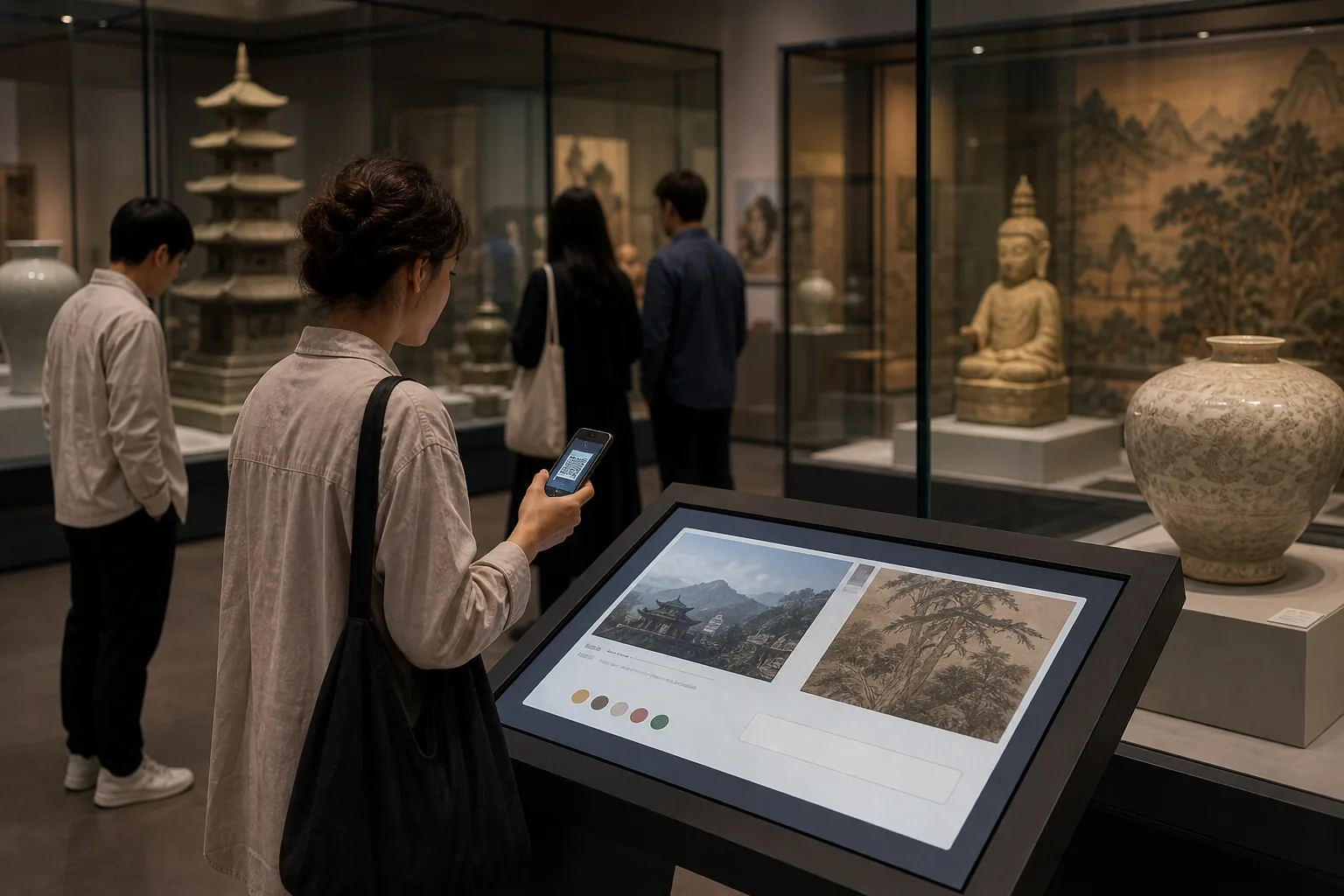
The Korea Gallery Trail is also designed to be participatory. Visitors scan QR codes for guided narratives, then respond to the prompt, “What is Your Arirang?” The question asks fans and general visitors to treat the word not only as a song title or album concept, but as a personal idea: a story of endurance, connection, memory, or home. That interactive element turns the gallery into more than a display route. It becomes a space where visitors can attach their own meaning to Korean cultural heritage.
For BTS, the partnership strengthens a long-running part of the group’s public identity. The seven-member act has often moved between local specificity and global reach, using Korean language, references, and themes while performing for audiences far outside Korea. With ARIRANG, that balance has become even more explicit. The album title invokes a folk tradition strongly associated with Korean history, but the group’s audience is international, multilingual, and often encountering those references from very different cultural starting points.
The museum collaboration therefore functions as a bridge. It gives fans a structured way to learn about the historical material behind the imagery and sounds they may have first met through BTS. At the same time, it gives non-fan museum visitors a contemporary entry point into objects that might otherwise be viewed only as distant artifacts. In that sense, the project is not simply about celebrity influence. It is about how pop music can redirect attention toward cultural history when the framing is handled with care.
Soft Power With a Public-Facing Format
The timing also underlines BTS’s continued commercial and cultural force overseas. The Korea Times report notes that ARIRANG remains on the Billboard 200, while its lead single SWIM continues on the Hot 100 after a 15-week run. Those chart markers matter because they show that the British Museum project is not a nostalgic side event after peak popularity. It is unfolding while the group is still actively shaping the global K-pop conversation.
For Korean entertainment, this kind of collaboration points to a broader shift. K-pop is no longer only exported through music videos, concerts, and merchandise. Increasingly, it is being used as a gateway into language learning, travel, food, fashion, film, and heritage institutions. BTS’s British Museum trail fits that pattern, but it also stands out because it places fandom inside a public museum rather than a purely commercial venue.
The result is a project that feels both promotional and educational. It promotes BTS’s current era, but it also asks visitors to look closely at Korean art and history. If successful, it could become a model for how major entertainment acts collaborate with museums without reducing heritage to decoration. For now, the Korea Gallery Trail gives London visitors a chance to experience ARIRANG as an album concept, a cultural keyword, and a personal question all at once.



Join the Conversation
Log in to share your thoughts and join the conversation with other fans.