

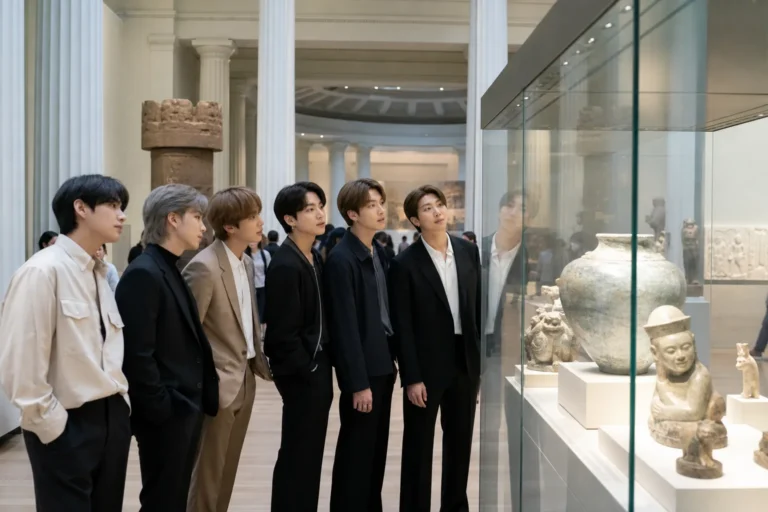
BTS is extending its latest tour moment into one of London’s most visited cultural institutions. HYBE said the group is collaborating with the British Museum on a participatory program called the Korea Gallery Trail, a heritage-focused experience built around the theme of Arirang.
The program runs at the museum through July 23, local time, and is tied to BTS THE CITY ARIRANG – LONDON, the offline city project arranged around the London dates of BTS’s world tour. The group performed at Tottenham Hotspur Stadium on July 6 and 7, turning the city into a wider fan destination beyond the concerts themselves.
Rather than presenting a conventional pop-up, the trail uses the museum’s Korea Gallery as its setting. Visitors are guided through selected permanent collection objects that organizers say connect with ideas often associated with Arirang: hope, resilience, belonging, craftsmanship, and cultural memory.
How the Museum Trail Works
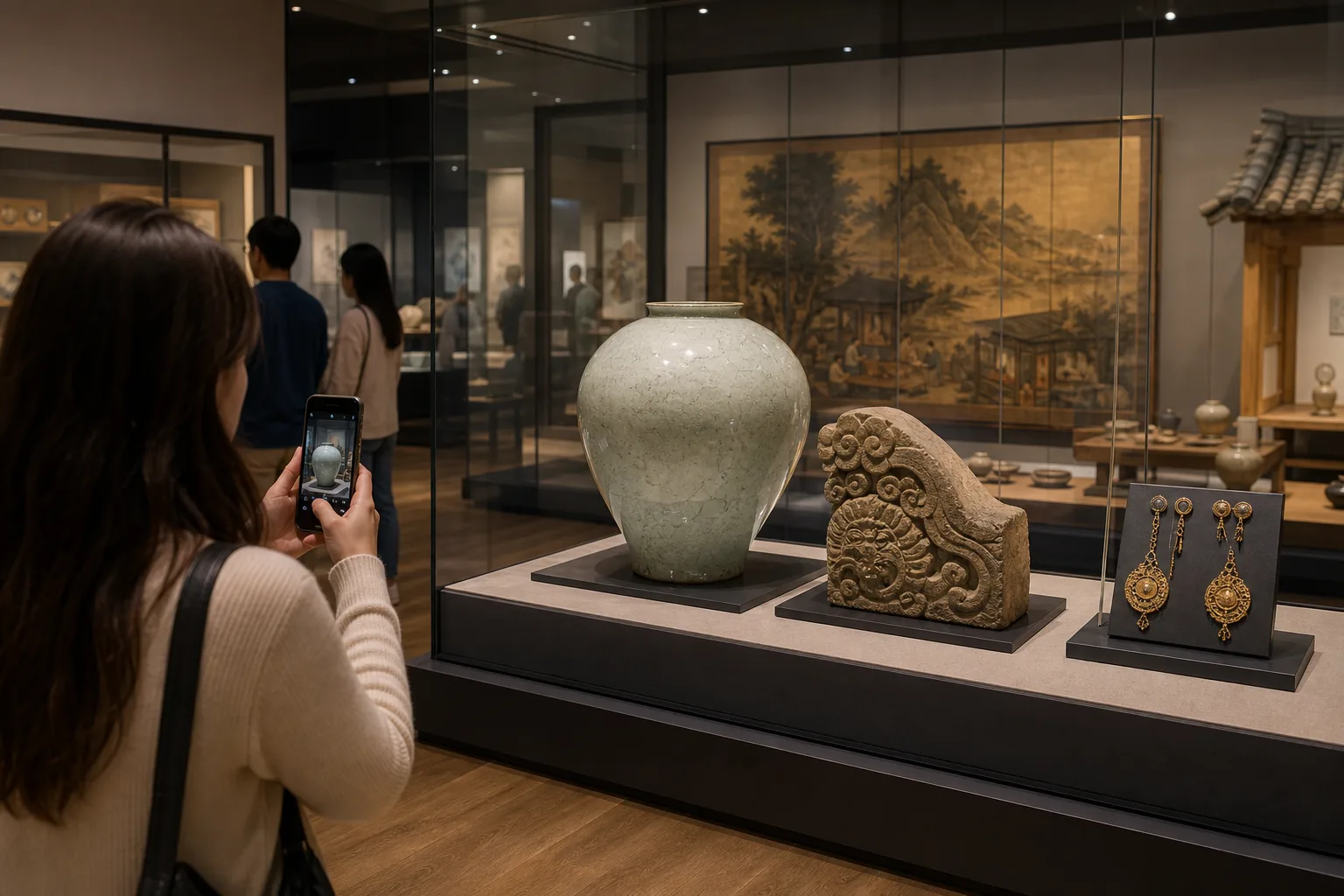
According to Korean reports citing HYBE, the experience begins at the entrance to the Korea Gallery, where visitors can scan a QR code for directions and interpretation. The route points them toward objects including a traditional sarangbang, or scholar’s room, a moon jar, gold earrings, and a decorative roof-end tile known as a sumaksae.
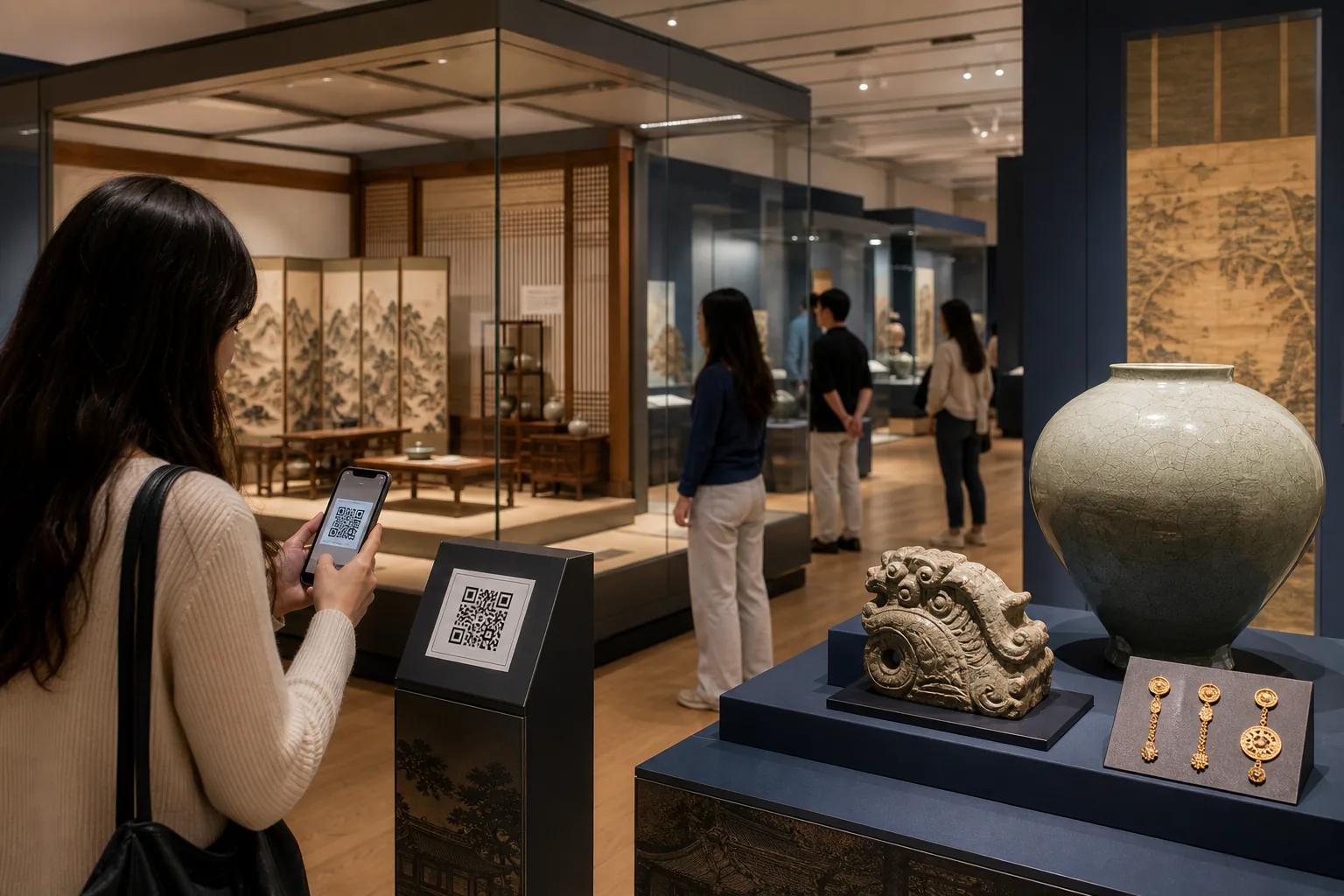
The choices are meant to give visitors a more concrete way to understand Korean heritage while connecting it to the emotional language of BTS’s fifth full-length album, Arirang. In that sense, the project treats the album title as more than a musical reference. It becomes a bridge between a globally familiar pop act and objects that carry older stories of Korean art, design, and belief.
One detail gives the trail a sharper music link. Reports said the program also draws from No. 29, the sixth track on the album, which was inspired by the sound of the Bell of King Seongdeok. That connection led organizers to emphasize Silla-era artifacts within the route, placing ancient sound, metalwork, and memory alongside the group’s contemporary presentation of Korean identity.
From Concert City to Cultural Route
The London program reflects how large K-pop tours increasingly operate as citywide cultural events. BTS THE CITY projects have been used in other destinations to connect concerts with local landmarks, fan activities, retail, and exhibitions. In London, the British Museum collaboration gives that model a more explicitly heritage-centered shape.
Visitors are also invited to answer the question, “What is your Arirang?” and share an object that feels connected to their own lives on social media. That campaign turns the museum visit into a personal prompt rather than a simple branded stop, asking fans and general visitors to think about how a cultural symbol can carry different meanings across generations and national borders.
The project arrives at a moment when BTS’s return to touring has again placed the group at the center of global K-pop attention. Their London stadium shows followed years in which the members’ individual careers and military service shaped the group’s public rhythm. Now, the Arirang tour is being framed not only as a comeback to the stage, but also as a platform for Korean cultural storytelling.
HYBE said the trail is intended to help visitors appreciate the artistry and technical skill behind the selected works while allowing BTS’s music and Korean heritage to meet through personal experience. That framing is significant: it suggests a softer, museum-based version of cultural promotion, where the power of fandom is used to direct attention toward historical objects rather than only toward merchandise or performance.
Why This Collaboration Stands Out
For BTS, the British Museum project reinforces a familiar part of the group’s global appeal: their ability to carry Korean language, references, and identity into spaces that are not usually organized around pop music. For the museum, the collaboration may bring younger and more international visitors into the Korea Gallery, including fans who might not otherwise have made that room a priority.
The result is a notable example of K-pop’s cultural reach in 2026. A concert tour is now capable of creating a path from a stadium performance to a museum object, from a track on an album to a centuries-old artifact, and from a fan’s social post to a broader conversation about what Korean heritage can mean outside Korea.
As the trail continues through July 23, its impact will likely be measured less by formal attendance figures than by the conversations it sparks. The central question, “What is your Arirang?”, gives visitors room to interpret the theme personally. That is where the collaboration becomes more than a promotional extension of a tour: it asks people to see heritage as something living, portable, and open to new emotional connections.



Join the Conversation
Log in to share your thoughts and join the conversation with other fans.