

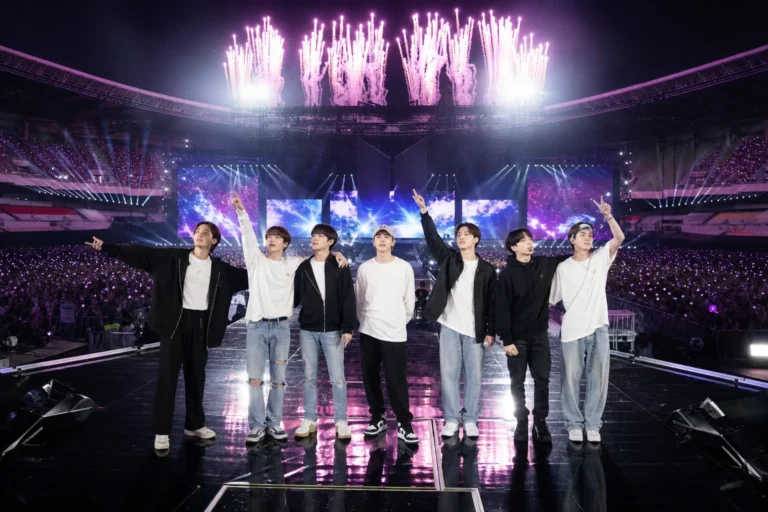
BTS is again being framed as a test case for how large the global K-pop touring business can become. A new industry projection cited by Koreaboo says the group’s ongoing ARIRANG world tour is expected to generate at least $748 million, with some estimates placing the final total above $800 million if the remaining schedule performs as anticipated.
The figures are not final box-office results, but they have drawn attention because of the scale implied. If the projection is realized, BTS would become the first K-pop act and the first Asian artist reported to cross $700 million in gross revenue from a single tour. That would move the group into a touring tier usually associated with the largest Western stadium acts.
The comparison point is especially striking inside K-pop. BLACKPINK’s Born Pink tour has widely been treated as the high-water mark for an Asian act, with a reported gross of $331.81 million. The current BTS projection would more than double that benchmark, underlining how much demand can expand when a veteran group returns to the road with a full stadium-scale plan.
According to the report, Billboard’s Top Tours data showed ARIRANG had completed 24 shows by the end of May and had already brought in $204 million. That works out to an average of about $8.5 million per concert, a number that helps explain why the full-tour estimate is so high even before the remaining dates are counted.
A Stadium Schedule Built for Global Demand
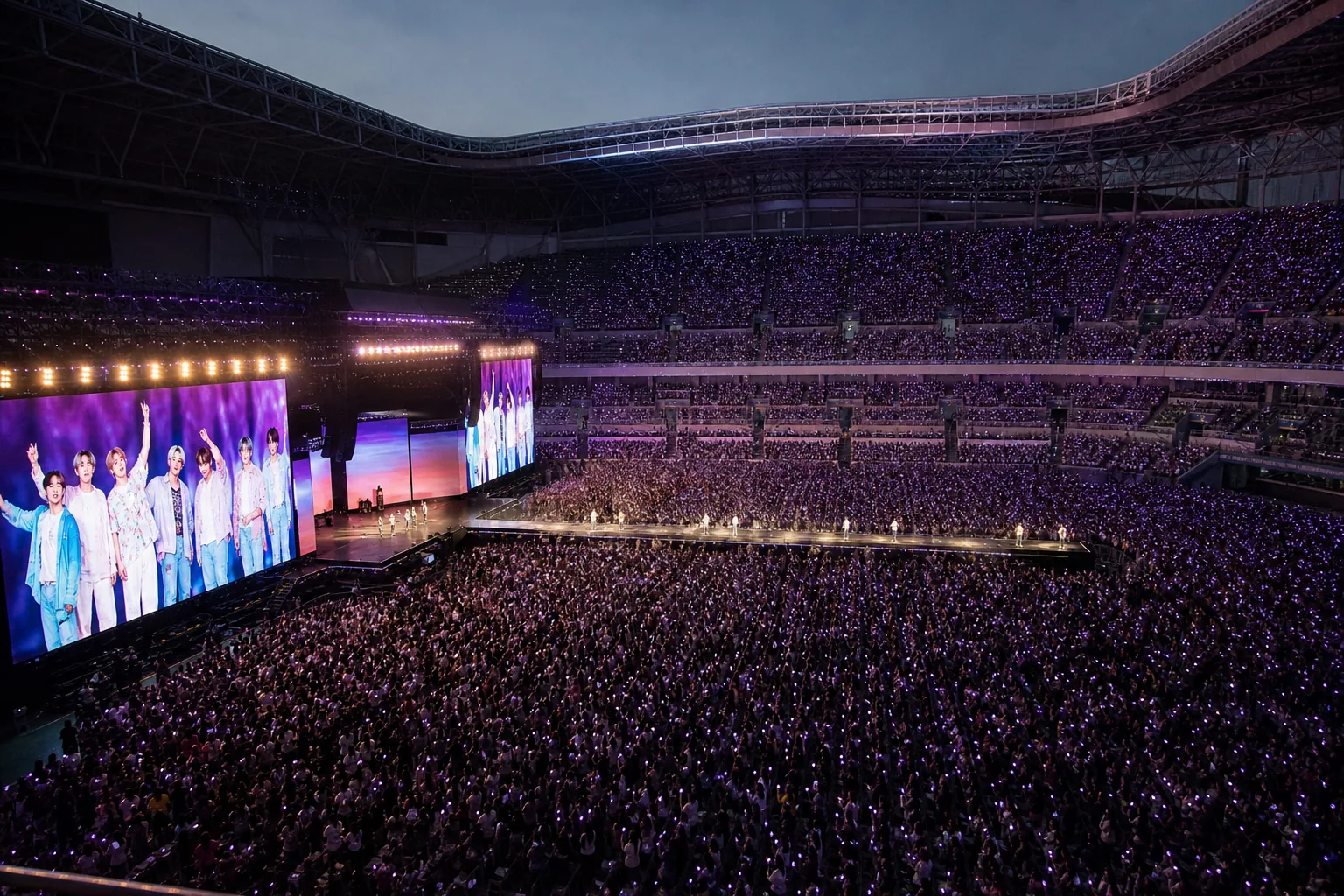
The tour still has a long runway. The report notes that 64 shows remained after the May tally, with the schedule extending into early next year. Upcoming European stadium stops include Tottenham Hotspur Stadium in London and Allianz Arena in Munich, two venues that signal the tour’s positioning beyond the usual K-pop arena circuit.
That venue strategy matters because touring revenue is not driven only by fandom size. It depends on the number of dates, ticket pricing, stadium capacity, market mix and how efficiently demand can be converted into sellable seats. BTS has long had the audience reach for global touring; the ARIRANG projection suggests the infrastructure around that reach is becoming just as important.
For HYBE and the wider K-pop business, a tour near or above the $800 million level would strengthen the case for concerts as a central growth engine. Recorded music, streaming, merchandise and brand partnerships remain important, but large-scale touring offers a visible measure of pricing power and market depth. It also shows promoters and venues that Korean acts can anchor multi-continent stadium calendars, not just headline one-off spectacles.
Why the Number Resonates Beyond BTS
The trillion-won threshold is another reason the story is resonating in Korea. The report says the lower estimate is equivalent to roughly 1.16 trillion won. An industry source cited in the coverage described trillion-won tours as a category historically reserved for the biggest Western stars. A Korean act approaching that level changes the way global entertainment observers talk about where commercial gravity sits.
There are still caveats. Projections can shift if additional dates are added, if reporting methods differ, or if currency conversion changes the Korean-won comparison. Final tour grosses also depend on confirmed ticket revenue rather than early estimates. But the early data point of $204 million from 24 shows gives the projection a concrete foundation rather than making it a purely speculative headline.
The timing adds to the sense of momentum. ARIRANG continues July 1 and 2 in Brussels, Belgium, keeping the tour in the news as it moves through another major market. Each stop now carries two narratives: the concert itself and the larger question of whether BTS is setting a benchmark that future K-pop tours will be measured against.
For fans, the headline may read as another milestone in a long list of BTS records. For the industry, it is more than a victory lap. It is evidence that Korean pop’s biggest names can compete at the top end of the live entertainment economy, where venue scale, international routing and repeat demand determine who belongs in the global touring elite.



Join the Conversation
Log in to share your thoughts and join the conversation with other fans.