
Criticism Erupts Over “M Countdown” Stage Choreography After Multiple K-Pop Clips Go Viral

![[stage choreography] featured image - Criticism Erupts Over “M Countdown” Stage Choreography After Multiple K-Pop Clips Go Vi...](https://d1ycet1ctov4dv.cloudfront.net/wp-content/uploads/2026/06/26213124/stage-choreography-1782477084087-768x512.jpg)
Viral clips spark backlash across K-pop fandoms
Criticism has flared online after two separate viral clips connected to South Korea’s music program “M Countdown” drew attention to the choreography and on-stage behavior of idol performers. The controversy comes as fan communities and Korean netizens debate how far performance content should be allowed to go—especially when younger members are involved or when gestures are interpreted as mocking or inappropriate.
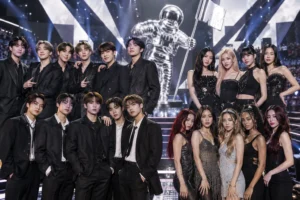
In one widely shared case, a K-pop group faced backlash for a stage performance that some viewers said appeared to be aimed at or involving “mainly minors,” raising concerns that the routine’s choreography crossed a line. In another trending video, criticism targeted an individual performer (reported as EVAN / Heeseung in coverage) for “shameless” actions during a separate “M Countdown” appearance, with commenters accusing the stage behavior of being deliberately provocative.
What audiences are reacting to—choreography, tone, and perceived intent
While the original viral posts varied in their specific claims, the core theme of the backlash was interpretation. Online reaction repeatedly centered on whether certain movements were “too harsh,” “too disrespectful,” or otherwise misaligned with mainstream television standards—particularly for a broadcast show watched by families and younger viewers.
![[stage choreography] Image showing the article's key context - In one widely shared case, a K-pop group faced backlash for a...](https://d1ycet1ctov4dv.cloudfront.net/wp-content/uploads/2026/06/26213312/stage-choreography-body-1-1782477190805.jpg)
In the minors-related controversy, social media discussion focused on age and audience protection: critics argued that choreography decisions should be evaluated not only on technical performance but on the developmental sensitivity of performers who are still underage. Supporters, meanwhile, often framed the routine as stage acting or concept-driven choreography, arguing that internet viewers were reading too much into brief on-camera moments.
For the second clip, the dispute focused more on behavior and body language. Some viewers interpreted the performer’s movements as intentionally crude or attention-seeking, while others argued that stage choreography in K-pop frequently includes exaggerated gestures meant to fit the song’s rhythm and camera framing. Even so, the tone of commentary—described in coverage as “brutal” and “pitying”—suggests that the viral framing made it harder for audiences to treat the moment as a harmless performance choice.
Why these moments spread so quickly
These disputes are also being amplified by modern distribution patterns. Short-form clips travel fast on platforms where the context of a full stage performance is stripped away. A few seconds can be reposted with commentary, screenshots, or captions that strongly influence how viewers understand the moment.
Once a clip reaches a critical mass of shares, fandoms often split into two camps: those who see the choreography as a clear violation and those who argue it’s a misunderstanding. The result can be a feedback loop where each side escalates its interpretation—turning a routine into a broader argument about idol culture, broadcast ethics, and what constitutes “disrespect” on stage.
![[stage choreography] Image explaining the article's impact and background - These disputes are also being amplified by modern...](https://d1ycet1ctov4dv.cloudfront.net/wp-content/uploads/2026/06/26213312/stage-choreography-body-2-1782477190888.jpg)
Potential reputational impact for performers and agencies
Even when the dispute is ultimately dismissed as subjective, viral controversies can carry reputational costs. For performers, backlash may affect public perception and invite increased scrutiny of future stages. For agencies and show producers, it can raise questions about review processes—such as what choreography is approved for broadcast, and whether age-related considerations are addressed more explicitly.
Importantly, controversies like these don’t exist in isolation. Coverage trends suggest that multiple separate “M Countdown” incidents are being discussed in the same time window, implying that the conversation around broadcast-ready performance content is active right now. When several clips trend concurrently, audiences may more readily compare performances against each other and treat the pattern as evidence of a systemic problem rather than isolated misunderstandings.
What comes next: clarifications, platforms’ role, and viewer expectations
In the short term, the most likely next steps are clarifications—either from agencies, from show staff, or indirectly through subsequent stage choices. However, in many cases, official responses take time, and the online narrative continues to evolve based on reposts and reinterpretations.
Over the next few weeks, watchers will likely focus on whether future “M Countdown” stages include adjustments to choreography, whether management emphasizes that the moves are part of a concept, and how fans and critics respond once the full context of the performance is visible. The broader question—how much intent matters compared with how the audience interprets a moment—may remain central as these debates continue to play out across social media.


Join the Conversation
Log in to share your thoughts and join the conversation with other fans.