
Central Daily Newspaper Files for Workout After 22 Billion Won Note Default Signals Deepening Press-Stability Concerns


Workout request follows final default on 22 billion won in notes
South Korea’s JoongAng Ilbo has formally applied for a corporate workout after reportedly failing to repay about 22 billion won (roughly tens of millions of U.S. dollars) tied to commercial notes, according to coverage summarized by major Korean news outlets. The move marks another high-profile instance of financial stress within the country’s traditional media sector and comes amid heightened scrutiny of how legacy publishers are coping with falling advertising revenues and shifting reader behavior.
The latest development, reported as a “final default” on the notes, signals that the company’s liquidity problems have progressed beyond earlier payment delays. Under South Korea’s workout process, companies can negotiate debt restructuring with creditors in an effort to stabilize operations without immediately triggering a forced liquidation.
Why the workout matters for creditors and readers
While a workout is not the same as bankruptcy, it typically changes the company’s leverage and bargaining position. Creditors often use the process to agree on debt rescheduling, interest reductions, or other restructuring measures—decisions that can affect employment, distribution, and long-term investment in reporting and newsroom technology.
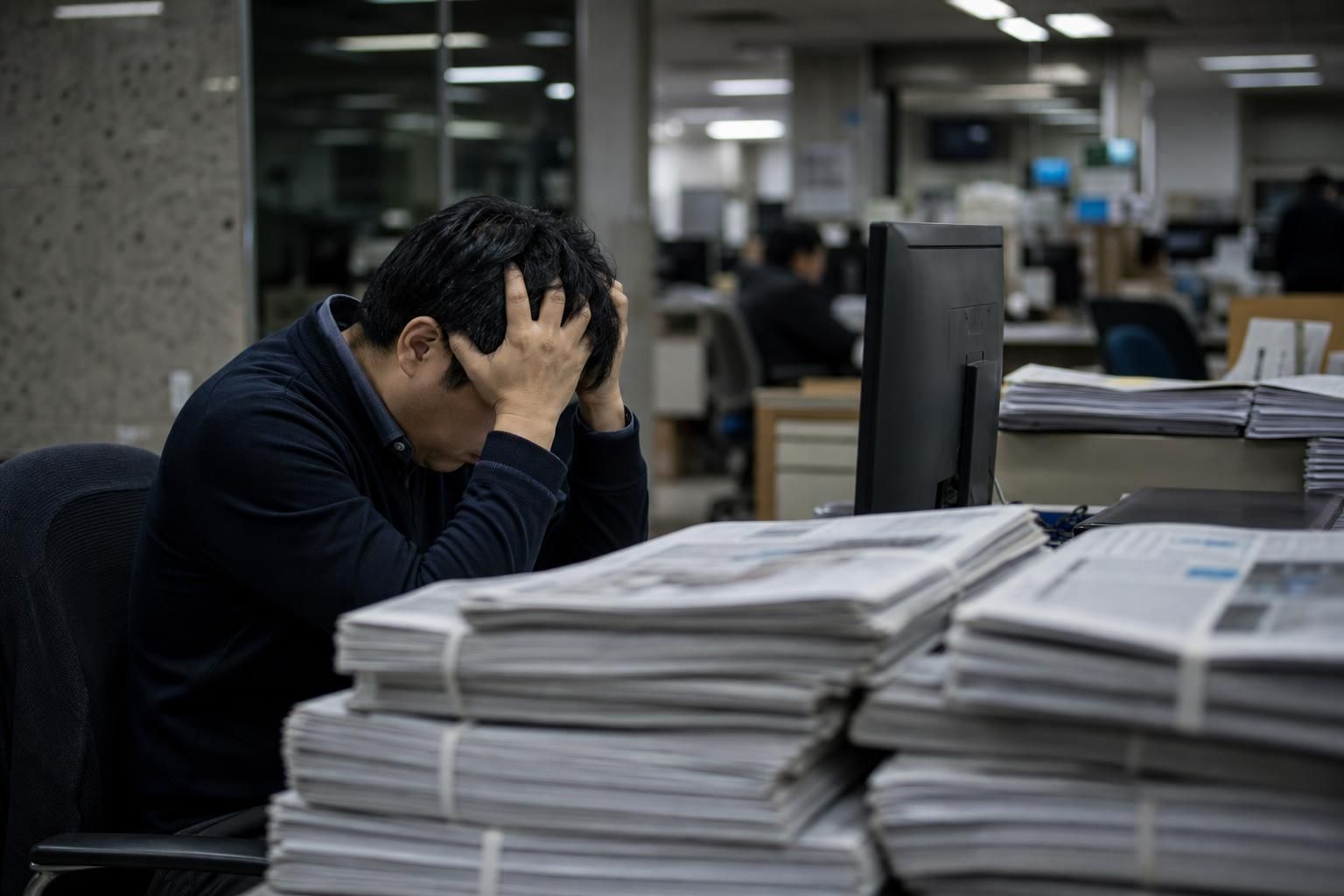
For readers, the immediate impact may be indirect but consequential. Financial uncertainty can slow hiring, reduce freelance budgets, and constrain newsroom expansion—especially for organizations already facing pressures from digital subscription competition, social-media-driven traffic, and advertising migration to online platforms.
Press-industry strain: a pattern emerging in Korea
The JoongAng Ilbo case is being viewed in the broader context of what some Korean commentators describe as an industry-wide squeeze on legacy newspapers. In recent years, many publishers have grappled with structural challenges: advertising budgets have shifted online, print circulation has declined, and subscriber growth often requires costly investments in digital products and content personalization.
Coverage of JoongAng Ilbo’s situation has also pointed to a wider climate of instability in Korean media finance—suggesting that investors, lenders, and regulators are increasingly concerned about sustainability, not just profitability. In that sense, the workout request could become a benchmark for how other struggling publishers manage creditor negotiations and operational cost cuts.
What happens next in the restructuring process
Once a workout application is filed, creditors and related stakeholders generally move toward formal discussions on an agreed restructuring plan. Depending on the outcome, the company may need to implement measures such as asset sales, expense reductions, revised repayment schedules, and—often in practice—changes to governance and internal controls.

A key factor will be whether creditors view the publisher as viable in a stabilized form and whether the restructuring plan can restore cash-flow while preserving the core business. The timeframe for negotiations can vary, but outcomes typically determine whether the company can continue as a going concern or whether the financial situation deteriorates into more severe proceedings.
Market implications and the credibility test for restructuring
JoongAng Ilbo’s workout request also raises questions about the reliability of financial disclosures and the resilience of publisher balance sheets under stress. For the market, such defaults can affect future borrowing costs and credit availability across the industry, while for newsroom leadership it puts a spotlight on how editorial and commercial strategies align with immediate fiscal realities.
Going forward, stakeholders will watch for (1) confirmation of how creditors will structure any debt adjustments, (2) whether the company can stabilize cash flow without major service disruptions, and (3) signs of longer-term digital transformation efforts that could support recovery. If successful, the workout could buy time; if not, it may intensify concerns that legacy media in Korea face a high bar for financial turnaround.
![[Jang Ki-ha, Yoon Gai] featured image - South Korean Singer Jang Ki-ha and Actress Yoon Gai Confirm Relationship as Rumors In...](https://d1ycet1ctov4dv.cloudfront.net/wp-content/uploads/2026/06/27150118/Jang-Ki-ha-Yoon-Gai-1782540077898-300x200.jpg)
Join the Conversation
Log in to share your thoughts and join the conversation with other fans.