
K-Pop Rapper Tablo Sparks Outrage After Censored Lyric Is Explained as “Speed Limit” Rule

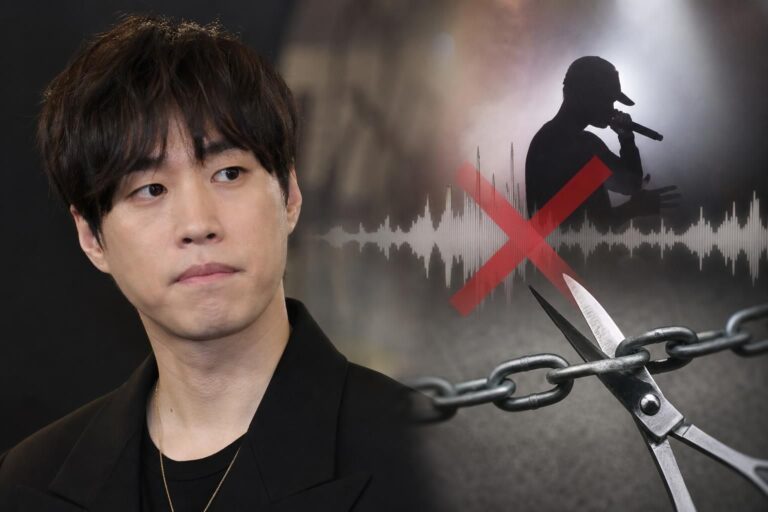
South Korean rapper Tablo, a member of the hip-hop group Epik High, has reignited public debate over music censorship after discussing a case in which a lyric was allegedly censored due to an apparent violation of a legal speed limit. Tablo raised the issue on his podcast, Hey Tablo, prompting widespread online reaction and fresh criticism of how narrowly and inconsistently authorities appear to apply rules to creative works.
A lyric censored for referencing “200 km/h”
According to Tablo, a line from Epik High’s song “Ddu Ddu Ru” was censored for an unusual reason: the track included vocals by Mithra Jin containing the phrase “200 km pokju,” which Tablo said translates roughly to “Our youth is running at 200 kilometers per hour.” He argued that the censorship decision treated the number as a literal reference to exceeding the allowed speed limit in South Korea.
Tablo emphasized that this was not merely an internal creative adjustment. In his account, when songs are censored, the relevant authorities notify artists with a reason for the restriction. For this particular case, he said the official explanation referenced the speed-related issue as justification for the removal or modification.
Why the explanation became a flashpoint online
A clip of Tablo’s remarks quickly circulated on social media, drawing both domestic and international attention. Critics argued that censoring music over a metaphorical or lyrical expression demonstrates what they see as an overbroad approach to regulation—one that can treat artistic language as potentially harmful to public order even when the context is clearly poetic.

Many commenters framed the controversy as part of a broader pattern: that regulatory systems may impose heavy-handed restrictions on pop culture while handling other serious societal issues with less visible scrutiny. While Tablo’s explanation focused on a single lyric, the reaction suggests that audiences are increasingly comparing how rules are interpreted across different categories of public concern.
Some reactions went further, implying that the perceived logic of the censorship system is arbitrary—censoring content for seemingly trivial or indirect references while allowing other forms of wrongdoing to proceed. Although these claims reflect opinion rather than new findings, they illustrate why Tablo’s anecdote resonated beyond just music fans.
The broader context: music censorship and platform gatekeeping
In South Korea, music content can be scrutinized through multiple channels, including broadcast standards and other compliance processes tied to distribution and public promotion. Artists often navigate rules concerning language deemed inappropriate, references that could be construed as promoting harmful behavior, or phrases that are interpreted as violating guidelines.
Tablo’s case stands out because the rationale he described centers on a quantified reference—“200 km/h”—that authorities allegedly treated as legally problematic. For listeners, the mismatch between lyrical metaphor and strict numeric interpretation became the core issue: the same figure can appear in music, sports, films, or slang without being intended as an endorsement of illegal speeding. Yet, in Tablo’s telling, the censorship process appears to have taken the number’s legal implication more seriously than its artistic framing.

As with many censorship controversies, the debate also touches on a larger question: how to draw boundaries between protecting public norms and preserving creative expression. When rules are applied in a way that artists feel is disconnected from intent, it can trigger accusations that regulation is guided more by caution than by clarity or context.
What artists and audiences are watching next
The immediate impact of Tablo’s comments is public pressure and heightened scrutiny. Fans typically look for two things after such controversies: whether similar cases are acknowledged or explained by regulators, and whether affected artists will receive clarification, apologies, or updated standards for future releases.
Tablo’s remarks may also influence how other musicians discuss compliance during promotions—especially those whose lyrics use numbers, speed references, or metaphorical language that could be interpreted in multiple ways. If the episode encourages clearer, more transparent guidelines, it could reduce confusion for artists. If it instead normalizes ad-hoc reasoning, it may deepen skepticism toward the system.
For now, Tablo’s account has turned a single censored lyric into a broader conversation about proportionality and interpretation in South Korea’s content rules. Whether the controversy ultimately leads to policy clarification or remains a flashpoint for social media debate, it has already underscored the tension many creators feel when art is filtered through legal or regulatory logic.



Join the Conversation
Log in to share your thoughts and join the conversation with other fans.
I like that this gives the story some room to breathe. Curious how people sit with it after reading.
This has a softer feeling than I expected. The little details make it easier to connect with.
This feels heavier than a quick headline. Hope the next update brings a little more clarity.