

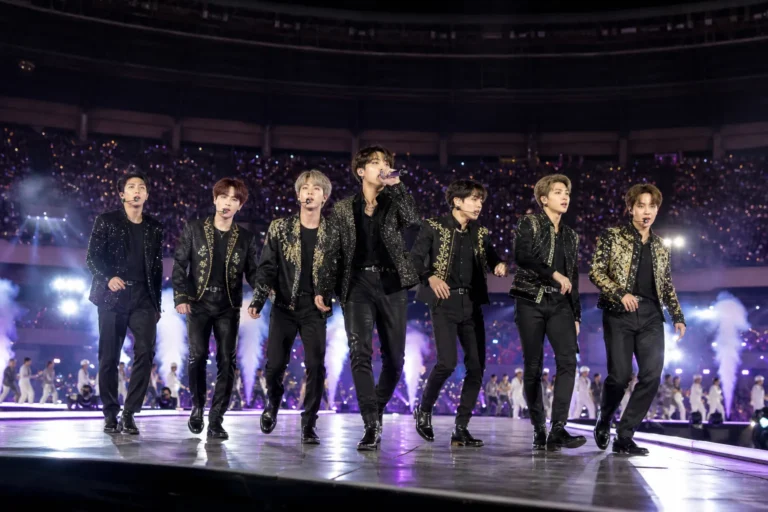
BTS has added another first to K-pop’s global record book, performing during the first halftime show ever held at a FIFA World Cup final. The seven-member group took the stage on Sunday, July 19, U.S. time, during the 2026 final between Spain and Argentina at New York New Jersey Stadium in East Rutherford, New Jersey.
The appearance placed BTS inside one of the most watched sporting events in the world, alongside a lineup that included Madonna, Shakira and Justin Bieber. For Korean pop music, the moment was notable not only because of the size of the audience, but because it positioned a Korean act as part of a newly expanded entertainment format for the World Cup final itself.
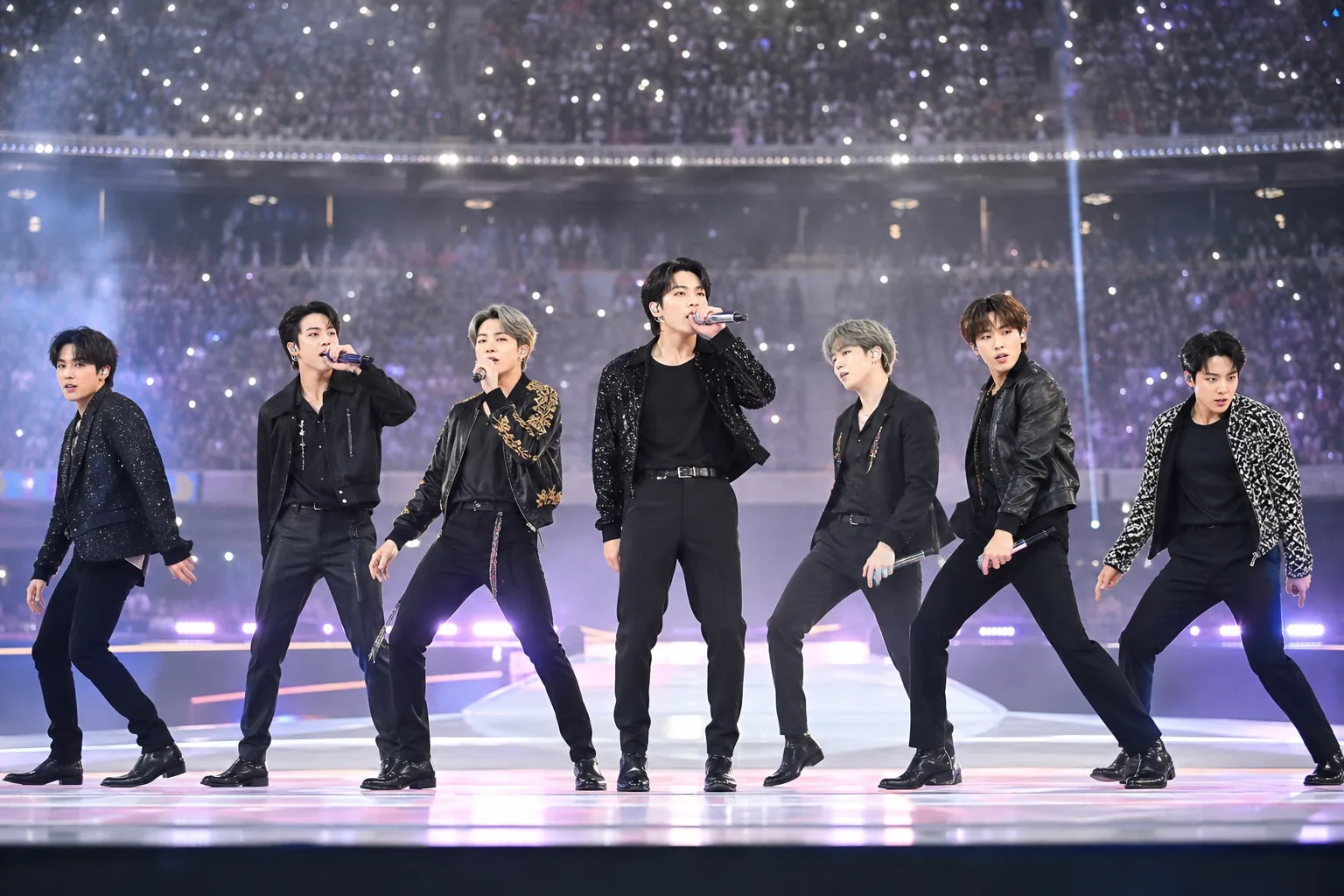
According to reports from Yonhap News Agency and The Korea Times, Madonna opened the halftime program with Music before Jungkook began BTS’s segment with the group’s English-language hit Dynamite. The remaining members then joined one by one, turning the performance into a full-group appearance at the center of the field.
A Stadium Stage For K-Pop
The choreography and styling were designed for a venue built around football rather than a conventional concert. The group performed in the middle of the stadium, with the audience surrounding the stage from every side. That format gave the appearance a ceremonial scale: BTS was not simply performing at a concert attached to the World Cup, but participating in the final’s main broadcast rhythm.
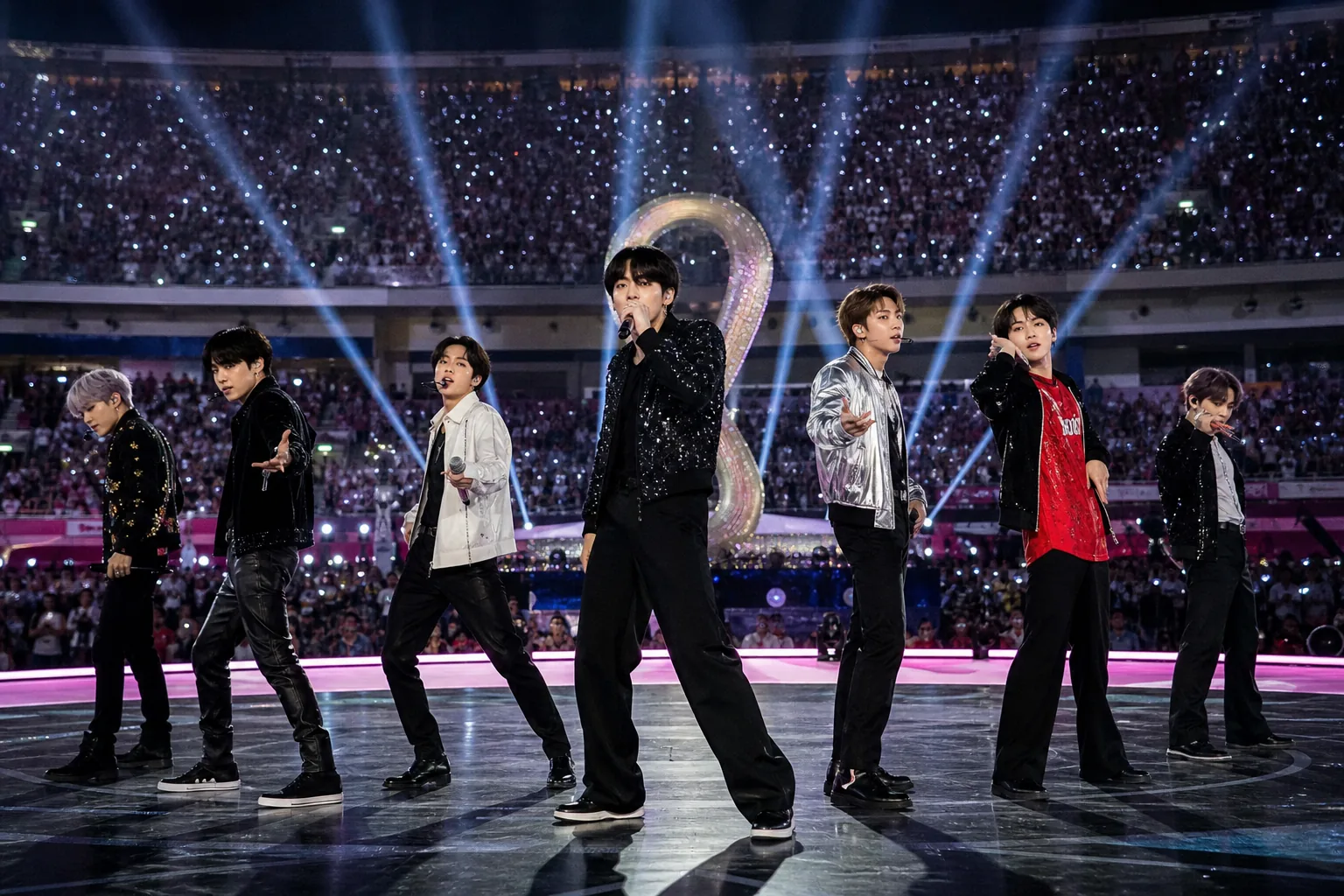
The details also carried meaning for Korean fans. Suga wore a jersey with the emblem of the Red Devils, the official supporters’ group for South Korea’s national football team, while Jimin and J-Hope wore outfits featuring the number seven. Those choices drew attention because they connected the group identity of BTS with Korean football culture and the symbolism fans often attach to the number seven.
The show was organized by FIFA in partnership with Global Citizen, with Coldplay frontman Chris Martin serving as curator. The organizers framed the halftime production as a way to combine sport, music and culture for a global audience. That ambition was visible in the lineup, which brought together veteran pop stars, contemporary chart acts and a K-pop group with one of the largest international fan bases in music.
Why The Moment Matters
World Cup ceremonies have long featured major musicians, but a formal halftime show during the final is a new development. The format is familiar to viewers of American football’s Super Bowl, yet it represents a different kind of programming choice for FIFA. By placing music inside the match rather than only before or after it, the organization created a stage that can reach viewers who may not normally follow pop performances separately.
For BTS, the appearance extended a long-running relationship with global sports stages. Jungkook previously performed at the opening ceremony of the 2022 World Cup in Qatar, but this event marked the first time all seven BTS members performed together during a World Cup final. That distinction matters because the group has often been discussed as both a collection of individual stars and a unified act whose full-lineup appearances carry special weight.
In a statement released through BigHit Music ahead of the performance, BTS described the invitation as an honor and emphasized music’s role as a shared language for hope and unity. The sentiment fit the scale of the event, where national teams, international viewers and pop audiences overlapped in a single broadcast moment.
The performance also arrived at a time when K-pop’s presence in global institutions is no longer treated as a novelty. BTS has already topped charts, sold out stadiums and represented Korean popular culture on major international platforms. Still, the World Cup final is a different kind of venue: it is a sports event first, and its audience includes millions who may be casual music listeners rather than dedicated fans.
That broader exposure is why the halftime show is likely to be remembered as more than a high-profile booking. It showed how K-pop can function inside a shared global spectacle without being separated into a niche segment. BTS performed as part of the main event, in the same program as household names from multiple generations and regions.
Whether FIFA continues the halftime format at future finals remains to be seen. But for this first edition, BTS helped define what the concept could look like: a compressed, highly visible stage where music, sport and national identity intersect. For K-pop, the takeaway is clear. The genre’s biggest acts are no longer just exporting Korean entertainment to the world; they are increasingly being built into the world’s biggest cultural broadcasts.


Join the Conversation
Log in to share your thoughts and join the conversation with other fans.