

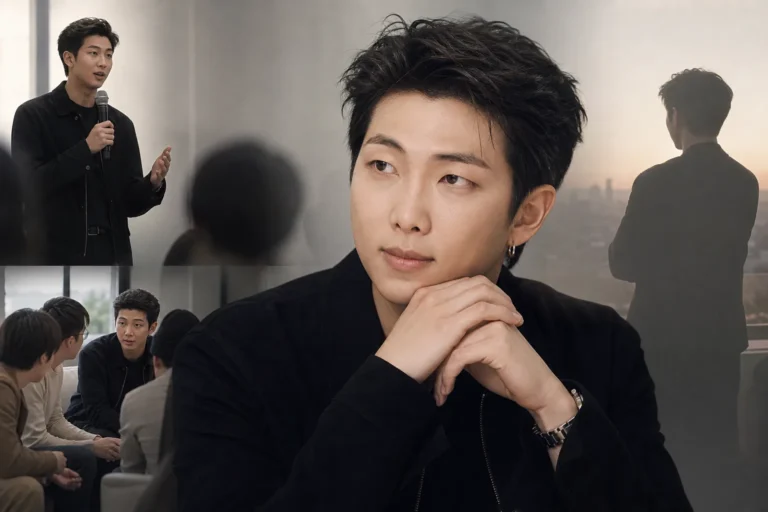
BTS leader RM is reframing leadership as an act of service rather than a display of authority. In a newly released interview with British fashion designer Bella Freud, the rapper, songwriter and longtime group leader reflected on how his understanding of responsibility has changed after years at the center of one of the world’s most visible pop groups.
The conversation, released on July 22, moved beyond the usual language of charts and milestones. RM spoke about success, creativity, modern pressure and the challenge of staying grounded while living inside a global entertainment system that moves at relentless speed. His comments offered a rare look at how an artist known for intellectual candor now thinks about guiding a team whose members have also built strong individual identities.
Leadership As The Unwanted Task
RM illustrated his point with a plain, memorable image: a room where people are resting while cold air comes in through an open window. Everyone can feel the chill, but nobody wants to leave their comfortable place to close it. For him, leadership means being the person who stands up in that moment and handles the task because the group needs it done.
That example captures a practical philosophy. Leadership, in RM’s telling, is not mainly about being the loudest voice or holding the highest status. It is about recognizing friction inside a shared space and accepting responsibility for work that may be inconvenient, unnoticed or emotionally tiring. In a group setting, that kind of action can determine whether small discomforts become larger problems.
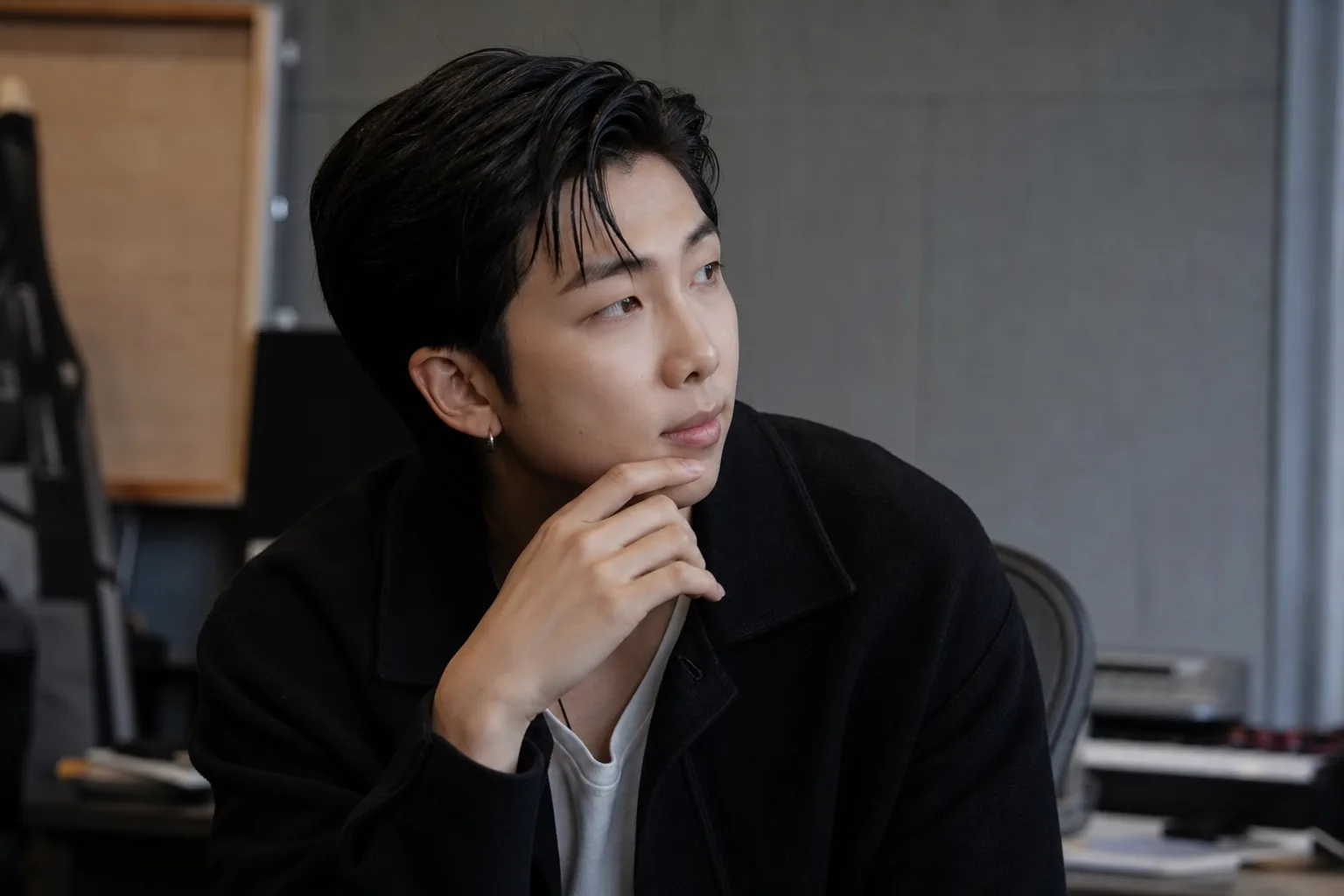
The idea also resonates with BTS’s long history as a seven-member act whose career has required constant coordination across music, touring, public communication and personal growth. RM has often been seen as a bridge between the group and wider audiences, especially in interviews and international settings, but his latest comments make clear that he views leadership less as a permanent spotlight and more as a repeated choice to serve the team.
A Softer Approach After Years Of Pressure
RM also acknowledged that his style has not stayed the same. Looking back at the group’s earlier years, he described his leadership as strong and, at times, dogmatic. That approach may have reflected the urgency of BTS’s rise, when the members were navigating pressure, uncertainty and a rapidly expanding global audience while still defining their place in the industry.
As time passed, however, each member developed a clearer personal voice through solo music, acting, variety work, brand projects and other individual paths. RM said that shift pushed him toward more communication and deeper listening. The point was not to step away from responsibility, but to practice it differently as the team matured.
His remarks suggest that leadership inside a long-running idol group can become more complex as success grows. Early teamwork may require direction and discipline, while later teamwork may depend more on trust, patience and the ability to make space for separate ambitions. For BTS, whose members have repeatedly emphasized both collective identity and individual artistry, that balance is central to the group’s current era.
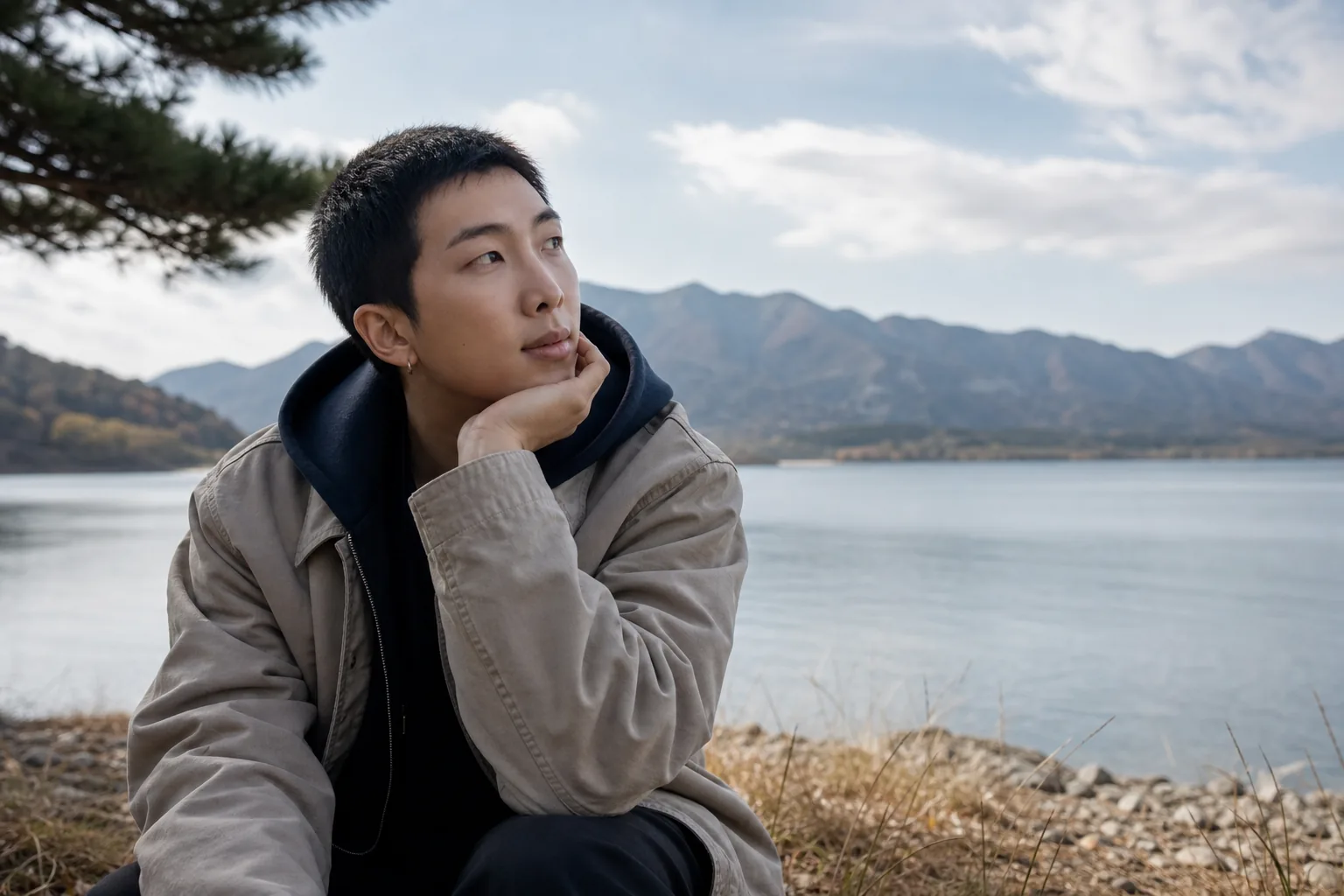
RM said that when the members recognize his effort and express appreciation for his role, the stress he has carried feels lighter. That detail underscored one of the interview’s most human themes: a team can be demanding, but it can also provide the affirmation that makes difficult work sustainable.
Creativity Beyond Constant Productivity
The interview also touched on RM’s broader concerns about contemporary digital life. He pointed to short-form content and the pace of online culture as forces that can make people feel they must always produce, react and keep moving. For an artist whose work often returns to reflection, language and self-examination, that pressure sits uneasily beside the slower rhythms that creativity can require.
RM connected that concern to his own search for balance. Rather than treating success as a permanent race for bigger numbers, he described a desire to stay close to nature and real-life experience. The comments align with the introspective tone of his 2024 solo album Right Place, Wrong Person, a project shaped by unease, self-questioning and the wish to loosen the grip of expectation.
That perspective is notable because BTS’s achievements are often measured in highly public ways: stadiums, awards, chart records and global fan engagement. RM’s latest reflections turn attention away from those visible markers and toward the quieter habits that help an artist endure them. The message is not that ambition has disappeared, but that ambition needs grounding if it is going to last.
What RM’s Comments Reveal About BTS Now
For fans, RM’s comments offer insight into how BTS may continue operating as both a group and a collection of individual artists. The group’s scale has made leadership unusually visible, but his framing keeps the focus on everyday responsibility: listening more carefully, doing the difficult task and protecting the conditions that allow people to create honestly.
In that sense, the interview reads less like a formal career statement and more like a progress report from someone still revising his own role. RM is not presenting leadership as a fixed trait he mastered years ago. He is describing it as a practice that changes with age, experience and the needs of the people around him.
That evolution may be why the comments have drawn attention. At a time when K-pop careers are increasingly shaped by speed, visibility and constant online interpretation, RM’s emphasis on responsibility and reflection stands out. His message is simple but pointed: a leader is often the person willing to notice the cold air, get up first and make the room workable for everyone else.



Join the Conversation
Log in to share your thoughts and join the conversation with other fans.