
Stephen Chow’s Kung Fu Soccer Faces Criticism Over Korean Women’s Soccer Portrayal

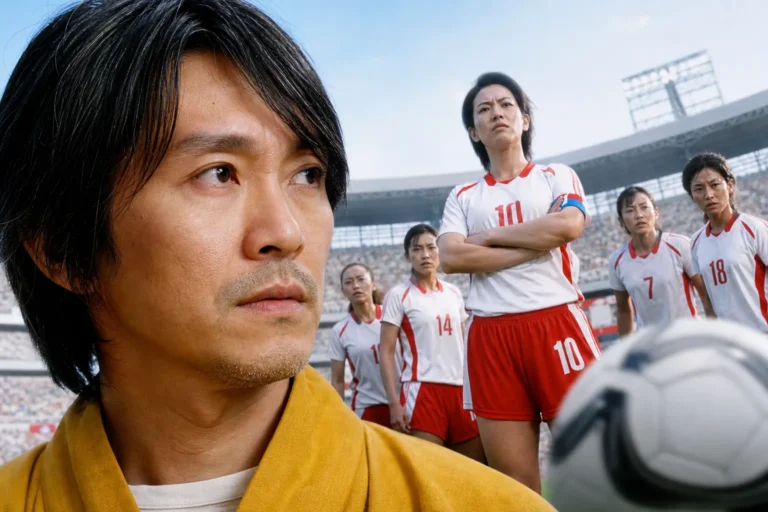
Stephen Chow’s new film Kung Fu Soccer has become the subject of criticism in Korea after scenes from the comedy were described as mocking Korean women’s soccer. The movie, a follow-up to Chow’s 2001 hit Shaolin Soccer, opened in China on July 11 and quickly became a major box-office performer, but its commercial momentum is now being accompanied by a dispute over how it depicts a fictional team with Korean associations.
According to the report cited by Koreaboo, Chinese media said the film passed about 132 billion won in cumulative ticket sales, roughly 88.7 million dollars, within three days of release. That fast start underlines the scale of attention surrounding the project. Chow remains one of the most recognizable names in Asian comedy cinema, and a sequel connected to Shaolin Soccer was always likely to draw interest from audiences familiar with his blend of slapstick, martial arts fantasy, and sports parody.
Why The Film Is Being Criticized
The controversy centers on the movie’s depiction of a team called the “Ewha Women’s Soccer Team,” a name that Korean viewers may connect with Ewha Womans University. In the scenes described in the source report, the team is portrayed as relying on dirty tactics and “foul soccer,” while some players are shown as more concerned with makeup and circle lenses than the match itself. The criticism is not simply that the film uses exaggerated comedy, but that the joke appears to attach negative stereotypes to a clearly Korean-coded women’s team.
Because Kung Fu Soccer is built as a broad comedy, supporters of the film may argue that absurdity and caricature are part of its genre. Sports comedies often use over-the-top rival teams, impossible skills, and cartoonish confrontations to heighten drama. The objection from Korean critics, however, is that national identity changes how such jokes are received. When a fictional opponent is presented with recognizable cultural markers, viewers may see the gag as a comment on a real country or its athletes rather than a neutral bit of comic exaggeration.
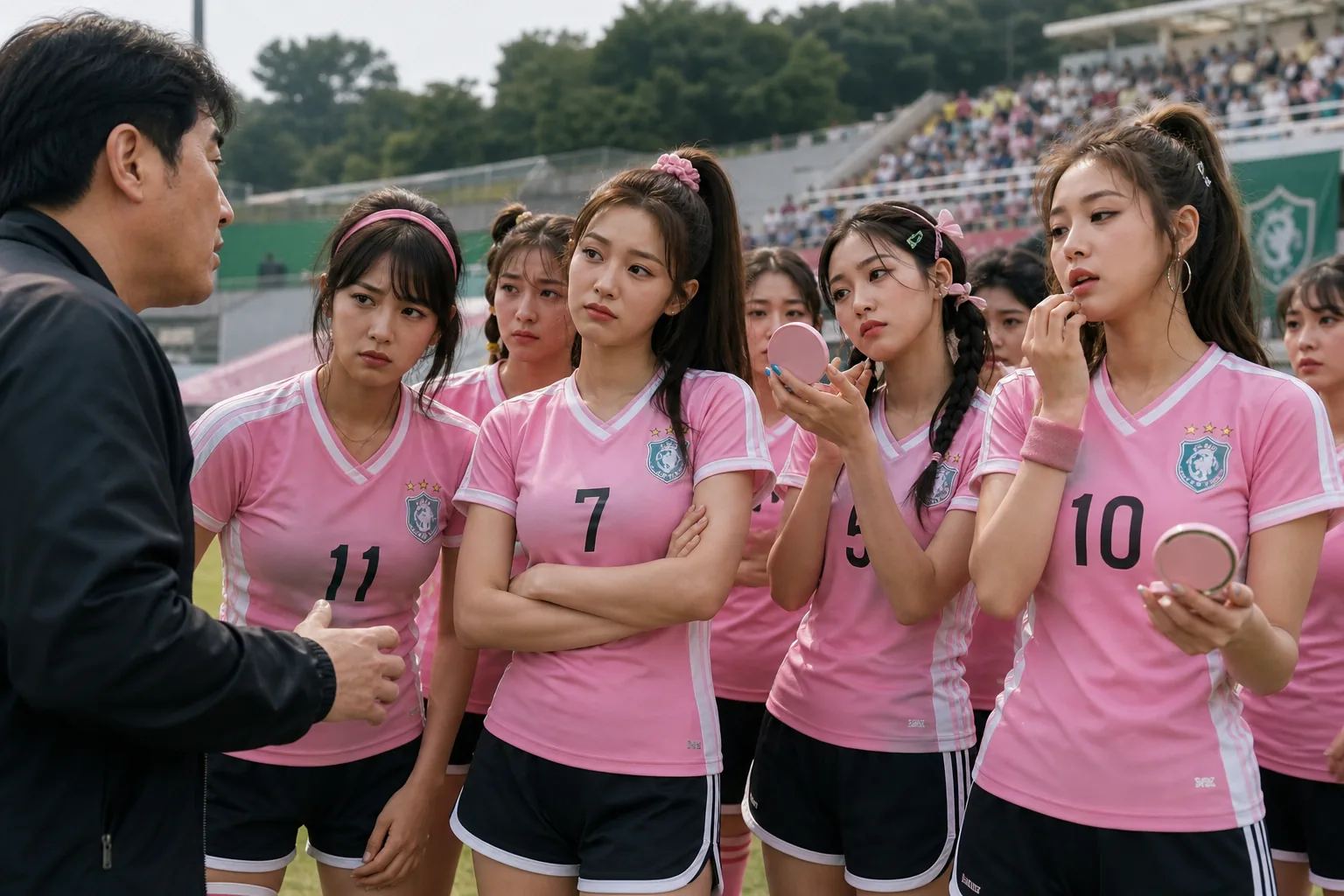
Professor Seo Kyung Duk of Sungshin Women’s University publicly criticized the portrayal, saying that repeated depictions of Korean athletes as rule-breakers are wrong even in fictional works. His remarks connect the new movie to an earlier controversy around Fly, Light on Ice, a short-track skating film released by the Beijing Municipal Broadcasting Bureau during the 2022 Beijing Winter Olympics. That project drew backlash after Korean athletes were portrayed in a way critics described as unfairly framing them as foul players.
A Sensitive Pattern In Sports Storytelling
The comparison matters because sports are often tied to national pride, especially in events where Korea and China have had visible rivalries. Short-track speed skating has repeatedly produced heated public debate in both countries, and soccer can carry similar symbolic weight. In that setting, a comedy scene that might otherwise be dismissed as silly can be interpreted as part of a larger pattern: Korean athletes being used as shorthand for cheating, vanity, or poor sportsmanship.
The concern is sharper because the target in this case is a women’s team. Women’s sports already face unequal attention and frequent stereotyping, so a major commercial film portraying female players through makeup-focused or unserious images can be read as doubly dismissive. Even if the movie’s intent is comic, the result can reinforce the idea that women’s athletes are less legitimate competitors, while also linking that dismissal to a specific national identity.
Seo also warned that the issue should be addressed before the film’s planned overseas release in August. That timing makes the dispute more than a domestic box-office story. If the movie expands into additional markets without changes or context, criticism could follow it into countries where Korean entertainment, sports, and online fandom communities overlap. The controversy may also be amplified by the speed at which clips from films circulate across short-form video platforms, where scenes can be judged separately from the full movie.

What Is At Stake For The Overseas Release
For producers and distributors, the practical question is whether the disputed material will be edited, clarified, or left unchanged. Comedy films are rarely built to satisfy every audience, and cross-cultural jokes often travel poorly. Still, when a film is promoted internationally, creators face a higher burden to consider how national symbols, university-like names, and athlete portrayals will be interpreted beyond the original release market.
The backlash also shows how entertainment news now moves across categories. This is not a K-pop story in the narrow sense, but it sits inside the wider Korean entertainment conversation because it involves Asian cinema, national image, sports culture, and online audience response. Korean entertainment coverage increasingly follows such cross-border disputes because they shape how Korea and Korean people are represented in globally consumed media.
Kung Fu Soccer remains a high-profile commercial release, and its strong opening suggests that many viewers are engaging with it primarily as a nostalgic sports comedy. The criticism, however, places pressure on the film’s team to respond before its wider rollout. Whether the controversy fades or grows will likely depend on how visible the disputed scenes become overseas and whether the production treats the objections as a misunderstanding, a marketing problem, or a representation issue requiring correction.



Join the Conversation
Log in to share your thoughts and join the conversation with other fans.
Comedy can be exaggerated without leaning on lazy national stereotypes. If the joke only works by insulting Korean women players, the criticism is fair ⚽ It is possible to be absurd and still write with more imagination.