
Na Hong-jin’s Hope Builds Global Momentum After Korean Box Office Surge


Na Hong-jin’s Hope is turning into one of the most closely watched Korean film stories of the summer, combining a fast domestic box office start with a growing international campaign aimed at genre audiences overseas.
The sci-fi action thriller opened in South Korea on July 15 and quickly passed 2 million admissions during its first five days in theaters. That pace made it one of the year’s fastest Korean theatrical launches and put the film at the center of a broader conversation about whether a large-scale local production can draw sustained crowds in a market still searching for dependable box office recovery.
Hope arrives with unusually high expectations. Na’s previous films, including The Chaser, The Yellow Sea, and The Wailing, helped define his reputation for tense genre storytelling, moral ambiguity, and carefully controlled dread. His new project expands that language into a bigger canvas, blending creature-driven suspense, action, science fiction, and village mystery.
A Korean Genre Film With Global Ambition
The film is set in an isolated Korean harbor village where an unknown presence throws the community into fear. Hwang Jung-min plays Bum-seok, a local police chief pulled into the emergency, while Jung Ho-yeon plays Sung-ae, a police officer involved in the search. Zo In-sung appears as Sung-ki, one of the villagers drawn into the dangerous pursuit. The cast also includes Michael Fassbender, Alicia Vikander, Taylor Russell, and Cameron Britton, giving the production a notably international profile.
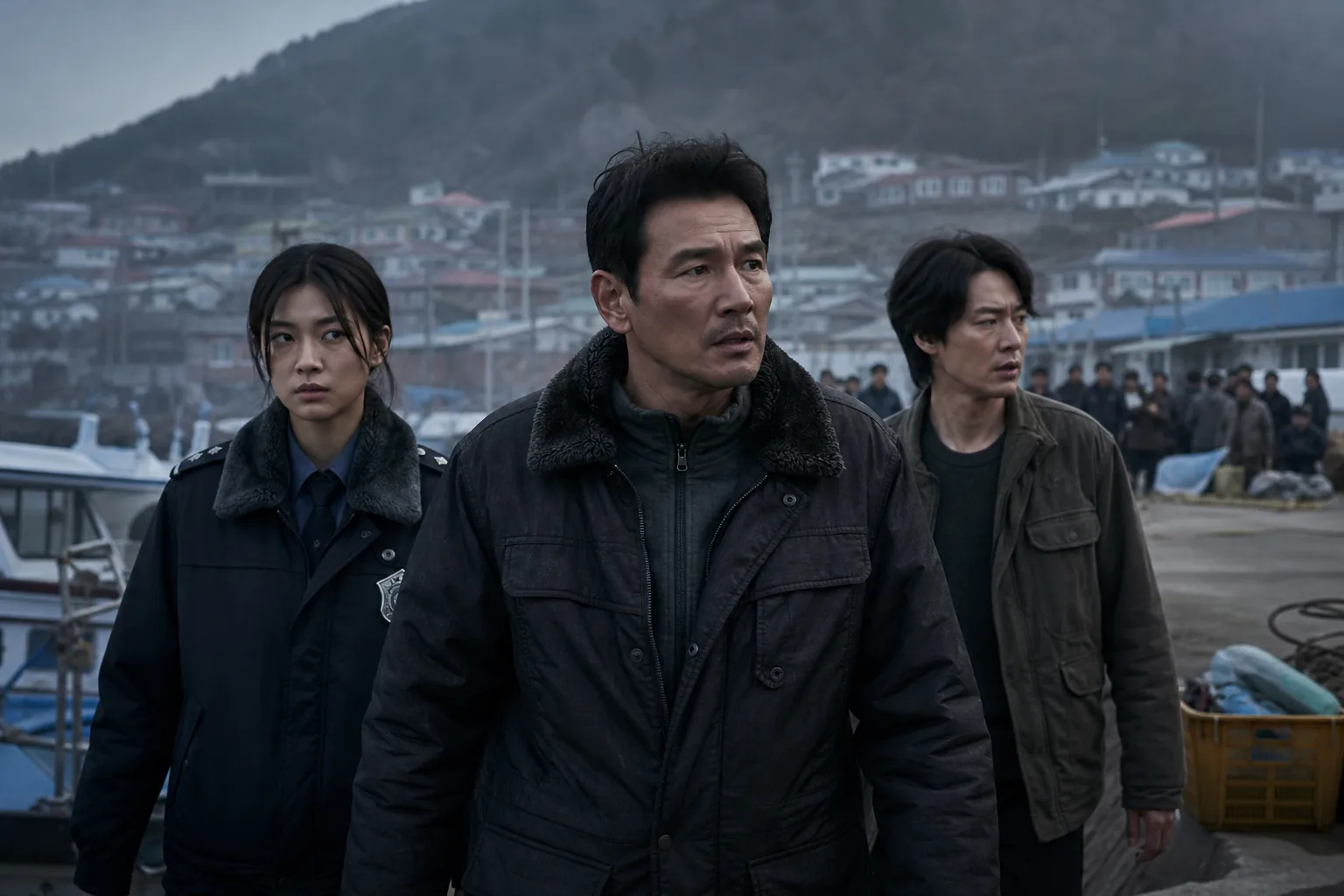
That cast is central to the film’s overseas positioning. Rather than treating Hope as a purely domestic release with foreign sales attached afterward, the project has been presented from the start as a Korean-led genre film built for global circulation. Its mix of Korean stars, internationally recognizable actors, and a director with a Cannes history gives distributors a clear way to introduce it to audiences who follow both prestige cinema and large-scale genre releases.
The movie’s Cannes competition premiere earlier this year gave it an arthouse and festival platform before its commercial rollout. Since then, attention has shifted toward whether that prestige can translate into broader audience demand. The early Korean admissions suggest strong curiosity, although the film has also prompted divided responses over its dense world-building, harsh tone, profanity, and ambiguous ending.
Comic-Con Push Adds Another Layer
The next step in the campaign came at San Diego Comic-Con, where Na appeared for a dedicated Hope panel arranged by the film’s North American distributor. The event included a special introduction connected to Jung Ho-yeon and gave attendees a look at new footage, marking Na’s first appearance on the Comic-Con stage.
That setting matters because Comic-Con reaches a different audience from Cannes. A Cannes competition slot signals critical and auteur interest, while Comic-Con speaks directly to fans of science fiction, horror, action, and franchise-scale spectacle. For a Korean film built around an unknown threat, a remote community, and escalating survival stakes, the move positions Hope as more than a festival title waiting for reviews.

The North American release is scheduled for September, giving the film a runway to build awareness after its Korean opening. The campaign is also arriving at a time when Korean screen content remains highly visible internationally, but theatrical films still face a harder task than streaming dramas or K-pop-led documentaries. Hope therefore carries symbolic weight: it is testing how far a Korean-language genre film with major international partners can travel in cinemas.
Why The Stakes Are High
Financially, the bar is high. The production has been described as one of the most expensive Korean films ever made, and local industry discussion has focused on how many admissions it would need to fully justify that scale through theaters alone. Overseas presales and distribution deals may ease some of that pressure, but the domestic performance remains an important signal for investors, exhibitors, and studios planning future tentpole Korean films.
The film’s polarized reception may also become part of its identity. Na’s work has often thrived on discomfort rather than easy consensus, and The Wailing became a major hit despite debates over its meaning and ending. If Hope follows a similar pattern, the questions surrounding its story may help keep public discussion alive rather than limit its commercial life.
For now, Hope has done what a major release needs to do at the beginning of its run: it has created urgency. The Korean box office numbers show immediate audience interest, the festival history gives the film critical visibility, and the Comic-Con appearance brings it into the global genre conversation. Whether that momentum lasts will depend on word of mouth, repeat viewing, and how effectively the September North American release converts curiosity into ticket sales.



Join the Conversation
Log in to share your thoughts and join the conversation with other fans.