
BTS Chile Concerts Face Venue Uncertainty After Stadium Approval Denial

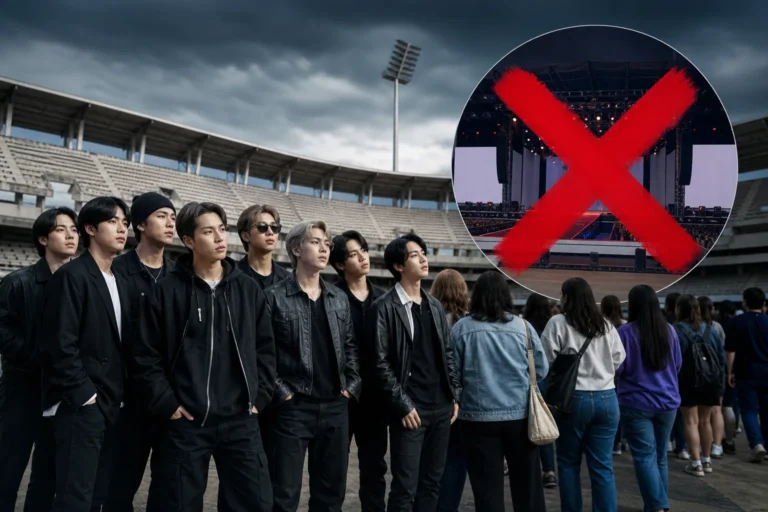
BTS’s planned concerts in Chile have become the center of a fast-moving venue dispute after officials declined to approve the group’s use of Santiago’s National Stadium for three October shows, prompting fan protests and political criticism over how the event was handled.
The controversy surfaced after Chile’s National Sports Institute, known as IND, said it would not authorize the stadium for the concerts. According to Korean reports citing local developments, the agency pointed to technical concerns tied to the production design, including the possible impact of a large 360-degree stage on the field and on future events already tied to the venue.
The decision has left organizers and fans facing uncertainty over where the concerts could be held. The performances were expected to take place in October at the National Stadium, one of the country’s most visible large-scale venues. Reports said officials are now looking at alternative locations, but finding a site with enough capacity and suitable stage conditions may be difficult.
Fans Push Back In Santiago
The reaction from BTS’s Chilean fanbase was immediate. Hundreds of ARMYs gathered in Santiago to protest the decision, with demonstrators calling for the group to be allowed to perform at the National Stadium. Korean coverage described a peaceful march near central government areas, where fans carried banners, wore BTS’s signature purple, and argued that the concerts should not be derailed after months of anticipation.
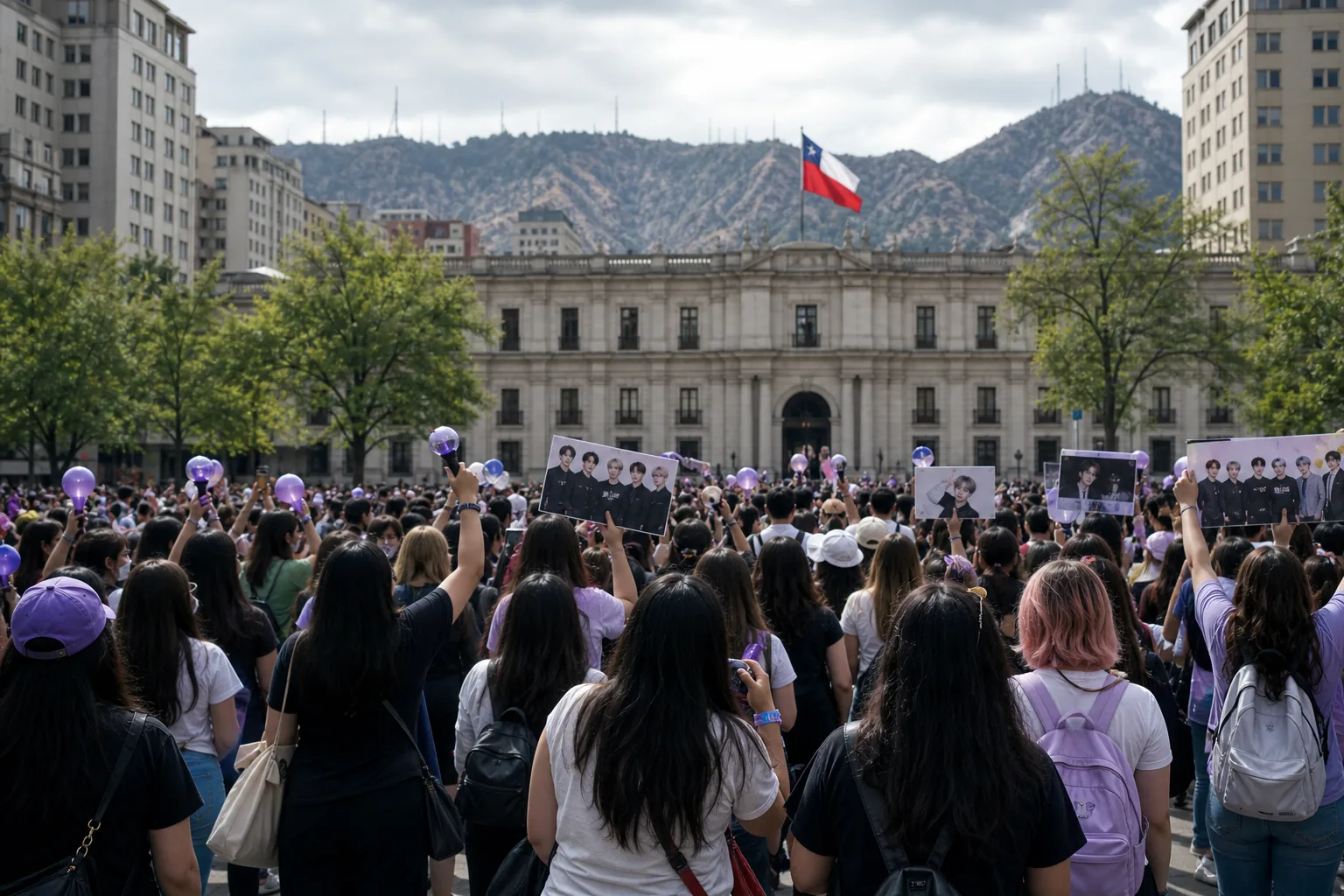
For many fans, the issue is not only about one venue. BTS concerts are major cultural events that can draw international attention, tourism spending, and intense community activity. Supporters have argued that the National Stadium is one of the few local options capable of handling the expected audience size for multiple nights, especially if the production requires a central stage setup and broad sightlines.
Officials have framed the denial as an administrative and technical matter rather than a judgment on the group or its fans. IND reportedly cited concerns that the stage structure and equipment could place heavy strain on the grass surface and disrupt later football matches or other large events. That explanation has not satisfied some fans, who have questioned why the planning process reached this point if the venue was not yet secured.
A Venue Problem Becomes A Political Issue
The dispute has also moved beyond entertainment circles. Some opposition figures in Chile have criticized the government for what they see as poor coordination around a major cultural event, calling for more transparency about the decision-making process. The government side, meanwhile, has maintained that the decision followed technical criteria and venue-management rules.
The timing makes the stakes higher. If the October concerts are to proceed in Chile, organizers will need either a successful reconsideration of the stadium decision or a replacement venue that can meet production, crowd-control, and scheduling needs. Korean reports noted that some provincial and private stadiums have been discussed, but questions remain about whether they can support the scale expected across three performances.
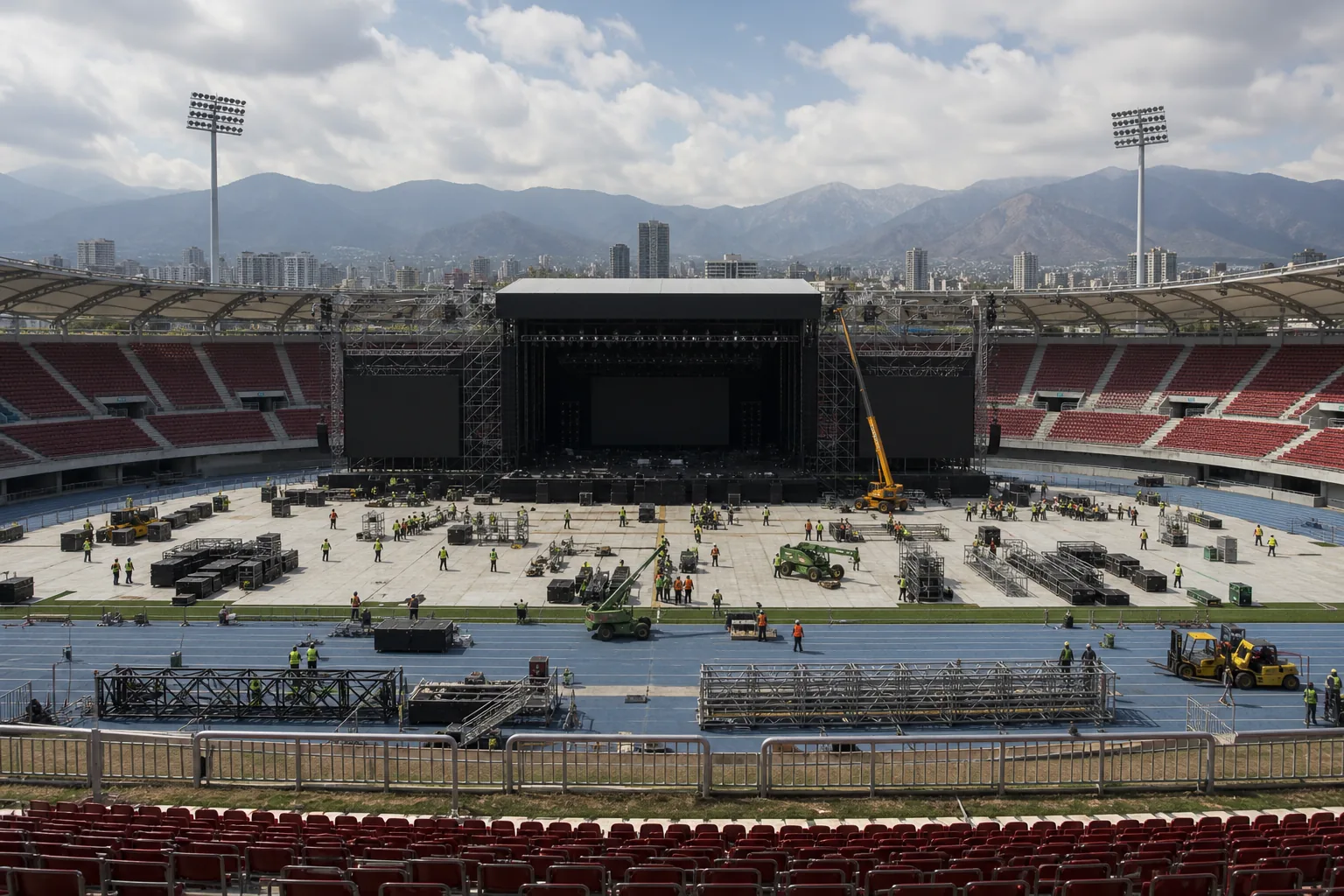
The case highlights a recurring tension in global pop touring: stadium concerts now require infrastructure that goes far beyond seating capacity. Modern K-pop tours often involve elaborate stage builds, large crews, complex lighting systems, and strict safety requirements. A venue that looks large enough on paper may still face limits once field protection, load distribution, emergency access, and post-event recovery are taken into account.
For BTS, whose international touring power has long been a marker of K-pop’s global reach, the Chile dispute is likely to be watched closely by fans across Latin America. The group has one of the region’s most passionate fan communities, and any change to the shows would affect travel plans, accommodation bookings, and expectations built around a rare large-scale appearance.
As of the latest reports, the core question remains unresolved: whether the concerts can still happen in Santiago at the originally expected scale. Until organizers or authorities announce a final plan, Chilean fans are left waiting for clarity while pressing their case that the concerts should go ahead in a venue capable of matching the demand.



Join the Conversation
Log in to share your thoughts and join the conversation with other fans.