


i-dle have returned with a summer single built around heat, rhythm, and a renewed focus on the basics of pop performance. The group released its ninth mini album, We made, on July 6, fronted by the Latin-pop dance track “Gimme Dat Love.” The comeback arrives as the group enters its ninth year since debut, a point in many K-pop careers when artists are expected to show both continuity and reinvention.
At a Seoul showcase held at YES24 Hall in Gwangjin District, the members framed the project as a reset rather than a simple seasonal release. According to Korean coverage of the event, they described the album as a meaningful attempt to return to the first feeling of loving music. That idea gives We made a different tone from a conventional summer comeback: it is not only about bright weather or festival energy, but about remembering why the group started making music in the first place.
The title track, “Gimme Dat Love,” leans into Latin-pop rhythm while keeping the clean structure of a mainstream K-pop dance single. Its production is described as pairing traditional Latin rhythmic elements with a drum pattern that feels relaxed but buoyant, while a more lyrical melody softens the track’s edges. That balance matters for i-dle, whose reputation has often rested on sharp concepts, dramatic hooks, and a willingness to shift images from release to release.
A Different Shade Of Summer
i-dle have previously approached summer through songs such as “Dumdi Dumdi” and “Klaxon,” but the members suggested that this release aims for a hotter, more intense color. Rather than treating summer as breezy background music, “Gimme Dat Love” appears positioned as a track with heat at its center: rhythmic, sensual, and performance-forward. It also places the group in a familiar but competitive K-pop lane, where seasonal songs must work both as chart material and as concert-ready stages.

The album’s message also connects to i-dle’s recent public-facing themes. Earlier this year, the group drew attention for lyrics in “Mono” that referenced LGBTQ people and were widely read as supportive of queer communities. With the new music video for “Gimme Dat Love,” the group again appears to emphasize different forms of love. Soyeon said the album was made with the meaning of respecting all love and all things, adding that she would be grateful if the message gave strength to someone.
That statement gives the comeback a broader frame than sound alone. K-pop groups often communicate values through styling, video imagery, stage direction, and album language, not only through explicit lyrics. For i-dle, whose creative identity has long depended on self-definition, the emphasis on respect and varied love fits into a pattern of using pop concepts to make statements without turning a comeback into a formal campaign.
What Is On ‘We Made’
We made includes five tracks in total. Alongside “Gimme Dat Love,” the record features “Love Is Pain,” an R&B ballad involving Yuqi in writing and composition, the pre-release song “Crow,” and “Morning,” a song described around the feeling of a happy start to an ordinary day. The track list suggests an album designed to move between heat, introspection, and softer daily-life sentiment rather than staying in one narrow summer mode.
The release also follows a period of major touring activity. i-dle began their Syncopation world tour in February at KSPO Dome in Seoul, then expanded to large-scale venues across Asia. The group became the first K-pop girl group to perform at Taipei Dome and also drew a reported 80,000 attendees across two days at Hong Kong’s Kai Tak Stadium. Those milestones place the comeback in the context of a group operating beyond music-show cycles and domestic promotion schedules.
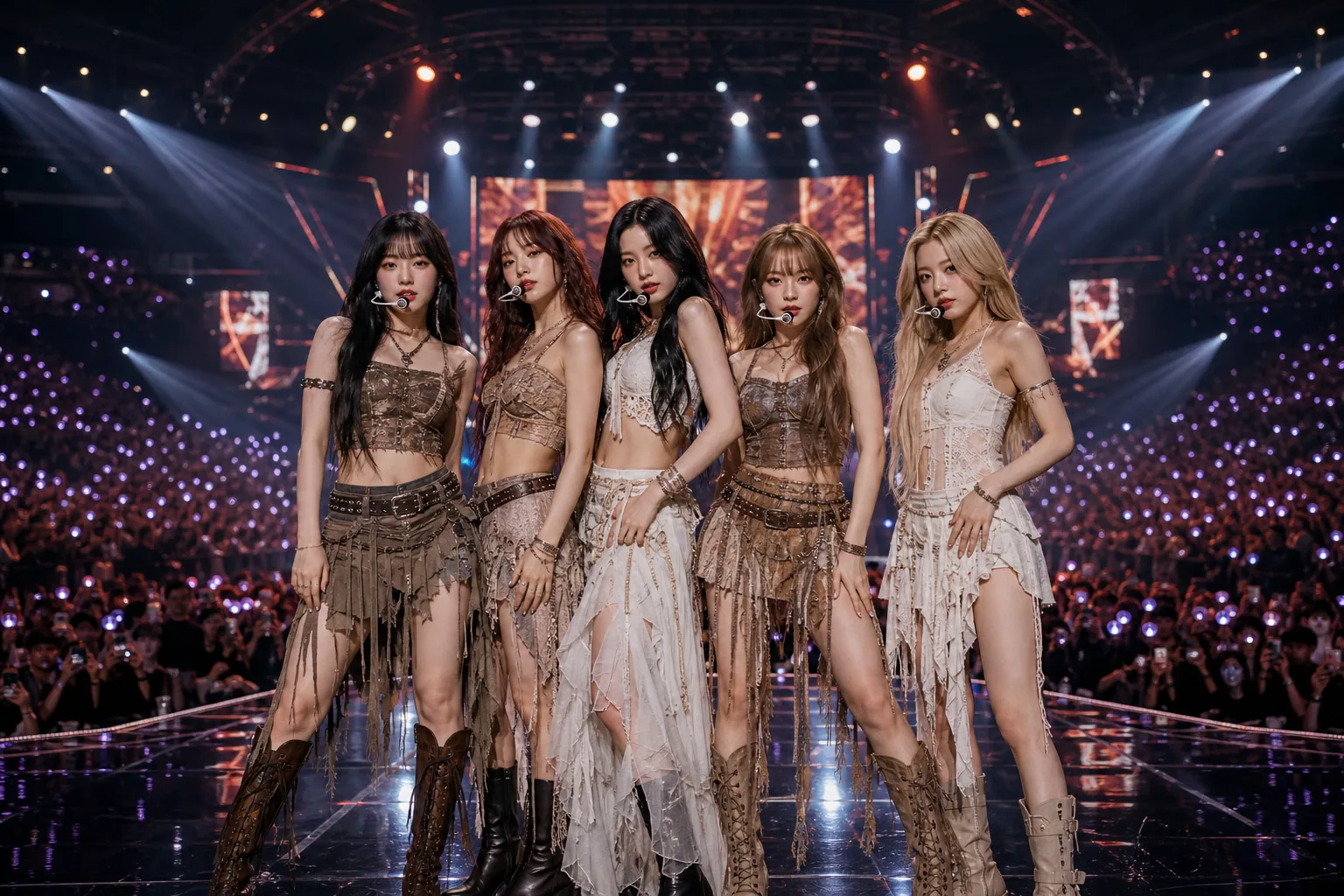
The next major international marker is Lollapalooza in Chicago, where i-dle are scheduled to appear on the main stage on July 31 local time. For a group promoting a Latin-pop summer single, a major U.S. festival stage offers a different kind of test from Korean television or arena concerts. It asks whether the song’s rhythm, visual directness, and live energy can connect with a broad crowd that may include casual listeners as well as committed fans.
Yuqi reflected at the showcase that seeing fans who did not know Korean sing along to Korean lyrics made her feel that music can connect people across language. Minnie also described the Lollapalooza appearance as an honor and said the group wanted to shape a strong stage using the energy received from fans on tour. Those comments underline the central tension of the comeback: We made looks inward to the group’s first love of music while also arriving at a moment when i-dle’s audience is increasingly global.
For listeners, the result is a comeback with several jobs to do at once. It has to serve as a summer single, extend i-dle’s identity as a performance group, carry a message of respect, and keep momentum moving toward a major festival stage. That is a heavy load for one title track, but it also reflects where established K-pop acts now stand: every release is both a song and a statement about what kind of global act they intend to be next.


Join the Conversation
Log in to share your thoughts and join the conversation with other fans.