
SEVENTEEN’s Dino Opens Up About Nearly Leaving the Group During a Difficult Period

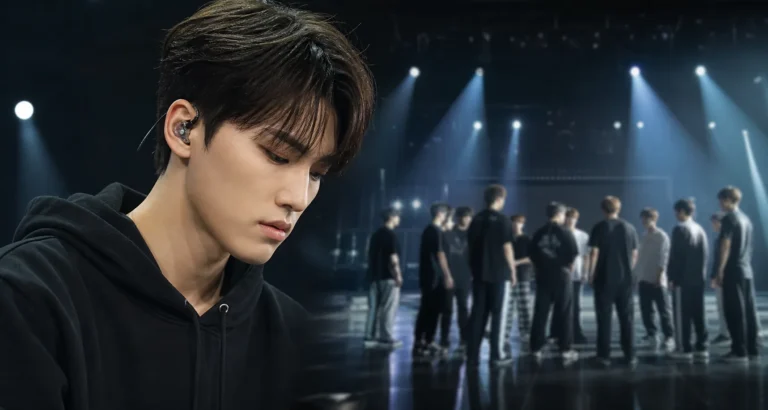
SEVENTEEN’s Dino has offered a rare look at a difficult chapter in his career, revealing that he once told the group’s older members he wanted to leave the team. The singer and dancer spoke candidly during an appearance on Ahn So Hee’s YouTube channel, where he reflected on the emotional weight of growing up inside one of K-pop’s most demanding group environments.
Dino, SEVENTEEN’s youngest member, said he moved to Seoul at 14 and has spent roughly half his life living and working closely with the other members. That long timeline is central to his story. SEVENTEEN’s public image is often built around teamwork, synchronized performance, and a self-producing identity, but Dino’s comments underline how much adjustment can happen behind the scenes when teenagers become professionals under constant pressure.
According to the account, the hardest period came when Dino was around 20. He described feeling worn down by the expectation that he should remain diligent, dependable, and positive as the maknae, or youngest member. In idol teams, that role can carry a specific emotional script: be bright, respectful, resilient, and adaptable, even while navigating the same fatigue and insecurity as everyone else.
That pressure eventually reached a breaking point. Dino said he gathered the older members and told them how he felt, including his intention to leave the group. Rather than framing the moment as a simple conflict, he described it as the result of feelings he had endured quietly for too long. For fans who have followed SEVENTEEN since their early years, the disclosure adds context to the invisible work required to keep a large team moving together.

A Turning Point Inside the Team
The conversation did not end with Dino walking away. Instead, it became a moment that pushed the members into more serious dialogue. Dino said the experience helped him and the others understand one another more deeply, suggesting that the crisis opened space for honesty that had been difficult to reach before.
That detail matters because SEVENTEEN’s structure is unusually complex. With 13 members divided across performance, vocal, and hip-hop units, the group depends on coordination both onstage and off. Differences in personality, working style, and communication can become amplified over years of shared schedules, dorm life, tours, rehearsals, and public scrutiny. Dino’s comments point to a familiar reality in long-running groups: endurance is not only about talent or popularity, but also about the ability to renegotiate relationships as members grow up.
For Dino, the issue was also personal identity. He said he wants to continue finding himself through both SEVENTEEN’s group work and his solo activities. That balance has become an increasingly important theme for veteran idol groups, whose members often remain committed to the team while also developing individual music, acting, variety, fashion, or production projects.
Dino also named fans as an important source of comfort. His comments suggest that interaction with CARATs helped him feel seen beyond the pressure of a role he had been expected to perform. In that sense, the story is not only about a moment of doubt, but about how public support, internal communication, and personal growth can intersect for an artist who entered the industry at a young age.

Why the Timing Stands Out
The reflection arrives as SEVENTEEN’s long-term future remains a major point of interest in K-pop. PLEDIS Entertainment recently announced that all 13 members renewed their contracts, a notable development for a group with a large lineup and a decade-long career. Contract renewals often invite speculation about whether members will pursue separate paths, but Dino’s story gives a more human dimension to the group’s continued unity.
His remarks do not erase the difficulty of the period he described. Instead, they show that staying together was not automatic. It required confrontation, listening, and a willingness to change how the members related to one another. For a team often praised for its performance precision, Dino’s account shifts attention to the emotional maintenance behind that consistency.
The disclosure may also resonate with fans because it avoids a polished success-story template. Dino did not present the past struggle as something instantly solved. He described a process: reaching a limit, speaking honestly, receiving understanding, and continuing to define himself within and beyond the group. That kind of candor can be especially meaningful in K-pop, where idols are often expected to keep hardship private until it can be packaged as inspiration.
As SEVENTEEN continues its next chapter, Dino’s comments offer a grounded reminder that longevity in an idol group is built through difficult conversations as much as public milestones. His decision to speak about almost leaving does not weaken the image of SEVENTEEN’s bond; it makes the bond easier to understand.



Join the Conversation
Log in to share your thoughts and join the conversation with other fans.