

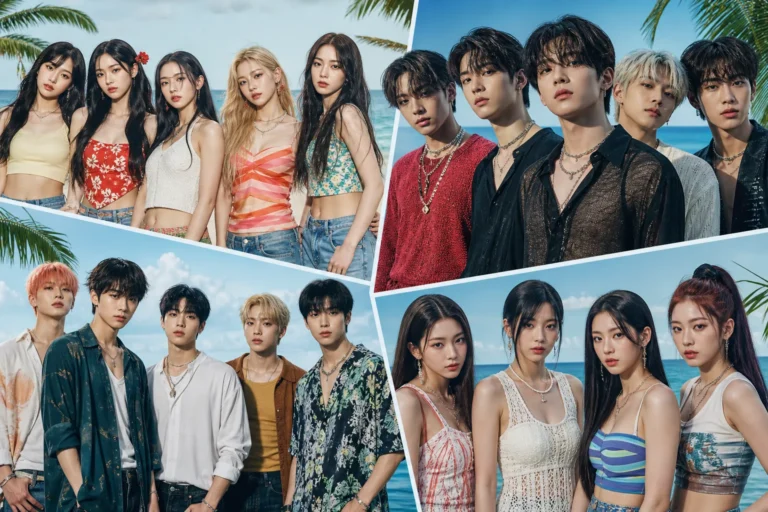
K-pop’s July calendar is no longer just a list of release dates. It has become a concentrated test of how artists, agencies, and fan communities turn summer attention into global momentum. In the first stretch of July 2026, i-dle, MONSTA X’s Kihyun, and TXT’s Yeonjun all released new projects within days of one another, while DAY6’s Young K is scheduled to follow later in the month with a full solo album.
The timing matters because these projects are not competing on the same terms. One is a veteran girl group’s latest reinvention, one is a long-awaited solo return, one is a high-profile idol’s individual statement, and one is a band vocalist and songwriter’s late-month entry into the same crowded season. Together, they show how broad K-pop’s summer playbook has become.
A crowded opening week
i-dle opened the run on July 6 with the mini-album We made, led by the single Gimme Dat Love. The release arrives at a point where the group is already established but still under pressure to keep evolving. For acts in their ninth year, a comeback is rarely judged only by whether it sounds catchy. It is also measured by whether the group can make its growth feel visible without losing the identity that built its audience.
Kihyun followed on July 7 with BORDERLINE, his first solo project in nearly four years. That gap gives the release a different emotional weight from a standard comeback cycle. For a MONSTA X member returning with new solo music, the story is partly about sound and partly about timing: how an artist reintroduces himself after a long pause while still carrying the expectations attached to a major group name.

Yeonjun then entered the frame on July 10 with NO LABELS: PART 02, a six-track project that includes Ice Cream, Vanilla, Baby Wassup, No More Disco, Fxxking Star, and Long Way Long Ride. His release highlights another increasingly important part of K-pop strategy: solo work that does not separate an idol from the group brand so much as expand the number of ways fans can engage with it.
Reinvention, authorship, and international positioning
For i-dle, the summer comeback has a notably international frame. The group is scheduled to appear at Lollapalooza Chicago on July 31, giving the new music a potential showcase beyond the usual comeback stages. The album’s credits also include producers and writers with experience across Latin and global pop markets, which points toward a broader sonic and commercial ambition.
That does not mean every July release is chasing the same audience in the same way. Kihyun’s BORDERLINE is built around a personal return, with a rock-inflected lead track and a concept centered on pushing past limits. Yeonjun’s project, meanwhile, emphasizes performance and individual color, including his choreography involvement for Ice Cream and lyric credits on two tracks. Those details matter because fans increasingly track not just appearances but authorship.
Young K’s upcoming YOUNGEST, scheduled for July 27 under Studio J, adds another texture to the month. DAY6’s audience is rooted in band performance, songwriting, and live credibility, so his release is likely to be assessed through a slightly different lens than idol-centered dance projects. By arriving late in July, the album can benefit from the same summer attention while avoiding a direct first-week collision with the earlier cluster.

Why summer has become a stress test
The compressed schedule also reveals how much promotional labor now happens outside official channels. Fanbases translate remarks, organize streaming goals, circulate short-form clips, and build countdown culture before a project has fully entered the charts. That activity can make a comeback feel enormous before sales, streaming, or radio data has caught up.
For labels, this creates both opportunity and risk. A summer release can travel quickly because students have more time, festivals create visual moments, and social platforms reward bright, high-energy concepts. But the same crowded calendar can also make attention harder to hold. A project that dominates one day can be pushed aside by another teaser, stage clip, or chart milestone within hours.
The real results will take time to read. Circle Chart data will offer early domestic indicators, while international streaming patterns and festival exposure will require a longer view. i-dle’s Lollapalooza appearance could become a major signal for North American growth, while Yeonjun’s solo reception may show how far TXT’s audience will follow individual member projects. Kihyun’s numbers will help gauge demand after a long solo gap, and Young K’s late-July release will test the durability of band-linked solo momentum.
What is already clear is that July’s comeback rush is not random noise. It is a snapshot of a K-pop market where veteran groups, solo idols, and band artists all use summer as a launchpad, but with different definitions of success. Some are seeking reinvention, some are rebuilding visibility, and others are sharpening a personal brand inside a larger group ecosystem.
That makes the month less a race with one obvious winner than a study in strategy. The first chart cycles will matter, but so will what happens after the opening week: whether songs keep circulating, whether stages create memorable moments, and whether global fans continue treating these releases as events rather than entries on a schedule.


Join the Conversation
Log in to share your thoughts and join the conversation with other fans.