
World Cup crowds supercharge Seoul convenience stores, with beer sales reportedly jumping up to 7x near Gwanghwamun

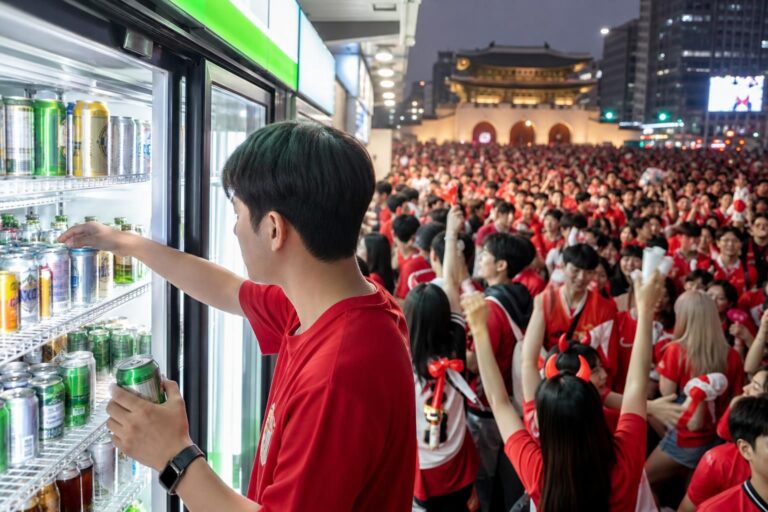
As World Cup matchday crowds packed into central Seoul, nearby convenience stores saw a sharp spike in demand—particularly for beer and snack staples, according to multiple local reports. One article highlighted that around Gwanghwamun, foot traffic from football fans translated into “World Cup special” sales, with beer purchases reportedly rising as much as sevenfold during peak periods.
Matchday foot traffic turns into instant retail lift
The reports point to a familiar pattern: when large gatherings form outside major venues and fan zones, nearby small-format retailers become the default pit stop. In the case of the Gwanghwamun area, crowds surged around the time of games, and convenience store shelves—especially those carrying drinks and ready-to-eat food—moved quickly.
For beer in particular, analysts and retailers attributed the jump to a combination of factors: synchronized viewing times, group purchasing (fans buy for multiple people), and the convenience of late-minute runs before and during matches. The reported figure—beer sales reaching up to 7x—underscores how quickly consumer behavior can change when entertainment and live sports collide with dense urban foot traffic.
Why beer and snacks see the biggest spikes
Convenience stores tend to benefit most when shopping needs are immediate and habitual. During major tournaments, fans typically look for items that are portable, easy to share, and aligned with viewing rituals. That makes beer a natural anchor product—purchased for cheering, socializing, and “watch-party” culture in streets, convenience-store seating areas, and nearby informal gatherings.
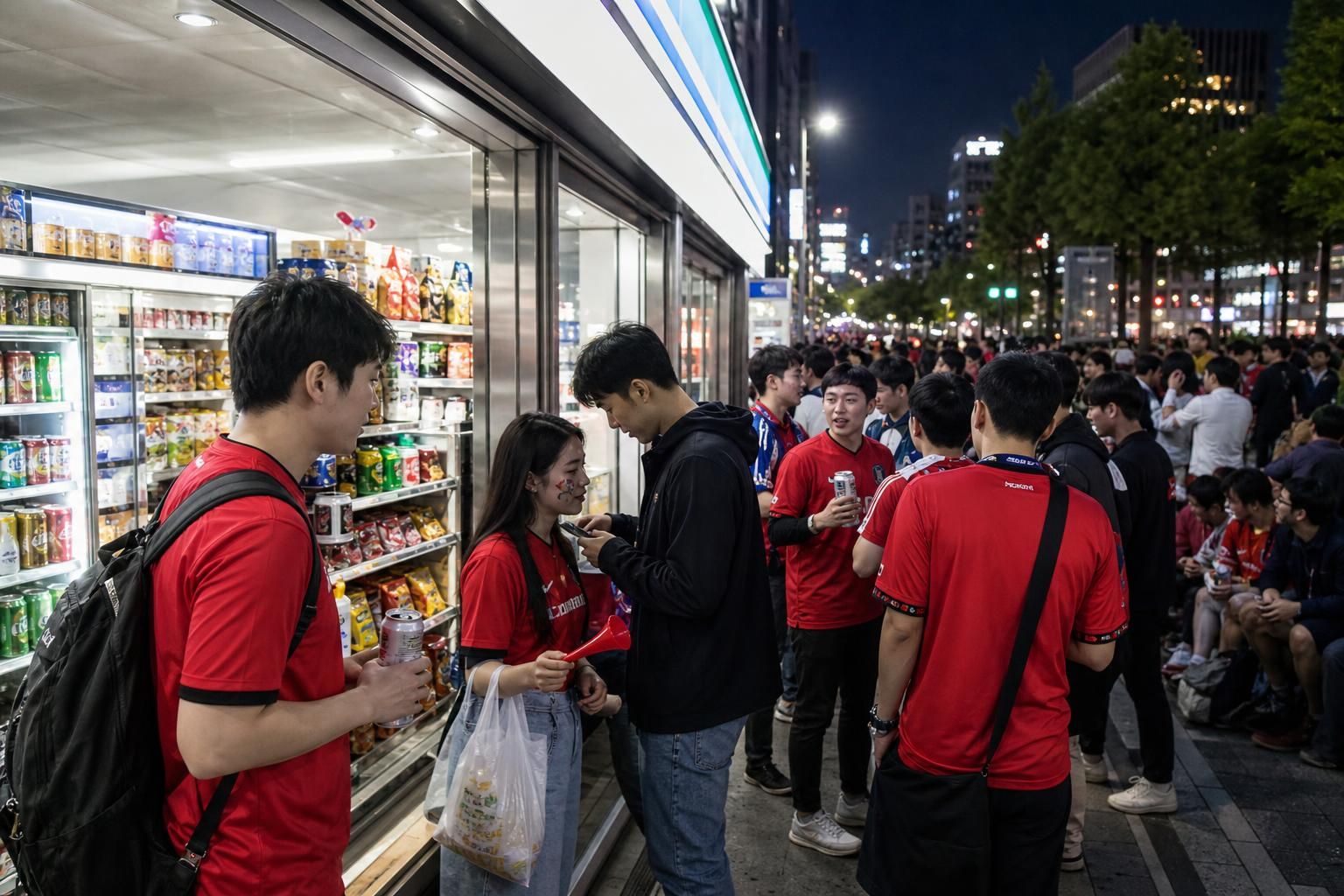
Snacks also tend to ride the same wave. Many World Cup consumers opt for “chicken-and-beer” style combinations, and reports noted that the boom extended beyond beverages to other category leaders commonly associated with matchday consumption. Together, these product categories can produce a compounding effect: increased footfall raises the chance of impulse purchases, and the presence of fans already looking for refreshments accelerates conversion for multiple items per transaction.
Competition among retailers intensifies on high-demand days
World Cup match schedules create short, high-pressure sales windows. Retailers near major crowd routes often adjust staffing and inventory planning to prevent stockouts. The reported sales leap suggests stores that prepared adequately had an advantage—ensuring fans could buy what they wanted without delay.
It also highlights how quickly matchday economics can shift in a matter of hours. In normal conditions, convenience stores operate on steady, routine demand. On event days, however, the store’s value proposition changes: it becomes part of the live match experience. That can raise the stakes for inventory accuracy, pricing consistency, and even queue management, especially in areas that become informal gathering points.
What the numbers signal for retailers and city planners
While these reports focus on Gwanghwamun, the broader implication is that convenience retail performance can function as a real-time proxy for crowd behavior. A sudden spike in beverage sales is not just a retail anecdote—it can indicate where foot traffic concentrates, when purchasing surges occur, and which neighborhoods effectively “capture” event spending.
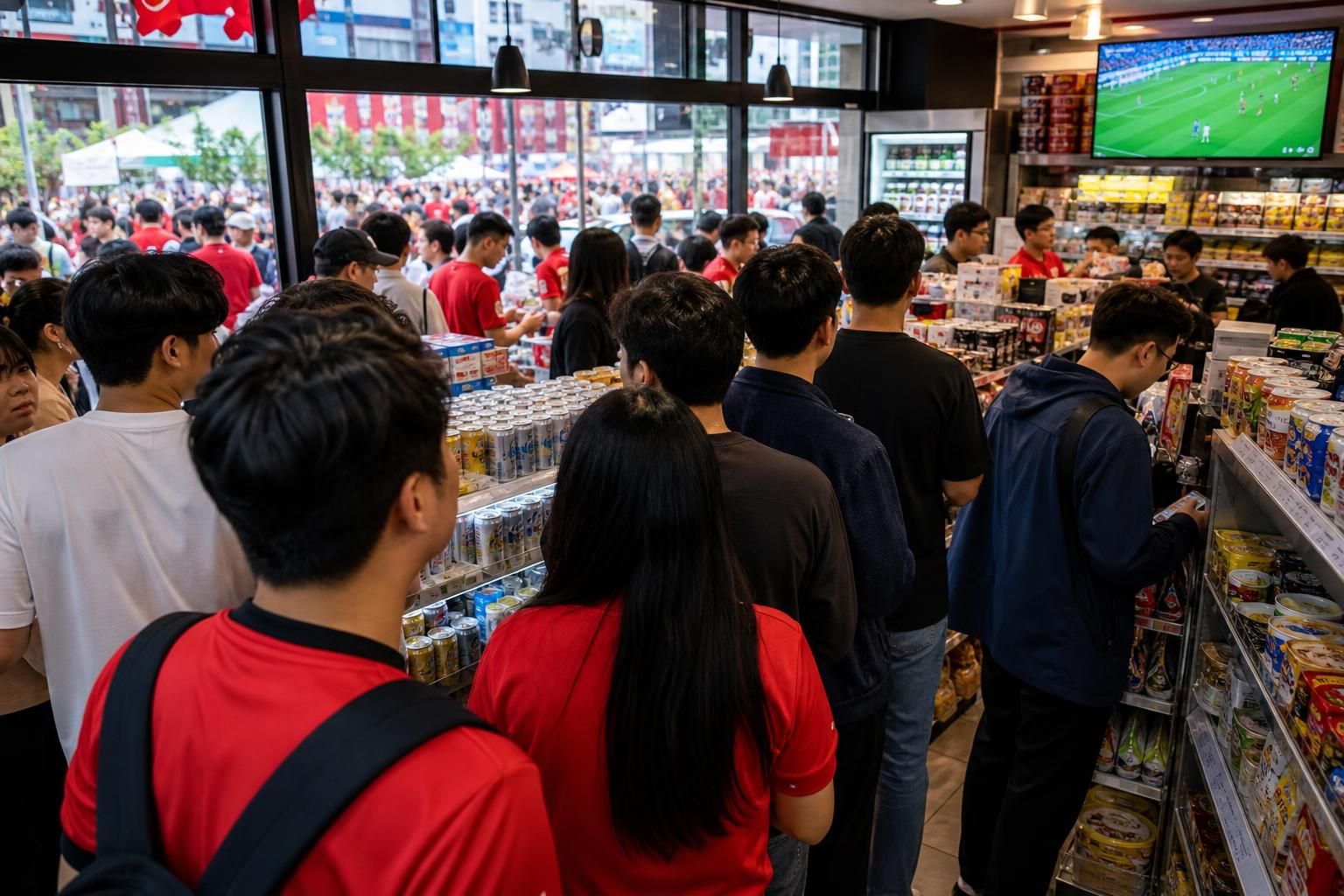
For businesses, the takeaway is operational: matchday planning matters. For the public sector, it can inform crowd management strategies and resource allocation, including sanitation, public messaging, and transport coordination—particularly around retail corridors likely to experience surges.
What to watch next during the tournament
With more matches to come, retailers will likely continue to refine forecasting and inventory distribution. If previous data points hold, the biggest demand spikes may cluster around games with high local interest or during late-evening kickoffs when fans are most likely to make last-minute purchases.
Shoppers, meanwhile, should expect continued “event-day” availability pressures. Retailers that manage stock effectively can reduce missed sales and customer frustration—while stores that fall short could face empty shelves at the worst possible moment.
For now, the reported jump in beer sales—up to seven times near Gwanghwamun—serves as a clear example of how quickly a sports spectacle can reshape everyday commerce in a dense city.
![[Jang Ki-ha, Yoon Gai] featured image - South Korean Singer Jang Ki-ha and Actress Yoon Gai Confirm Relationship as Rumors In...](https://d1ycet1ctov4dv.cloudfront.net/wp-content/uploads/2026/06/27150118/Jang-Ki-ha-Yoon-Gai-1782540077898-300x200.jpg)

![[celebrity court, dui case, korean comedian] featured image - South Korean Comedian Lee Jin-ho Faces Charges Over Alleged Ill...](https://d1ycet1ctov4dv.cloudfront.net/wp-content/uploads/2026/06/27100120/celebrity-court-dui-case-korean-comedian-1782522080050-300x200.jpg)
Join the Conversation
Log in to share your thoughts and join the conversation with other fans.