

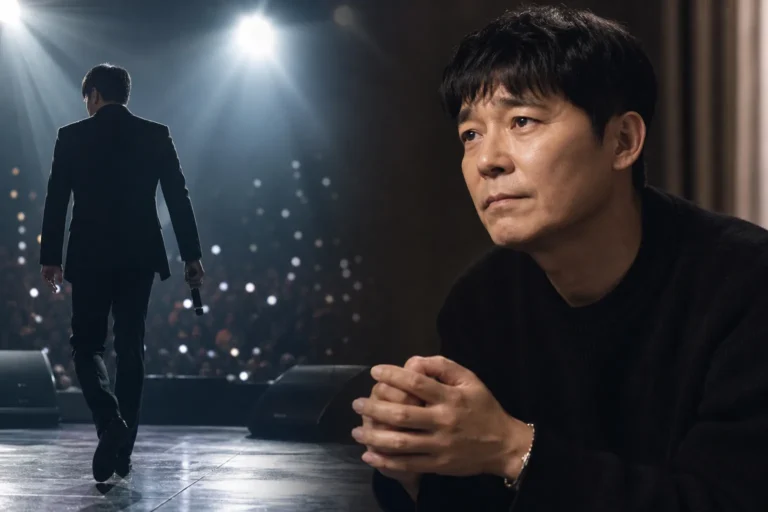
Lim Chang Jung is set to revisit one of the most complicated chapters of his long entertainment career, describing a period when chart success and public criticism arrived at the same time. The singer and actor is scheduled to appear on TV Chosun’s Golden Friday, where he will perform and speak about the pressure that followed some of his best-known hits.
According to the report, the July 17 broadcast opens with Lim performing “A Glass of Soju”, a signature song closely associated with his vocal identity. The program’s cast reportedly praised him as an artist with a style difficult to separate from his own name, a description that reflects his unusual position in Korean popular music: commercially familiar, vocally demanding, and often hard for other singers to reinterpret.
The episode also turns toward the technical side of his catalog. Lim’s songs are known for high notes, extended phrasing, and emotional crescendos that can expose a singer’s limits in live performance. On the show, he is expected to explain that attempting those songs without enough preparation can create problems for performers, from vocal strain to public criticism when the result falls short of audience expectations.
That context matters because another performer on the broadcast, Son Bin Ah, chooses to take on Lim’s award-winning song “Again.” Rather than reproducing the original’s trot-influenced energy, Son reportedly shapes the song closer to a ballad. The choice underlines how Lim’s work can be both attractive and intimidating to singers: the melodies are familiar, but the physical and emotional demands are not easy to hide.

A Career Peak With a Difficult Backstory
The most striking part of Lim’s appearance is his account of the period surrounding the success of “Again” and “Marry Me.” The songs helped place him at a major commercial high point, with reports noting that he won a Daesang during that era. From the outside, it looked like a clean career summit: hit songs, public recognition, and a place near the center of mainstream Korean music.
Lim’s recollection presents a more complicated picture. He says that the same period brought some of the harshest criticism he had experienced, describing it as a time when he felt he received a lifetime’s worth of insults. The comment is notable because it pushes against the common assumption that awards and chart performance automatically translate into personal satisfaction for artists.
He also recalls a painful live-performance memory, saying that audience members left while he was singing. The detail gives the story a sharper edge than a general complaint about criticism. For a performer whose reputation rests heavily on vocal delivery and emotional connection, seeing listeners walk out would have been a direct and public form of rejection, especially during a period when expectations were unusually high.
Why the Story Resonates
Lim’s comments fit into a broader conversation about how Korean entertainers are evaluated when success becomes highly visible. A hit can bring larger stages and more attention, but it can also narrow the margin for error. Songs that become cultural calling cards are repeatedly scrutinized, and the artists behind them can become tied to performances that fans expect to sound powerful every time.

The story also shows why legacy artists often carry complicated memories of their peak years. For audiences, a peak is usually remembered through records, awards, and familiar choruses. For performers, the same period can include exhaustion, public judgment, and moments that are difficult to revisit even after the career achievement has been secured.
Lim has moved across music, acting, and television for decades, which gives his remarks added weight. He is not presenting the experience as a simple setback from an untested artist, but as a memory from someone who had already built a recognizable place in Korean entertainment. That distinction makes the walkout anecdote less about one night and more about the emotional cost that can sit behind a successful public image.
The upcoming Golden Friday episode appears designed to balance performance with reflection: Lim sings the songs that made him famous while explaining why those same songs are difficult to carry. For fans familiar with the polished versions of “A Glass of Soju,” “Again,” and “Marry Me,” the broadcast may offer a reminder that a career-defining catalog can be both a source of pride and a record of pressure.
As the episode airs, the focus will likely be less on relitigating old criticism than on understanding how Lim Chang Jung looks back at it now. His account adds a human frame to a familiar entertainment pattern: public success can be real, even when the person experiencing it remembers the moment as painful.



Join the Conversation
Log in to share your thoughts and join the conversation with other fans.
This was a surprisingly good read ????topic??has more going on than the quick headline suggests.