
ENHYPEN’s Jake Goes Viral on Weverse After Typo Sparks Support—and Backlash


ENHYPEN member Jake has sparked a wave of reactions online after a typo on Weverse went viral, with fans framing the mistake as endearing rather than serious. In a separate, unrelated incident also drawing attention on social platforms, Super Junior’s Kim Heechul faced backlash over remarks about partners “kneeling” in relationships. Together, the two stories highlight how quickly social media posts and offhand celebrity comments can turn into online flashpoints.
Jake’s Weverse typo: a “contact” message becomes a meme
According to Koreaboo, the viral moment centered on a message Jake posted on Weverse after arriving in Korea. In the note, he said he couldn’t reach someone, but misspelled a key term—writing a phrase containing 열락 instead of the correct spelling 연락 (both related to “contacting”). The post included an apology: “I’ve finally arrived in Korea. I couldn’t contact you, I’m sorry.”
The error was immediately noticed by fans, who treated it as a familiar part of Jake’s online personality. Koreaboo reports that commenters pointed to his history of spelling mistakes, with some joking that even typos would not change their support.
Fans call it “cute,” while others watch for patterns
Reactions largely leaned positive, with social media users describing the typo as “adorable” and “funny,” and some comparing the moment to familiar Korean drama-style humor. In one example cited by Koreaboo, a fan appeared to pledge loyalty in spite of typos, while another remark suggested Jake’s Korean skills may have shifted after time abroad—again framing the mistake as harmless and relatable.
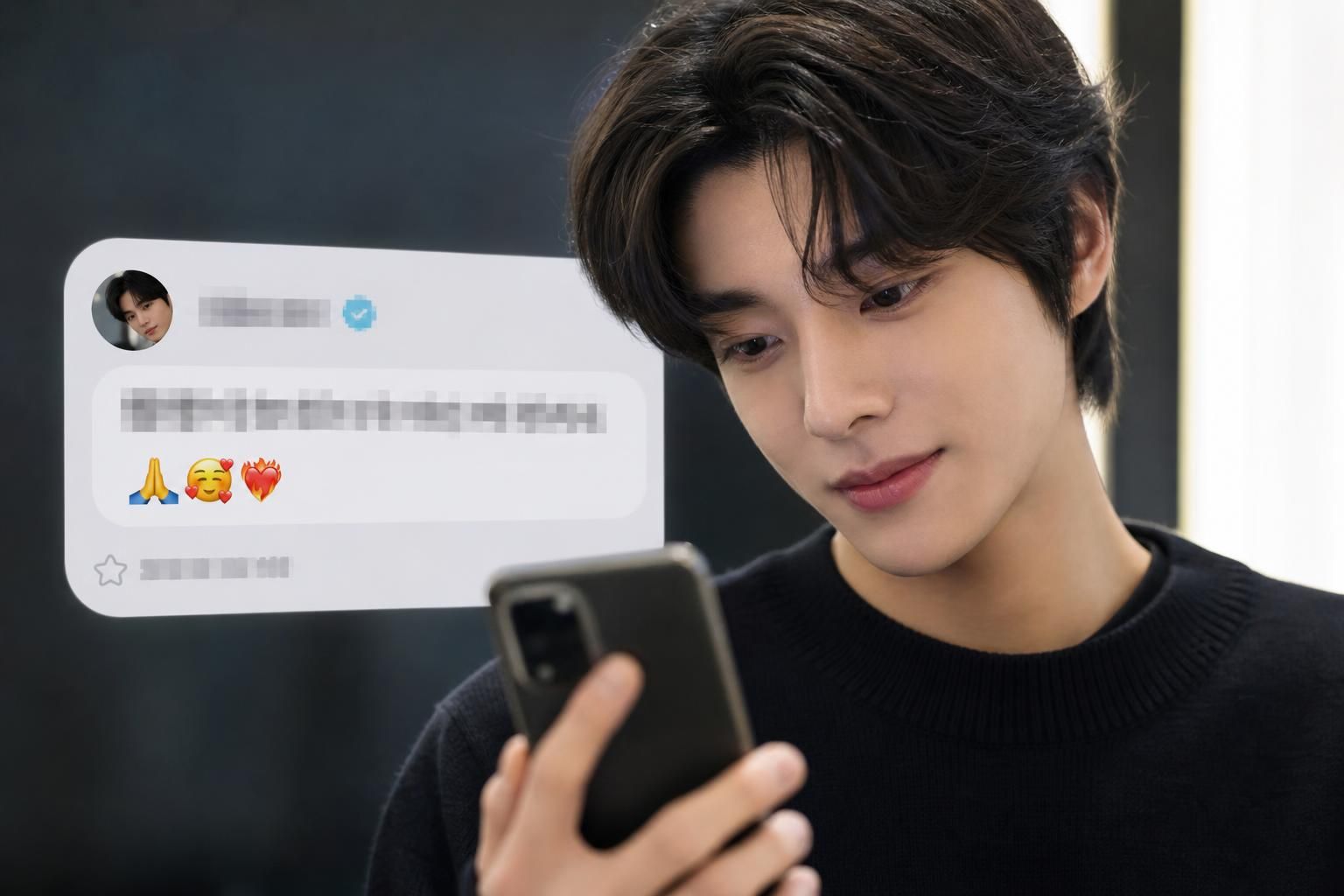
That said, virality around language mistakes is not always purely celebratory. While Jake’s typo has been treated as charming, the format of social media engagement—screenshots, rapid reposting, and instant commentary—can also shift minor issues into broader “persona” narratives. For many K-pop followers, spelling errors act as informal evidence of authenticity: they are seen as signs that idols are communicating directly rather than producing polished corporate copy.
Meanwhile, Kim Heechul faces controversy over “kneeling” remarks
In a separate trending story, Kim Heechul became the subject of debate after a remark made during a new dating reality show appearance. As described by Koreaboo, the incident occurred when participants took a test to determine their dating styles, and Heechul’s results were interpreted as indicating an assertive or dominant pattern.
During discussion, Heechul was asked whether he had ever told a girlfriend to beg or kneel. He reportedly denied forcing anyone to do so directly, but then added: “Doesn’t everyone tell their partner to kneel at least once when they are dating?”
Following the response, the female panel members reacted with shock, and online criticism followed. Koreaboo notes that some viewers interpreted the comment as normalizing degrading or coercive dynamics in relationships, while others framed it as an offhand joke that went too far. In the comment section excerpts included in the report, critics used harsh language, while defenders (not fully detailed in the provided summary) would typically argue that celebrity banter does not always reflect literal intentions.
Why both stories spread: intimacy, screenshots, and cultural signals
Although Jake’s typo and Heechul’s remarks are unrelated, they share a common mechanism: the rapid transformation of everyday online content into public debate. Weverse messages and variety show clips are “designed” for engagement, but they also create low-friction moments for audiences to extract meaning, context, and intent.
Jake’s error became an instant bonding tool—proof of imperfect human communication. Heechul’s comment became an instant interpretive battleground—proof, to some viewers, of an outdated or insensitive attitude toward power dynamics. Together, they show how K-pop and celebrity media operate as real-time conversation platforms, where a single line can trigger either affection or controversy.
What to watch next
For Jake, the likely next stage is continued fan amplification: more screenshots, quick edits, and continued discussion that keeps the typo circulating beyond its original post. Weverse’s conversational environment makes it easy for subsequent messages to either reinforce the “cute mistake” narrative or reset attention if Jake posts more polished updates.
For Heechul, the next phase depends on how producers, the show’s official channels, or the celebrity himself address the controversy. In similar cases, public responses typically fall into one of three buckets: clarification of intent, acknowledgment of viewer concerns, or silence followed by delayed sentiment shifts. Either way, the online reaction curve is usually fast at first—then spreads into longer debate about respect, consent, and the boundaries of “jokes” in public entertainment.

Join the Conversation
Log in to share your thoughts and join the conversation with other fans.