

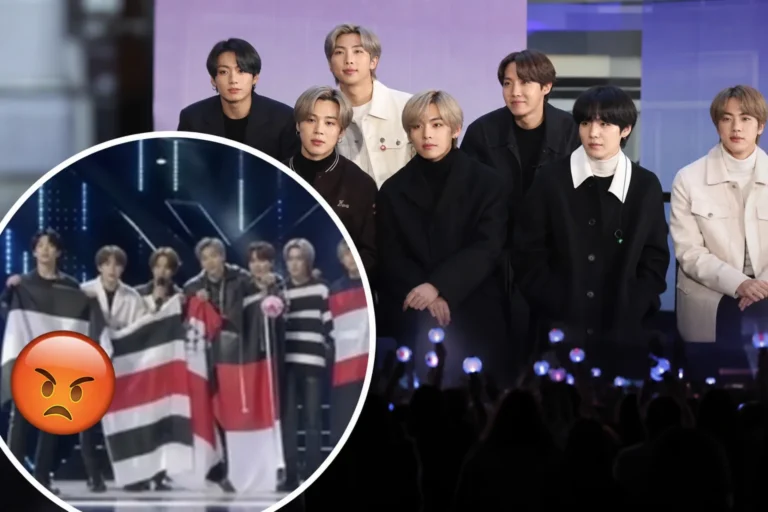
A past BTS television appearance has become the subject of renewed debate after a short clip circulated widely online, drawing attention to a flag visible on a cake prop in the broadcast setting. The resurfaced moment prompted sharp criticism from some viewers, while other fans argued that the clip was being removed from its original context and unfairly used to assign responsibility to the group.
The controversy centers on footage from an older appearance on the K-pop program After School Club. In the clip, a decorated cake can be seen near the members, and viewers recently focused on the presence of an Israeli flag among the visual elements. The clip spread across social platforms on July 30, 2026, at a time when many entertainment audiences are closely scrutinizing public figures, brands, and symbolic references connected to the war in Gaza.
Within hours, posts criticizing BTS gained traction, with some users framing the footage as part of a broader argument about whether major K-pop acts are held accountable for associations or imagery that fans find politically sensitive. The criticism was not limited to the prop itself; it also reflected a larger pattern of online debate around celebrity visibility, brand partnerships, and the pressure on global artists to respond to geopolitical issues.
At the same time, many supporters pushed back against the interpretation that BTS personally chose or endorsed the cake. They noted that broadcast sets often include items arranged by production staff, fan projects, or program organizers, and argued that performers may have little control over every object placed in the background during a scheduled appearance. For those fans, the key issue was whether an old visual detail should be treated as evidence of the artists’ own position.

Why An Older Clip Became A New Flashpoint
The renewed attention shows how older K-pop media can rapidly gain new meaning when viewed through current events. A moment that may have passed with little public comment years ago can re-enter circulation under a different political and cultural climate, especially when screenshots and short clips are shared without full program context. In this case, the flag became a focal point because viewers connected it to present-day debates over Gaza, corporate ties, and celebrity responsibility.
BTS remains one of the most visible Korean acts in the world, which means even archival material involving the group can travel far beyond the original fandom space. Their global profile also means that criticism often becomes amplified quickly, whether the issue involves music releases, endorsements, awards, public appearances, or older broadcast footage. The latest discussion fits into a wider environment in which fans and critics alike revisit past content to reassess public figures through the lens of current standards.
The dispute also highlights a familiar divide in K-pop discourse: whether idols should be judged primarily for their direct actions and statements, or whether they should also be held responsible for production choices and adjacent imagery around them. Critics argue that symbols matter, particularly when attached to highly influential artists. Defenders counter that accountability should be based on verifiable decisions rather than assumptions about props, stage design, or materials prepared by others.
Fan Culture And The Speed Of Online Judgment
Because the clip spread through short social media posts, much of the discussion developed before a shared factual baseline had formed. Some users treated the footage as self-explanatory, while others sought to identify the date, setting, and likely origin of the cake. That pattern is common in K-pop controversies, where translation, archive research, and fandom documentation often unfold in real time alongside emotional reactions.

The debate has also become part of a broader conversation about how K-pop fandoms handle political issues. International fan communities increasingly expect artists, agencies, and brand partners to be aware of global sensitivities. However, those expectations often collide with the practical reality that many public appearances involve multiple layers of planning, from broadcasters and stylists to sponsors, fan gifts, and production teams.
No formal statement from BTS or their representatives was included in the available reporting on the resurfaced clip. Without additional clarification, the public discussion remains centered on interpretation: what the visible prop means, who was responsible for its presence, and how much weight should be placed on an older broadcast moment in judging the group today.
For now, the incident underscores how quickly archival entertainment content can become part of a present-day controversy. It also shows the growing intensity of scrutiny facing K-pop’s biggest acts, whose past and present media appearances are constantly reexamined by audiences across different political, cultural, and regional contexts.



Join the Conversation
Log in to share your thoughts and join the conversation with other fans.