
CORTIS Fanbase Statement Intensifies Debate Over Melon Chart Influence


A statement from a Chinese fanbase for HYBE rookie boy group CORTIS has turned into a wider argument about the reliability of Korean music charts, after fans described spending large sums on albums and streaming the group’s music through the night to help lift its public profile.
The post was originally framed as a defense of the broader Chinese fandom after two foreign women were reportedly arrested in connection with trespassing at the group’s residence. The fanbase sought to distance ordinary supporters from the alleged actions of two individuals, arguing that a whole national fandom should not be judged by a criminal case involving a small number of people.
However, the line that drew the most attention was not the denial of collective responsibility. It was the fanbase’s own description of organized support: buying albums with their own money, keeping streaming efforts active overnight, and working to help CORTIS reach bigger stages. For many Korean online commenters, that wording sounded less like routine fandom enthusiasm and more like a blunt description of the practices that can distort chart performance.
Why The Statement Spread
CORTIS is still early in its career, which makes every visible marker of momentum important. Chart entries, album numbers, and social-media attention are not only fan achievements; they can influence public perception, media coverage, brand interest, and the way a group is positioned by its agency. When a rookie act appears to rise quickly, observers often debate whether the growth reflects broad public demand or concentrated fandom activity.
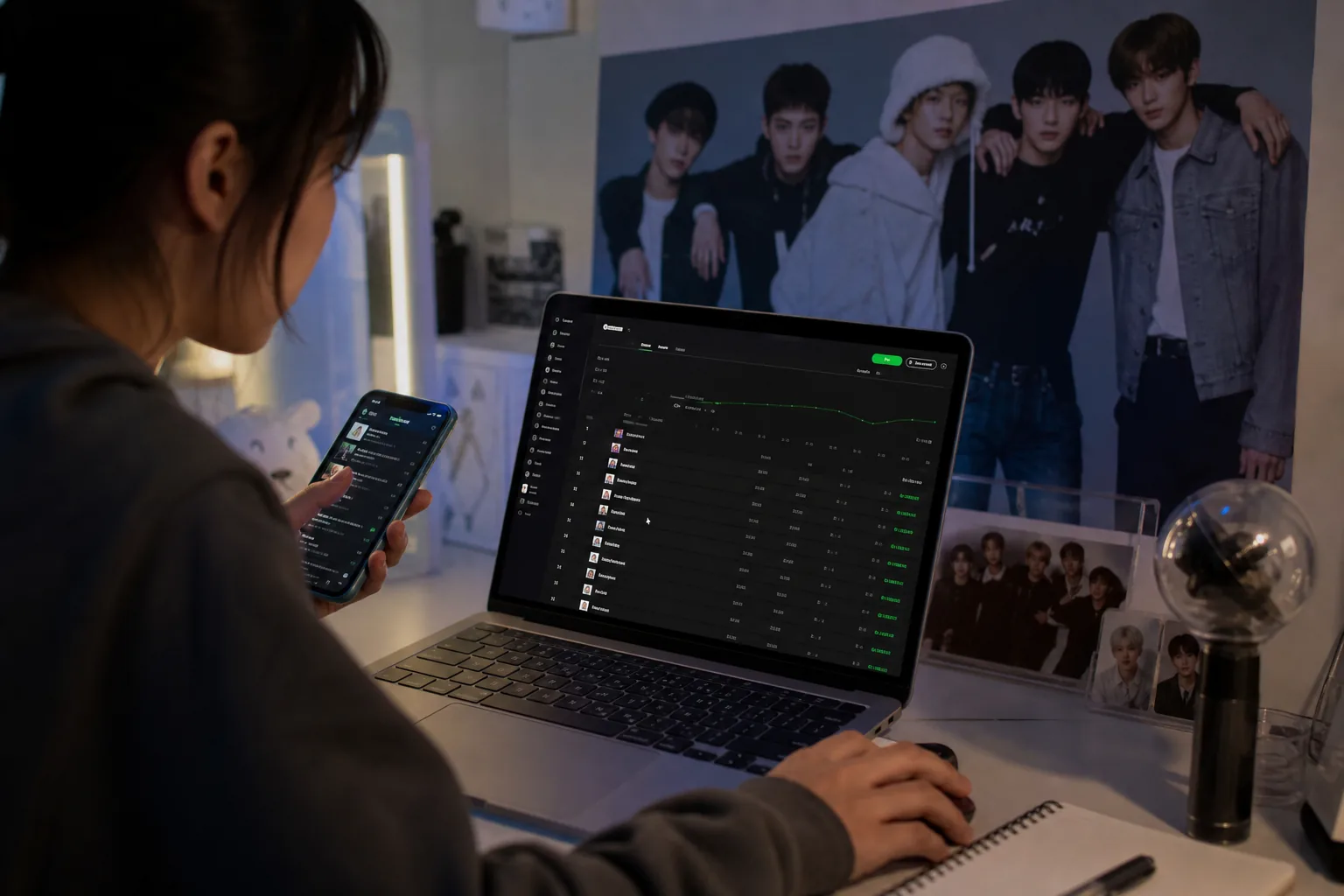
That tension explains why the fanbase statement spread so quickly. In K-pop, organized streaming and purchasing are common parts of fandom culture, and many fan communities treat them as legitimate support. Yet Korean digital charts such as Melon are also viewed as measures of what listeners inside the domestic market are actually playing. When overseas groups of fans coordinate around those rankings, the boundary between popularity and mobilization becomes harder to read.
The reaction around CORTIS was sharpened by the recent trespassing controversy. The fanbase’s statement appeared to be an attempt to condemn illegal behavior while defending the wider fandom from discrimination or blame. Instead, the admission of heavy organized support gave critics a different target and widened the conversation from fan conduct at a residence to the integrity of music rankings.
A Broader Chart Debate
The criticism has not remained limited to one country or one artist. Online responses have pointed to overseas fanbases across China, Japan, Southeast Asia, and other markets, arguing that coordinated activity by international fans has affected Korean chart rankings for years. Others have pushed back by noting that mass streaming, bulk buying, viral marketing, and fandom-driven chart campaigns are not unique to CORTIS or HYBE.
That broader point matters because the controversy reflects a structural issue in modern K-pop. Groups now build international audiences from debut, and global fandoms often move faster and more aggressively than casual domestic listeners. A song can gain visibility through synchronized fan labor before the general public has meaningfully engaged with it. To supporters, this is proof of dedication. To critics, it can make chart positions feel less organic.
Melon and other Korean platforms have long faced pressure to represent real listening behavior while filtering out excessive or artificial patterns. The challenge is that fan enthusiasm and manipulation can look similar from the outside when both involve repeated streaming, organized schedules, and large spending. That ambiguity leaves room for arguments whenever a newer or less familiar act rises unexpectedly.
For CORTIS, the immediate effect is another round of scrutiny at a sensitive stage of promotion. The group is being discussed not only for its music and debut trajectory but also for the actions and statements of its fans. That can be damaging for a rookie team, especially when public conversation starts to attach chart questions to the group’s name before its identity has fully settled.
At the same time, the controversy shows how much responsibility now sits outside the artists themselves. Fanbases can help build careers, but their public statements, campaigns, and conflicts can also shape the narrative around an act. In this case, a message intended to defend ordinary fans from being grouped with alleged trespassers ended up fueling a different dispute about whether organized support is overwhelming Korean chart systems.
The debate is unlikely to end with CORTIS. As K-pop becomes more global and fan communities become more coordinated, chart rankings will keep carrying two meanings at once: a sign of audience interest and a record of organized fandom power. The latest backlash shows that the industry has not yet found a stable way to separate those forces in the public eye.



Join the Conversation
Log in to share your thoughts and join the conversation with other fans.