


KATSEYE’s latest promotional rollout has become the center of a fast-moving K-pop debate after the group revealed the tracklist for its upcoming EP WILD. The project is scheduled for release on August 14, but attention quickly shifted from the music itself to the design of the announcement graphic, which some fans said looked too close to the visual direction used for BTS’s ARIRANG tracklist earlier this year.
The discussion began after KATSEYE shared a six-song tracklist for WILD, including the previously introduced singles “Animal” and “Pinky Up.” The image used a restrained layout built around black lettering, red strip-like shapes, a textured background, and a clean sans-serif type treatment. For many viewers, those elements immediately recalled the BTS ARIRANG tracklist unveiled in March, which also leaned on bold red tape-like blocks, black text, and a minimalist presentation.
A Design Debate Moves Faster Than the Music
Online reaction grew quickly because both acts sit within the wider HYBE ecosystem, making the comparison more sensitive than a routine similarity between unrelated releases. Fans who criticized the new graphic argued that the overlap was not limited to one color or one design choice. Their concern centered on the combined effect: the red-and-black palette, the strip motif, the simple background, and the clean type all appearing together in another major release cycle only months after BTS used a similar visual language.
That does not automatically prove copying. Promotional graphics across pop music often draw from shared design trends, and tape-inspired layouts, monochrome type, and textured backgrounds are common tools in album marketing. Still, K-pop fandoms tend to follow teasers, logos, styling, fonts, and rollout schedules with unusual intensity. When a visual idea becomes closely associated with a major group, even a partial resemblance can trigger a larger debate about originality, internal creative review, and whether a label is protecting each artist’s identity.
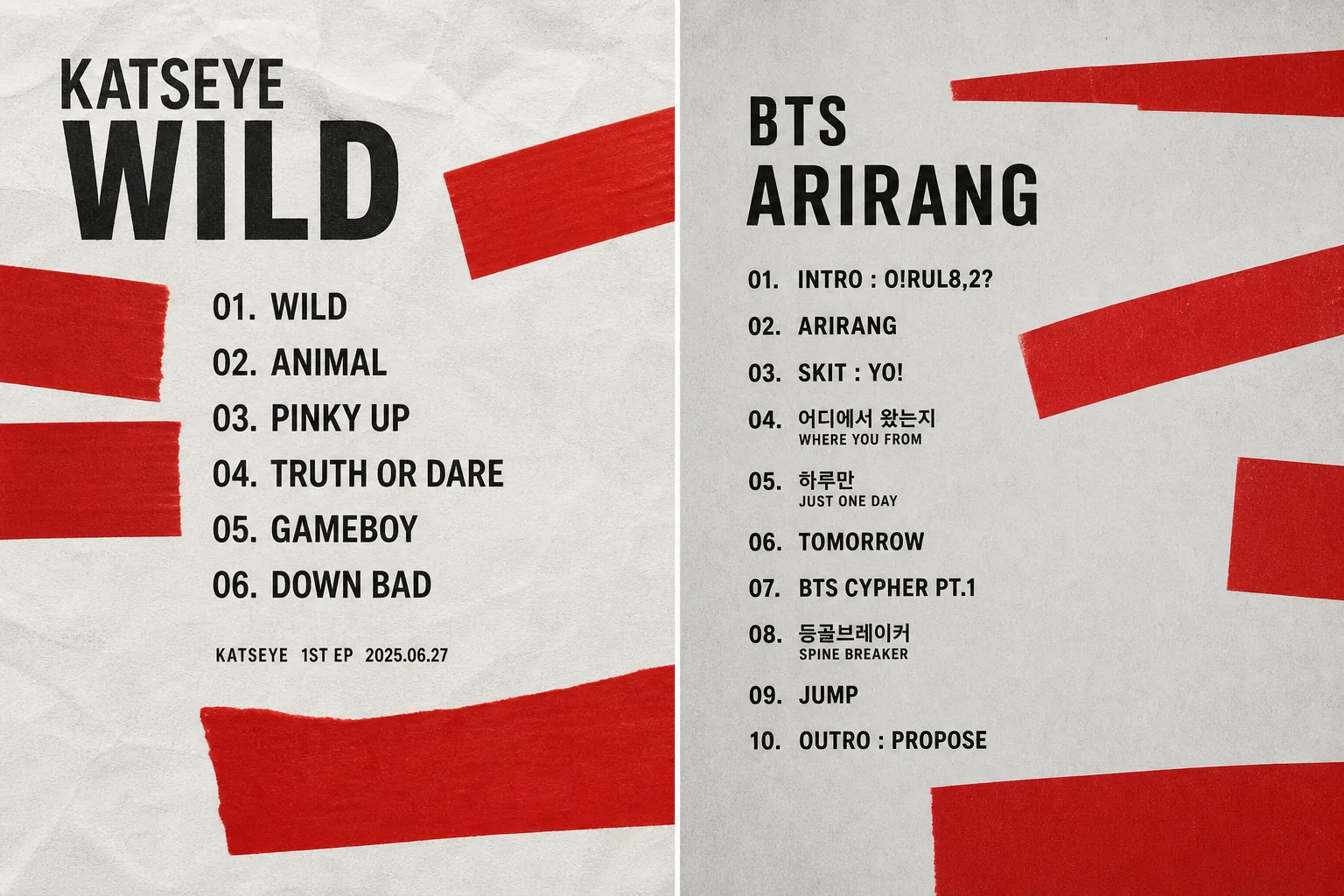
The timing also matters. BTS’s ARIRANG rollout was treated by fans as a major creative statement, with its tracklist image becoming part of the comeback’s broader identity. Because KATSEYE’s WILD announcement arrived less than half a year later, critics framed the resemblance as a sign that the newer campaign had moved too close to a design already connected to BTS. Others pushed back, noting that a tracklist teaser is only one promotional asset and that audiences should wait for the EP’s full concept before drawing firm conclusions.
KATSEYE’s WILD Rollout Faces Extra Scrutiny
The controversy comes at a high-visibility moment for KATSEYE, whose global positioning has made each new release part of a broader conversation about how K-pop systems, Western pop markets, and multilingual fandoms now overlap. A tracklist reveal would normally function as a straightforward checkpoint before release day, giving listeners song titles and sparking speculation about sound. In this case, the teaser became a referendum on visual strategy before the music had a chance to take center stage.
Some fans also focused on individual song titles from the WILD list, especially the third track, “Hootie Frutti,” which drew separate comments for its unusual wording. That side conversation added to the momentum around the announcement, but the larger dispute remained the perceived similarity between KATSEYE’s graphic and BTS’s earlier ARIRANG presentation.
For HYBE, the debate highlights the risks of managing multiple globally visible artists whose audiences are highly fluent in promotional detail. Shared corporate infrastructure can bring resources, reach, and production scale, but it also raises expectations that each team will maintain a clear creative lane. When two campaigns appear visually connected without an explicit conceptual bridge, fans may interpret the overlap as carelessness rather than coincidence.
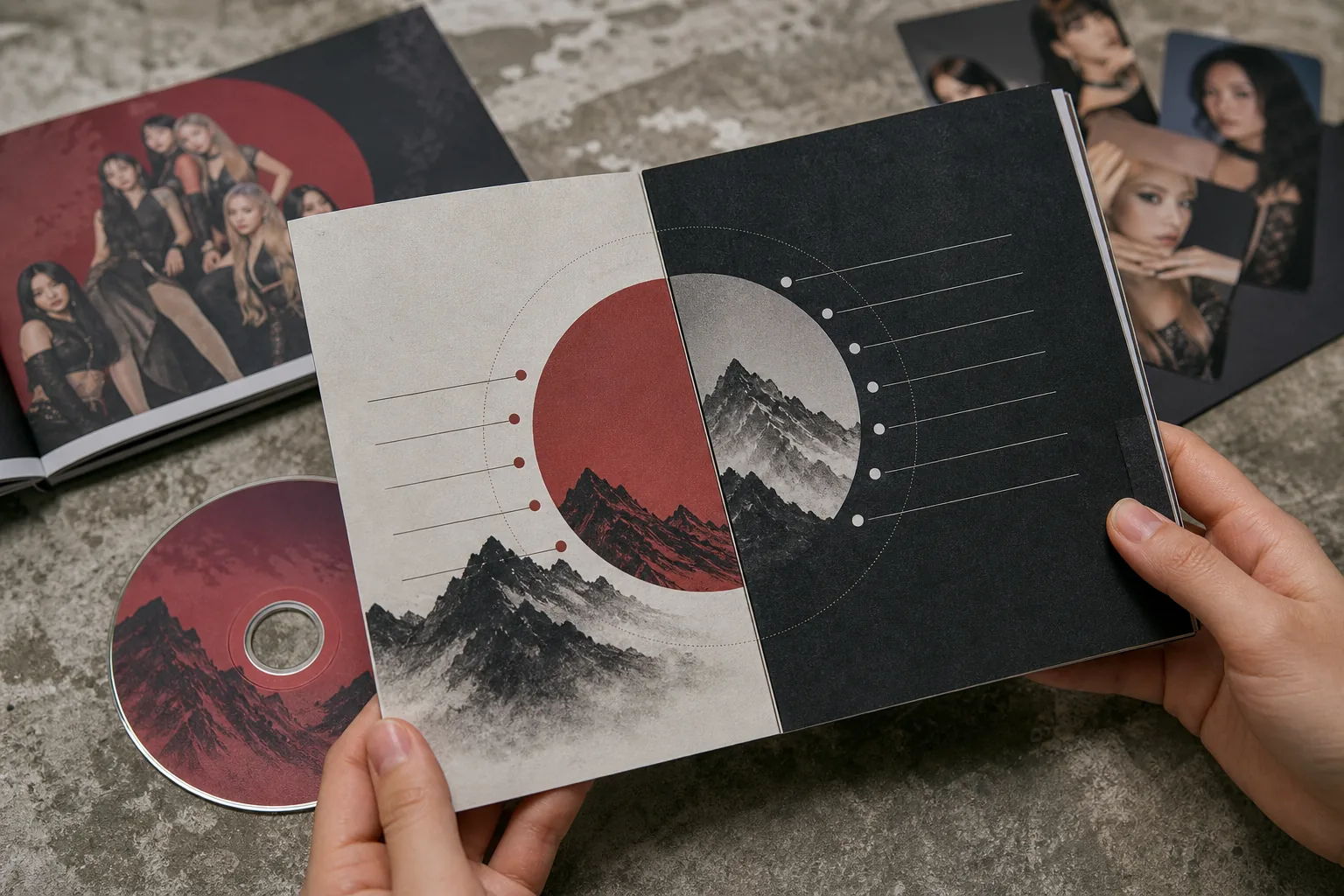
The outcome may depend on how the rest of the WILD campaign unfolds. If later teasers establish a distinct world for KATSEYE’s EP, the tracklist dispute may fade into the usual pre-release noise. If the rollout continues to echo imagery fans associate with BTS, the criticism could become a more persistent challenge for the group and its creative team.
For now, the situation shows how quickly a K-pop release can become a design conversation as much as a music conversation. KATSEYE still has time to redirect attention toward the songs, performances, and concept behind WILD, but the first impression of this tracklist reveal has already placed the campaign under a sharper spotlight than expected.

Join the Conversation
Log in to share your thoughts and join the conversation with other fans.