
SBS Drama Kim Manager Draws 21.6 Percent Rating as AI-Made Action Sequence Sparks Industry Attention

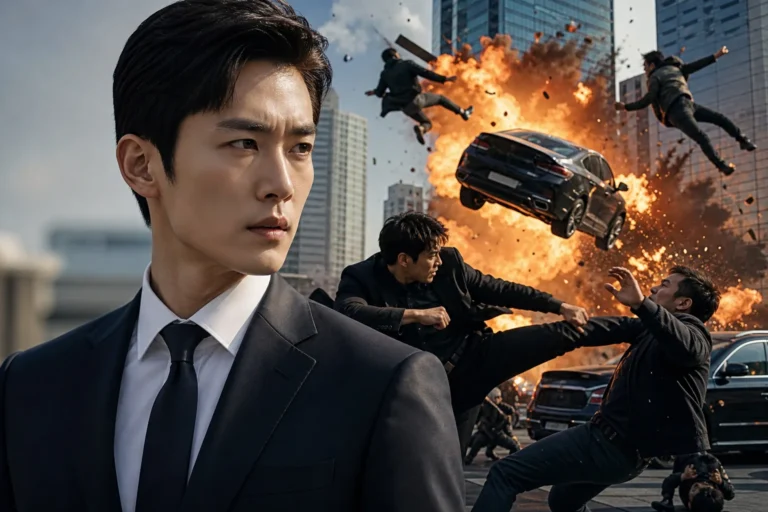
SBS’s Friday-Saturday drama Kim Manager has quickly turned into one of the most closely watched Korean television stories of the week, combining strong domestic ratings, overseas streaming momentum, and a production experiment that has opened a wider conversation about artificial intelligence in K-drama.
According to Korean reports, the drama reached a 21.6 percent rating after only four episodes. That pace is notable for SBS’s Friday-Saturday lineup, where the series is being framed as one of the fastest recent dramas to cross the 20 percent threshold. The numbers have helped shift Kim Manager from a buzzy action title into a broader industry case study about what kinds of stories can still command large real-time television audiences.
The drama stars So Ji Sub as Kim Manager, an apparently ordinary office worker whose life is upended when his daughter disappears. Based on a popular webtoon, the series follows him as he is forced to confront a dangerous past that he had tried to leave behind. Reports have pointed to So’s return to SBS drama after more than a decade as one reason early interest was high, but the show’s brisk plotting and action-heavy structure appear to be sustaining that attention.
A Hit Built On Speed And Stakes
Part of the appeal lies in the drama’s compact format. With a 10-episode run, Kim Manager has little room for filler, and Korean coverage has highlighted its fast-moving revenge narrative, father-daughter stakes, and direct emotional hook. The story’s central conflict gives the action a personal motive rather than presenting it only as spectacle, which helps explain why the series has resonated beyond viewers looking for set pieces.
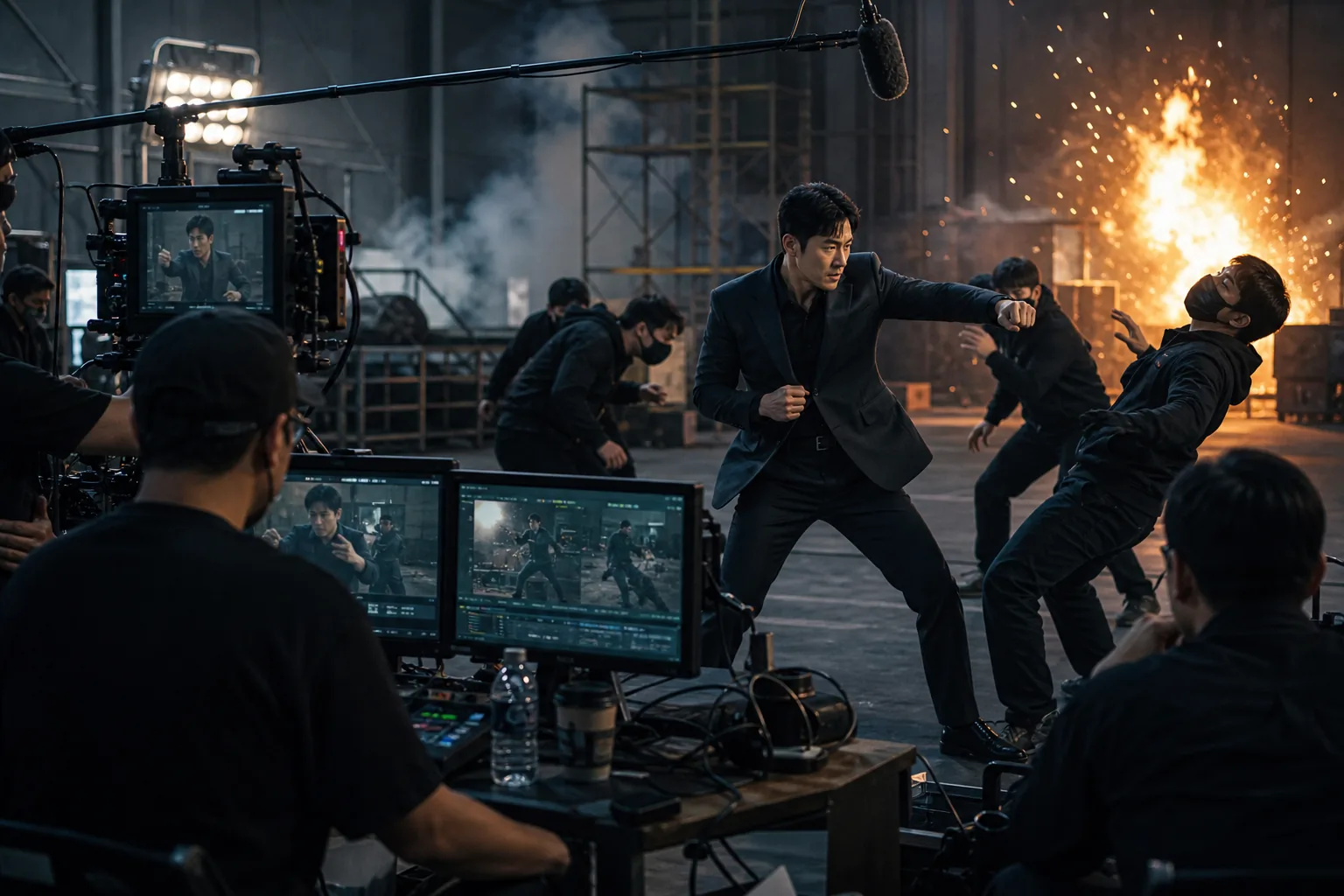
YTN’s report noted that the show has also found a strong audience through Netflix, where it reportedly climbed to No. 1 in the platform’s non-English TV category in its second week. The drama was said to have ranked first in 11 markets, including Korea, Singapore, Thailand, and Taiwan, while entering the top 10 in 79 countries. Those figures position Kim Manager as both a domestic ratings winner and an export title with visible global traction.
The series is drawing extra attention because of how one major action passage was made. Korean outlets reported that a roughly three-minute sequence showing Kim Manager’s past as a special operative was produced entirely with AI technology. The sequence, which aired across the first and second episodes, reportedly includes explosions, snowy roads, a tunnel chase, a vehicle flip, a fall into water, recovery shots, and gunfire.
Why The AI Sequence Matters
Industry coverage described the sequence as a first for Korean drama because it was not a brief AI-assisted insert or isolated visual effect, but a complete multi-minute passage created as part of the story. Morpheus Studio, a Korean visual effects company, said the work used its AI content production platform AICRON, with VFX professionals overseeing planning, generation, editing, and final assembly.
The decision is significant because the same material would be costly and complex to shoot conventionally. Outdoor locations, winter settings, controlled explosions, underwater elements, vehicle stunts, CG, and post-production VFX all add pressure to a drama budget and schedule. In this case, the AI-made flashback appears to have been used to give the lead character’s past more cinematic scale without relying on a traditional live-action production footprint.

That does not mean AI has suddenly replaced drama production. The reports emphasize that the work was guided by visual effects professionals and was used for a specific storytelling purpose. The more immediate takeaway is that Korean studios are testing whether generative tools can support sequences that are narratively important but expensive to stage, especially when consistency of character appearance and emotional expression can be maintained well enough for broadcast use.
For Kim Manager, the production story arrives at an ideal moment. The series already has the ratings and streaming reach to be discussed as a hit; the AI sequence gives it an additional layer of relevance for producers, VFX houses, and viewers watching how entertainment technology is changing. The combination turns the drama into more than another successful webtoon adaptation. It becomes a live example of how K-drama may experiment with production methods while still depending on familiar strengths: star power, urgency, emotional stakes, and a clear hook.
The next question is whether the attention around Kim Manager will encourage more Korean dramas to use AI for complete scenes, or whether this remains a carefully chosen exception. For now, the show’s early performance suggests that audiences are responding first to the story, while the industry studies the tools behind it.



Join the Conversation
Log in to share your thoughts and join the conversation with other fans.