


Jang Minho’s long climb through Korea’s music industry is drawing renewed attention after a new profile revisited the singer’s journey from first-generation idol hopeful to one of the most in-demand names in trot. The account, published by Segye Ilbo on July 7, frames his current success not as a sudden television-made breakthrough, but as the result of more than two decades of failed starts, side jobs, family support, and live-stage persistence.
The story is striking because Jang’s career began with the kind of debut that can look glamorous from the outside. He entered the industry in 1997 as a member of the idol group U-Bes, standing on music programs during an era when first-generation idol culture was becoming a defining force in Korean pop. But the profile notes that the group collapsed amid agency difficulties, leaving Jang with little stability and few signs that his early promise would turn into a lasting career.
Rather than exit entertainment, Jang tried again. In 2004, he returned with the ballad group Baram, another attempt to find a place in the mainstream music market. That project also failed to gain wide traction. The repeated setbacks pushed him into a harder reality: if he wanted to keep music alive as a possibility, he first had to survive outside the spotlight.
Years Outside the Spotlight
According to the report, Jang spent some of those years living in extremely difficult conditions, including a small room secured with a deposit of just 200,000 won. He took on construction work, carried bricks, worked as a swimming instructor, and appeared in minor reenactment program roles. These details have become part of his public narrative because they explain the gap between an early idol debut and the later confidence he brought to adult contemporary and trot audiences.

That period also highlighted the role of family in keeping his career from ending quietly. The profile says his older brother sent him more than 1 million won a month, while his sister helped him with transportation money for trips to Seoul. In many celebrity success stories, hardship becomes a neat prelude to fame. In Jang’s case, the years appear to have been longer and less cinematic: daily work, repeated uncertainty, and a continued refusal to put down the microphone.
Those experiences eventually became useful in a different market. As a swimming instructor, Jang learned how to communicate comfortably with older clients, the same demographic that would later become central to his trot fan base. The shift was not just a change in genre; it was a change in how he understood listeners. Trot rewards directness, warmth, and the ability to make a room feel personally addressed, skills often built more on real-life contact than on studio polish.
Jang made the decisive turn to trot in 2011. Two years later, he released Men Say, the song widely credited with changing his fortunes. Its rise by word of mouth helped put his name in front of audiences who had not followed his earlier idol or ballad group years. The breakthrough did not erase the past, but it gave those years a new meaning: they became proof that he had already paid the cost of staying in the business.
A Career Built in the Field
What separates Jang’s later success from a standard comeback story is the amount of work that happened away from national broadcast attention. Before the broader trot boom of the 2020s, he built his name through regional events and direct audience contact. That circuit can be demanding, but it also creates a different kind of legitimacy. A singer who can hold attention in local venues, festival stages, and repeated live appearances is not simply relying on a single viral moment.
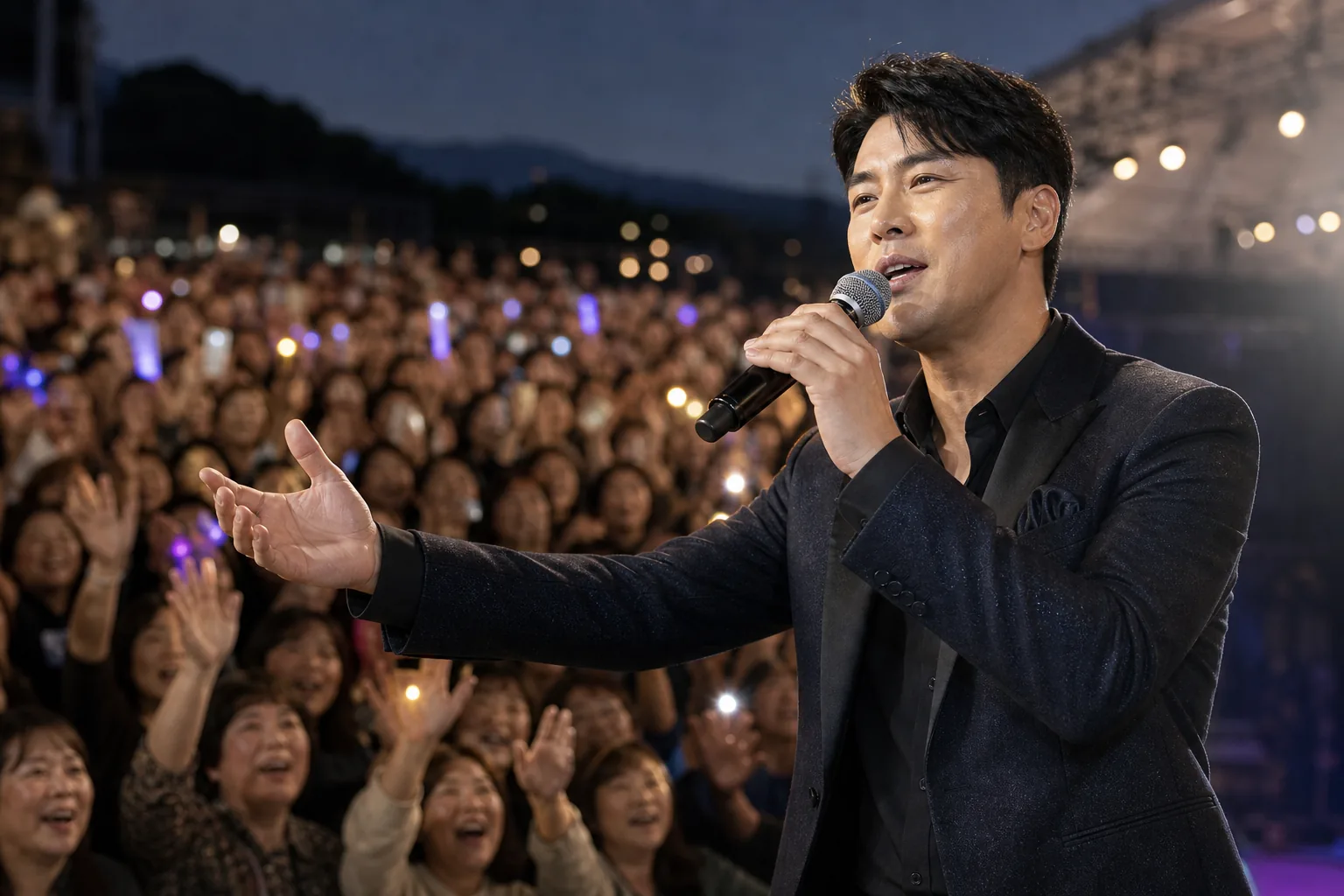
The Segye Ilbo profile says Jang is now treated as a top-tier performer in the event market, citing an appearance fee level of around 35 million won per event. That number has become a headline detail because it contrasts sharply with the earlier image of a singer struggling to pay for basic living. But the more important point is what it signals inside the industry: consistent demand, a reliable audience, and a reputation strong enough to command premium booking value.
His popularity also fits into a larger change in Korean entertainment. Trot, once treated by some younger viewers as a niche older genre, has become a major commercial lane through television competitions, touring, variety shows, and cross-generational fandoms. Jang’s history makes him especially suited to that moment. He carries idol-era experience, traditional stage discipline, and a public image rooted in perseverance rather than overnight novelty.
The report also emphasizes his reputation for looking after people around him, including staff who stayed with him through leaner years. That detail matters because modern fan loyalty often extends beyond performance. Audiences respond to the idea that a star’s conduct behind the scenes matches the sincerity projected on stage. For Jang, the public appeal is not only that he became successful, but that he appears to remember what failure, dependence, and gratitude felt like.
Seen in full, Jang Minho’s career is less a comeback than a long-delayed arrival. His path from a 1997 idol debut to a leading trot name shows how Korean entertainment can sometimes reward survival as much as youth, trend timing, or agency power. The current attention around his story underlines why he remains compelling: he represents a version of success built slowly enough that fans can see the years inside it.



Join the Conversation
Log in to share your thoughts and join the conversation with other fans.