

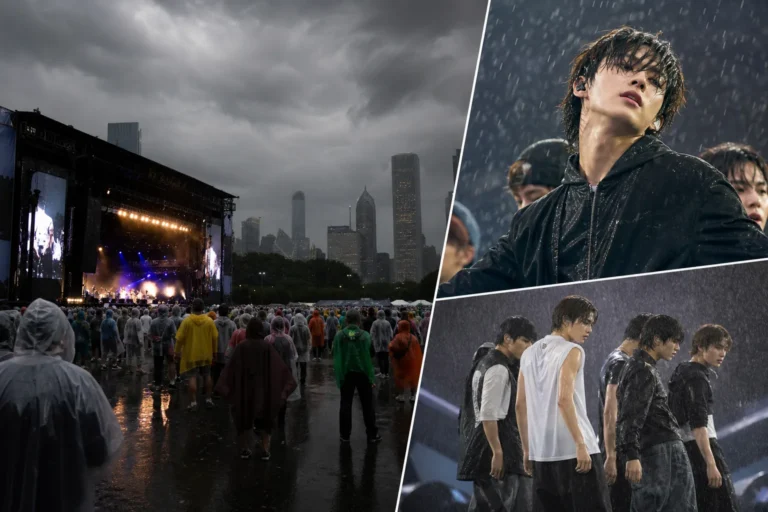
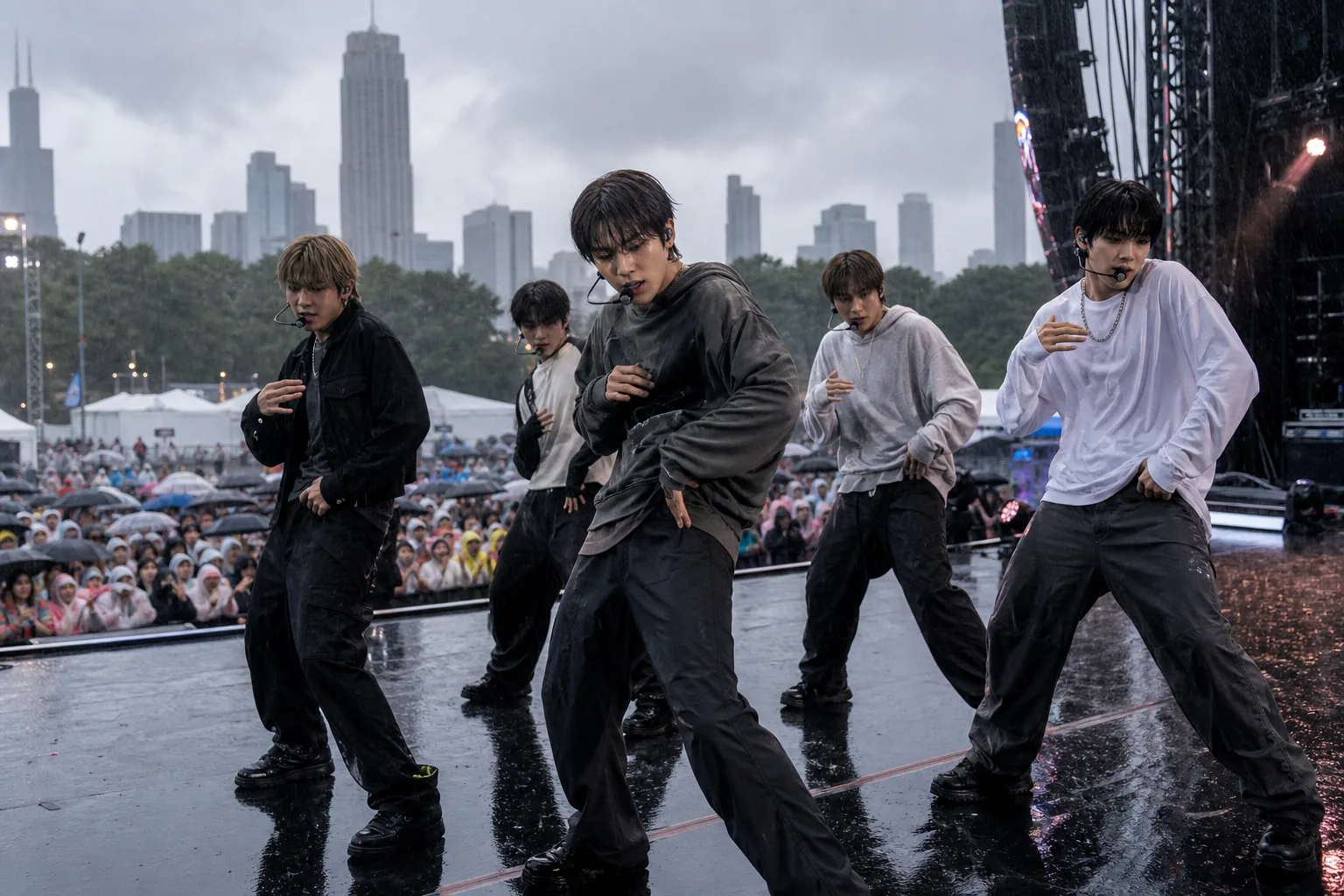
CORTIS completed a shortened performance at Lollapalooza 2026 after severe weather disrupted the festival’s Day 3 schedule in Chicago. The group was able to take the stage after organizers pushed back the start of programming, but its appearance was reduced from the originally planned 50 minutes to 40 minutes.
The change came as heavy rain and flooding affected the festival site overnight and into August 1 local time. Lollapalooza delayed the beginning of Day 3 from noon to 3 p.m. Central Time while conditions were assessed and the grounds were prepared for the return of audiences and performers.
Weather decisions at major outdoor festivals are rarely limited to whether rain is falling at a given moment. Organizers must consider ground conditions, equipment safety, access routes and the ability of crowds to move through the venue. A delayed opening can therefore require a broad reset across stages and support areas before live programming resumes.
A revised schedule after heavy rain
Most sets scheduled during the first three hours of the day were canceled as the festival adjusted to the weather interruption. CORTIS was among the acts whose plans changed, with the group’s performance moved to a 3:40 p.m. start rather than being removed from the lineup entirely.
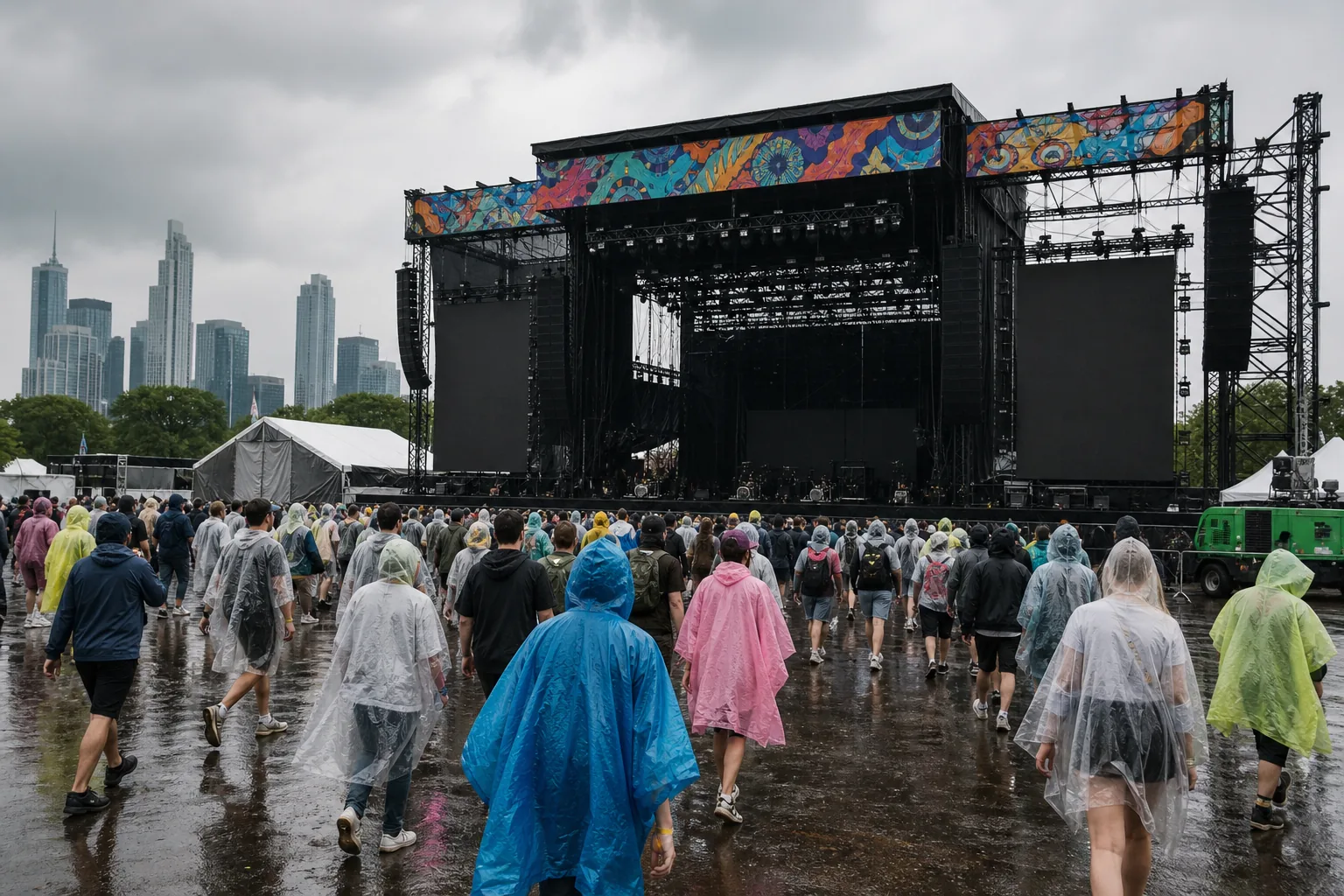
For an outdoor event of Lollapalooza’s scale, a weather delay affects more than a single stage. Production crews, performers, venue staff, security teams and fans all have to work within a revised timetable, while organizers also need to account for site safety and the time needed to reopen areas after rain.
CORTIS still received a meaningful slot on a day whose early programming had been heavily affected. A 40-minute set gave the group an opportunity to perform for festivalgoers while allowing the schedule to continue moving toward the evening program.
The adjustment also shows why festival schedules are built with tightly coordinated stage turnovers, sound checks and staffing plans. Once an early block is lost, restoring every canceled appearance may not be possible. Preserving as many later performances as conditions allow becomes a practical priority, particularly when multiple stages share production resources and audience traffic routes.
Keeping the festival day moving
The reduced running time illustrates the balancing act behind a large multi-stage event after an interruption. Shortening selected appearances can help preserve later performances and minimize further changes across the schedule, even though it asks artists to reshape a planned set on short notice.
CORTIS’s appearance also placed the group on an international festival platform at a moment when weather, rather than music, had become the immediate operational challenge. Performing after a delayed opening can bring a different atmosphere: audiences have waited through uncertainty, crews have reset the stage environment, and each act has less room for transitions or extended remarks.
For a group, a shorter program can mean making difficult choices about pacing, song selection and the moments used to connect with the crowd. The central goal remains the same: deliver a cohesive performance within the revised window while helping the festival return to a stable rhythm. That flexibility is a familiar part of live performance, but especially visible on a day affected by severe conditions.
Later in the evening, BLACKPINK’s Jennie was scheduled to appear as a headliner, with her performance time unaffected by the delayed start. The contrast reflected how the revised timetable concentrated the disruption in the afternoon portion of the festival day.
What comes next at Lollapalooza
The 2026 festival was set to continue with Day 4 on August 2 local time, including aespa on the schedule. As the event moved forward, attention turned to whether the remainder of the program could proceed under more stable conditions.
For CORTIS, the appearance remains a notable festival moment despite its shorter length. The group adapted to a changed schedule and performed in front of a major U.S. festival crowd, demonstrating the flexibility required when live events face conditions beyond anyone’s control.



Join the Conversation
Log in to share your thoughts and join the conversation with other fans.