
JTBC’s Financial Stress Deepens as Creators Raise Payment Concerns and Labor Groups Call for Action

![[broadcaster, pay dispute, production] featured image - JTBC’s Financial Stress Deepens as Creators Raise Payment Concerns an...](https://d1ycet1ctov4dv.cloudfront.net/wp-content/uploads/2026/06/26020137/broadcaster-pay-dispute-production-1782406896488-768x512.jpg)
South Korea’s media industry is facing renewed uncertainty as concerns mount around JTBC, where multiple reports over the past day point to unpaid creator compensation amid the company’s ongoing restructuring. According to reports circulated in the entertainment and business press, at least one performer associated with JTBC programming has posted evidence of filming while labor advocates have urged broader safeguards for freelancers and non-permanent workers.
The situation has gained attention after outlets reported that JTBC’s broader financial troubles are affecting not only talent schedules, but also payment timelines for production-side contributors. In particular, a dispute involving performance-related or appearance-related fees and parallel claims about other forms of compensation have been highlighted, underscoring how quickly financial strain can ripple through the creative workforce.
From restructuring to production friction
While JTBC’s public-facing operations have continued, the latest headlines suggest that the company’s financial pressures are beginning to show up in the day-to-day mechanics of broadcasting and production. One item in the digest focused on Kim Young-cheol, who was reported to have shared confirmation of recording for the variety program Knowing Brothers even as reports circulated about unpaid variety appearance fees tied to JTBC’s financial stress and restructuring.
At the same time, other reporting referenced worries that the fallout from JTBC’s management instability could extend beyond performers into the wider ecosystem of writers, freelancers, and production staff. That distinction is important: variety and drama schedules involve large networks of contractors whose compensation depends on timely settlements, and delays can trigger immediate financial pressure for individuals without payroll stability.
![[broadcaster, pay dispute, production] Image showing the article's key context - While JTBC’s public-facing operations have c...](https://d1ycet1ctov4dv.cloudfront.net/wp-content/uploads/2026/06/26020317/broadcaster-pay-dispute-production-body-1-1782406995731.jpg)
Labor groups demand stronger protections
Beyond the creator-to-company payment dispute, the most consequential development highlighted in the digest comes from labor advocacy. Reports cited Jikbaekgweljil 119 (a labor-rights organization) calling for steps that would protect workers, including pressuring JTBC to pause certain hiring practices—specifically those involving freelancers and dispatched workers—until compensation practices normalize.
Organizations making these claims typically argue that when a broadcaster is under financial duress, reliance on non-permanent labor becomes a risk factor for late or incomplete payments. Their position implies that the problem is not only contractual paperwork, but also the operational choices broadcasters make when cash flow tightens.
Why unpaid fees matter for the whole industry
Payment disputes rarely remain isolated. In South Korea’s entertainment sector—where production budgets and fee schedules are tightly managed—unpaid obligations can create second-order effects such as reduced willingness to participate, scheduling disruptions, and increased compliance scrutiny by industry bodies. Even a short delay can affect creators’ livelihoods, but longer delays can also shift bargaining power in future negotiations.
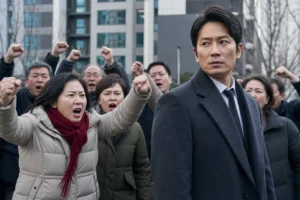
Additionally, if workers suspect systemic payment delays, they may demand more stringent terms up front, raising overall friction for casting, writing, and production contracting. That can, in turn, influence content pipelines—how quickly shows proceed, whether production plans change, and how much leverage talent agencies have during negotiations.
Talent posts filming proof amid uncertainty
The digest’s mention of a performer posting recording confirmation points to the social dynamics that accompany financial disputes. For public figures, sharing proof of participation can be an attempt to reassure audiences and clarify that production has not paused entirely. But it also highlights a gray area: a show can continue filming while payment disputes are still under negotiation or pending internal approvals.
![[broadcaster, pay dispute, production] Image explaining the article's impact and background - Additionally, if workers suspec...](https://d1ycet1ctov4dv.cloudfront.net/wp-content/uploads/2026/06/26020317/broadcaster-pay-dispute-production-body-2-1782406995813.jpg)
This dual reality—production continuing on one track while compensation concerns develop on another—often fuels public speculation and can intensify pressure on management to provide clear timelines. It also increases the likelihood that creators, talent agencies, and labor advocates will seek formal documentation of obligations.
What happens next
For viewers, the immediate question is whether JTBC’s financial stress will translate into delays, cancellations, or renegotiations of existing programs. For creators and workers, the priorities are likely to be clearer settlement schedules, verifiable payment commitments, and practical safeguards during ongoing restructuring.
In the near term, watch for: formal statements from JTBC regarding compensation status, responses from talent agencies and production unions, and any expanded calls from labor groups for additional restrictions or compliance requirements. If the disputes broaden—particularly into writer compensation or other contractor categories—industry-wide consequences could follow, including heightened scrutiny by regulators and increased contract protections across broadcasters.
As the broadcaster navigates restructuring, the key takeaway from the latest reporting is that financial instability can become a real-world production issue quickly—affecting not just press narratives, but the livelihoods of the people who build and deliver programming.


Join the Conversation
Log in to share your thoughts and join the conversation with other fans.