
AI Weather Presenter Debate Raises Questions About Korean Broadcasters and Digital Labor

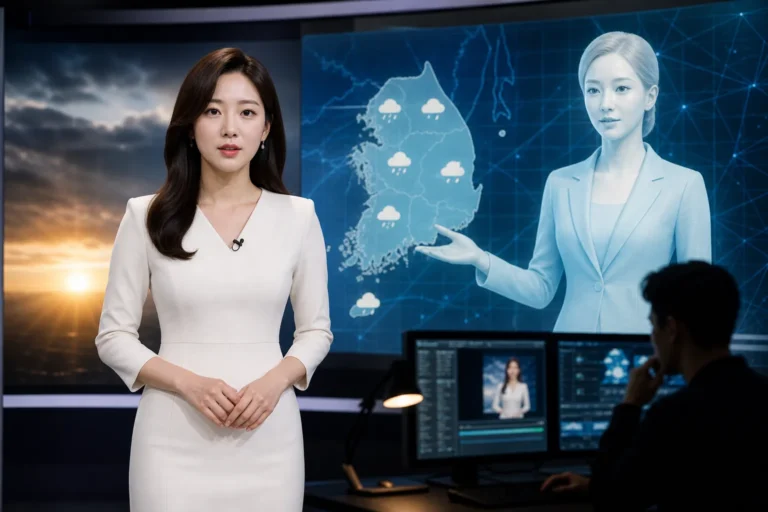
A viral image of an AI-generated weather presenter has opened a wider debate in Korean entertainment and media circles, drawing attention not only to automation in broadcasting but also to how digital human figures are designed, styled, and introduced to the public.
The image circulated on social platforms with claims that a major Korean broadcaster had replaced a human weather forecaster with an AI model. The figure appeared in front of a weather map in a studio-style frame, presenting the kind of visual format familiar to television audiences. As the screenshot spread, many viewers treated it as a sign that traditional broadcasters were beginning to move from experimental AI graphics toward direct substitution of on-air talent.
That assumption quickly fueled concern. Weather presenters occupy a public-facing role that depends on credibility, timing, and human communication, even when the information itself is technical. For many viewers, the possibility of replacing such workers with synthetic presenters felt like a visible example of a larger labor shift already affecting creative and media industries.
Why The Image Drew A Strong Reaction
The discussion intensified because the controversy was not only about whether AI should appear on screen. Viewers also focused on the AI model’s styling, including a fitted short dress that some felt was inappropriate for a weather segment. The reaction pointed to a sensitive question: if a digital presenter has no practical need for comfort, workplace norms, or personal agency, who decides how that figure should look?
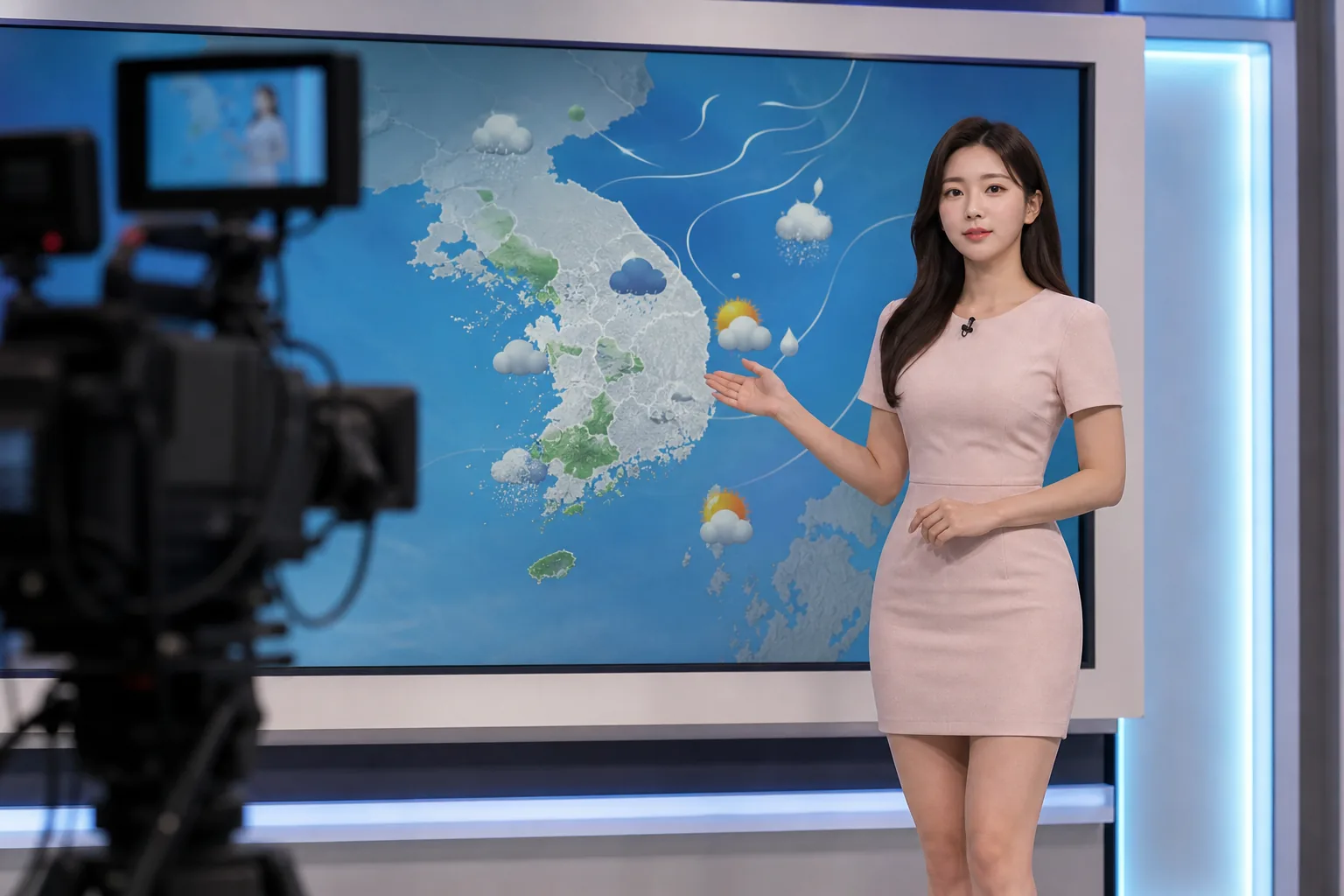
In Korean broadcasting, weather presenters have long been discussed through both professional and visual lenses, and the AI image landed directly in that context. Critics argued that the styling risked reducing the presenter role to an idealized visual product, especially when the figure was not a real employee who could make choices about appearance. The debate therefore moved beyond technology and into the long-running issue of how women are presented in public entertainment formats.
Further reports clarified that the screenshot did not come from an actual television weather report by the broadcaster named in online discussion. Instead, the image was linked to a YouTube channel operated by a weather and air-quality service provider. That clarification changed one key fact: a national broadcaster had not, based on the available information, replaced its human forecasters with an AI presenter in a regular broadcast.
A False Alarm With Real Industry Questions
Even with that correction, the public response shows how ready audiences are to believe that AI presenters could soon become part of mainstream Korean media. The anxiety is understandable. Entertainment companies, broadcasters, and online platforms are already testing virtual idols, synthetic voices, digital hosts, and AI-assisted production tools. The weather-presenter image became a flashpoint because it looked ordinary enough to feel plausible.
The case also demonstrates how quickly AI-related media can blur the line between experiment, rumor, and institutional policy. A screenshot framed like a broadcast can travel faster than the details behind it. By the time clarification arrives, the debate may already have shifted toward broader fears about job replacement, image control, and whether audiences can trust what they are seeing.
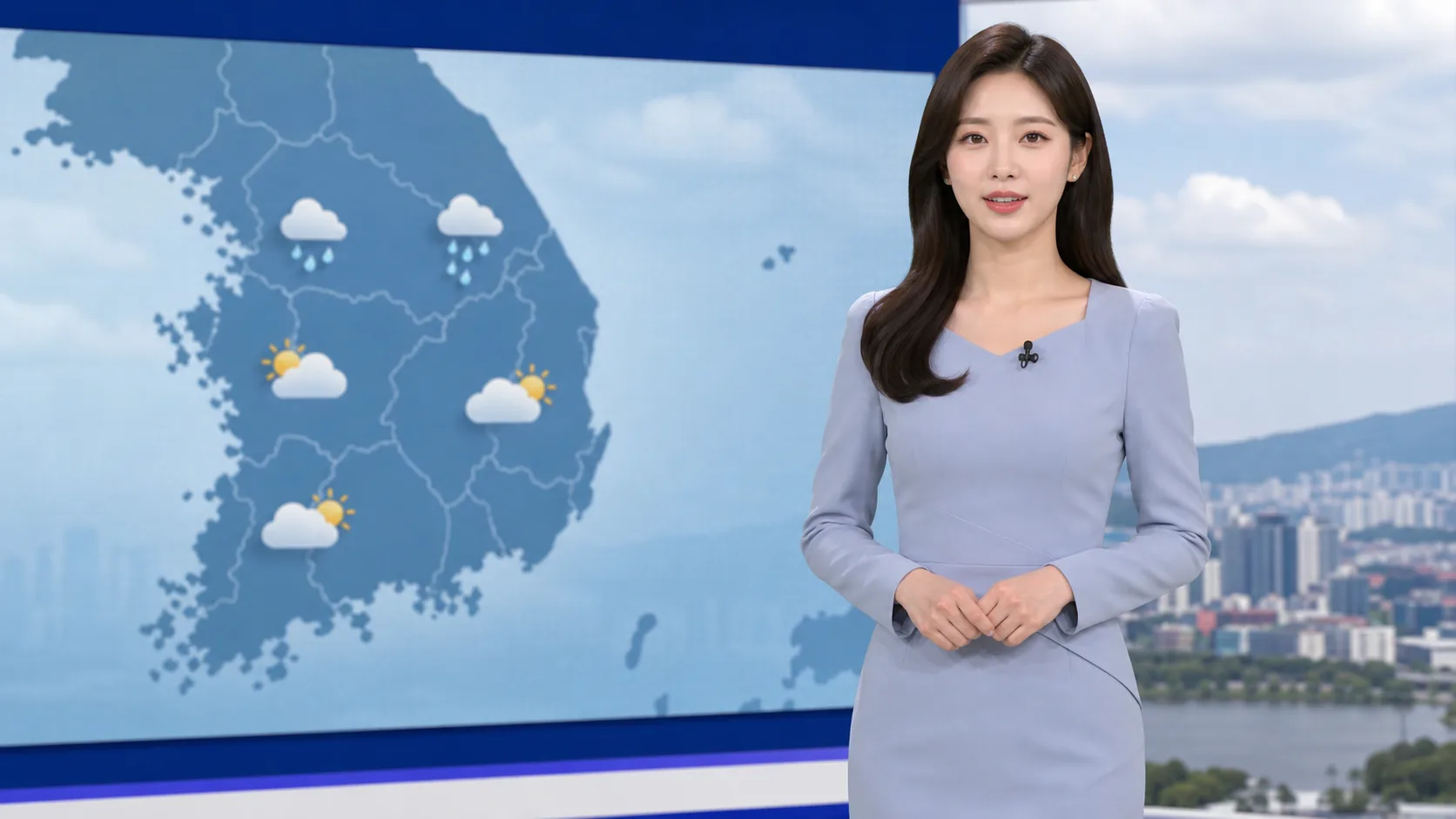
For broadcasters and production companies, the lesson is not simply to avoid AI presenters. It is to treat them as editorial products that require clear standards. A digital human used in news, weather, music programming, or entertainment coverage still communicates values: professionalism, authority, gender presentation, and the relationship between technology and human labor. Those choices are made by people, even when the person on screen is not real.
The controversy arrives at a moment when Korean entertainment has become a global testing ground for new fan experiences and media formats. K-pop already uses avatars, virtual stages, AI-assisted localization, and highly designed online identities. That innovation can create new creative possibilities, but it also raises pressure to define what should remain human-led, especially in roles built around trust and personal connection.
Audiences are unlikely to reject every synthetic presenter outright. Many viewers may accept AI figures in clearly labeled contexts, such as explainers, simulations, language versions, or experimental digital channels. The resistance grows when AI appears to quietly replace human workers or when a digital body is styled in a way that seems to amplify old stereotypes under the cover of new technology.
For now, the AI weather-presenter debate appears to be less a confirmed industry turning point than a warning sign. The viral claim was corrected, but the reaction was real. As Korean broadcasters and entertainment platforms continue to experiment with AI, transparency, labor impact, and visual ethics will likely determine whether audiences see the technology as useful innovation or as another reason to distrust the screen.



Join the Conversation
Log in to share your thoughts and join the conversation with other fans.