

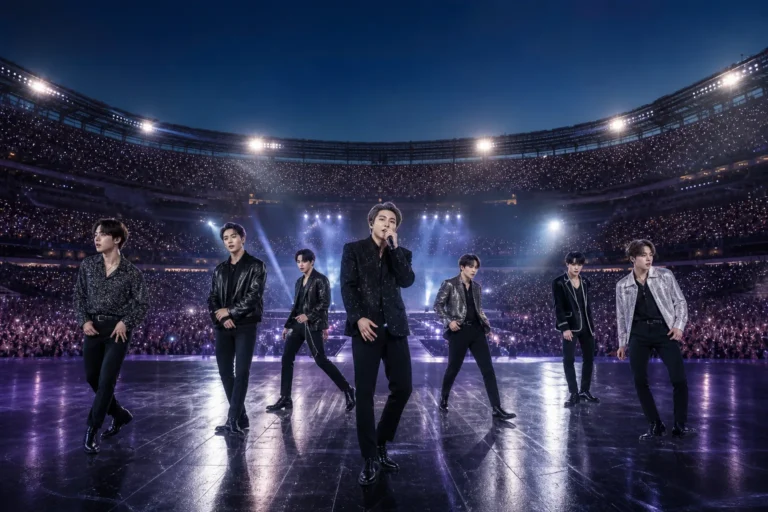
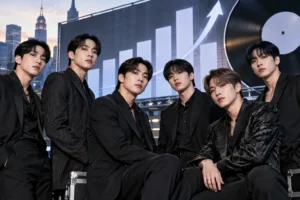
BTS helped turn the 2026 FIFA World Cup final into a landmark moment for K-pop and global live entertainment, joining Madonna, Shakira and Justin Bieber for the tournament’s first official final halftime show at MetLife Stadium in East Rutherford, New Jersey.
The performance arrived during the July 19 final between Spain and Argentina, adding an American-style halftime spectacle to football’s biggest match for the first time. For BTS, whose international reach has long extended beyond traditional music markets, the appearance placed the group inside one of the most watched sports events in the world and underlined how central Korean pop has become to global programming.
A New Stage for K-pop
According to post-show reports, the 11-minute production moved quickly through a broad lineup that included Madonna, BTS, Shakira, Burna Boy, Justin Bieber, Gustavo Dudamel, Coldplay’s Chris Martin, the PS22 Chorus and characters from the Muppets and Sesame Street universe. BTS performed “Dynamite”, a concise choice that matched the show’s compressed format and reminded casual viewers of the group’s English-language crossover hit.
The group was not presented as a novelty guest or regional addition. Instead, BTS appeared as one of the advertised co-headliners of the event, alongside some of the most recognizable Western and Latin pop figures of the past several decades. That billing matters because it reflects a changed entertainment map: K-pop is now treated as a default part of a global mainstream lineup rather than a separate export category.
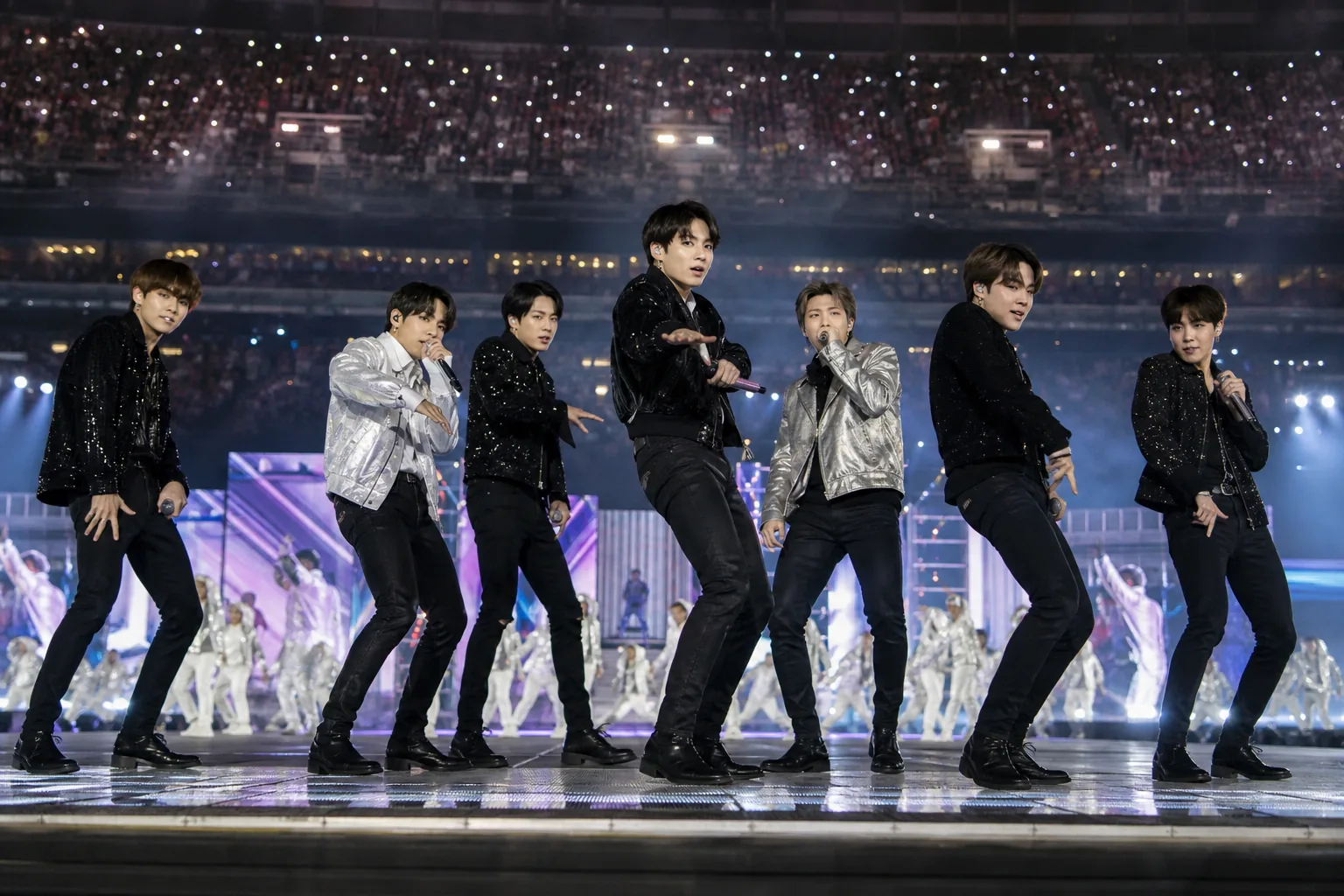
The show also highlighted how football’s final has become a contested cultural space. Until now, World Cup finals have usually relied on pre-match ceremonies, national anthems and trophy rituals rather than a large halftime concert. FIFA’s decision to stage a dedicated mid-game production created a new platform, but it also changed the rhythm of an event many fans regard as primarily sporting rather than entertainment-driven.
FIFA’s Entertainment Experiment
FIFA and Global Citizen framed the halftime show as more than a pop concert. In announcing the expanded lineup, FIFA tied the production to the FIFA Global Citizen Education Fund, positioning the event as a vehicle for youth education and football access initiatives. The pairing of celebrity performance with a social-impact campaign gave the show a broader public-facing message, even as many viewers focused on the star power and staging.
That dual purpose shaped the lineup. Shakira and Burna Boy were connected to the tournament anthem, Madonna opened the pop-focused sequence, Bieber brought another major international fan base, and BTS supplied a K-pop centerpiece with unusually wide cross-market recognition. The result was a compressed showcase designed for broadcast impact rather than a conventional concert arc.
Reaction to the format has been mixed. Supporters saw the show as an overdue modernization of a tournament watched by audiences across continents and generations. Critics questioned whether the World Cup final needed a Super Bowl-style halftime production at all, arguing that football’s most important match already carries enough emotional and cultural weight without additional spectacle.
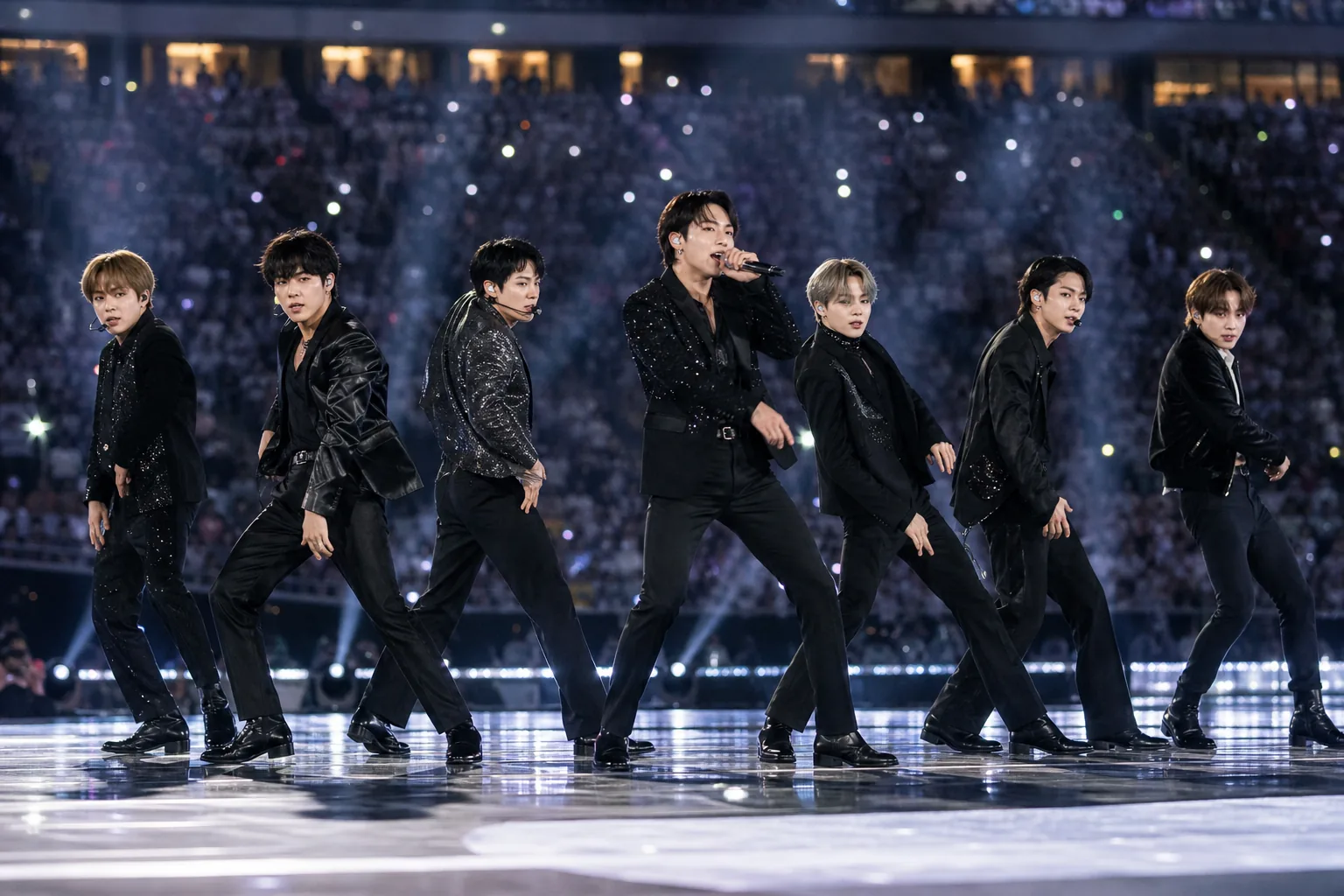
For BTS, however, the appearance fits a pattern of high-visibility cultural milestones. The group has previously crossed into U.S. awards shows, major stadium tours, diplomatic and cultural events, and global brand campaigns. A World Cup final halftime stage adds another category: a sports broadcast moment designed to reach viewers who may not actively follow K-pop but understand the scale of the World Cup.
Why the Moment Matters
The performance also arrives at a time when K-pop’s global influence is increasingly measured not only by album sales or streaming charts, but by placement inside shared cultural events. When a Korean group appears beside Madonna, Shakira and Bieber in the middle of a World Cup final, the signal is not simply that K-pop has fans overseas. It shows that organizers of the world’s largest events now expect K-pop to help carry mass-audience programming.
There is a practical industry lesson as well. Halftime shows operate on instant recognition, short running times and broad demographic reach. BTS’s inclusion indicates that the group remains valuable in exactly that environment: fast, visually legible and familiar to viewers across language lines. Even a brief performance can reinforce brand power when the stage is watched globally.
Whether FIFA continues the halftime-show format at future World Cups remains an open question. The 2026 edition benefited from the North American host context, a stadium accustomed to large entertainment productions and an organizing partnership built around Global Citizen’s social-impact model. Future hosts may embrace the precedent, modify it or return to a more traditional football-centered interval.
What is clear is that BTS now has a place in the history of that experiment. The group did not merely perform at another festival or awards show; it helped introduce a new entertainment layer to the World Cup final itself. For K-pop, that is a symbolic step from global popularity to global infrastructure, where Korean artists are built into the architecture of the biggest live events rather than invited to orbit them.

Join the Conversation
Log in to share your thoughts and join the conversation with other fans.