
BTS’s Busan Concert Draws Backlash After Fans Report Venue Chaos Before Start

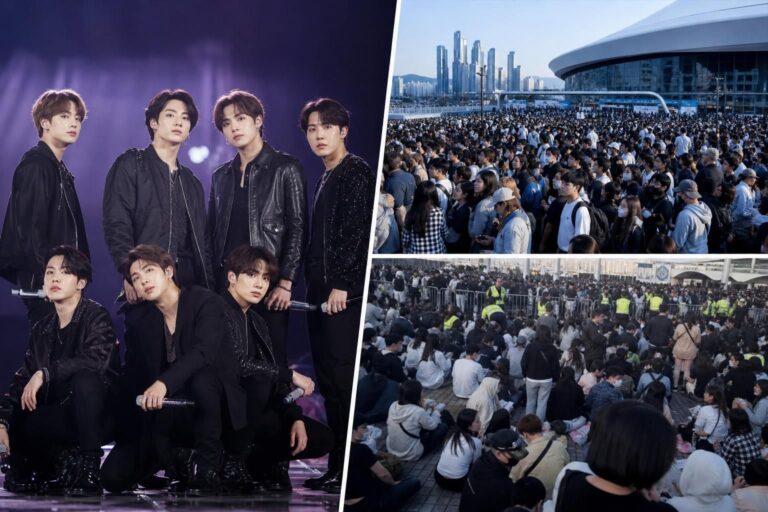
BTS’s Busan ARIRANG tour stop has sparked a wave of anger online after fans reported severe venue-entry and organization problems before the show even began, with the concert originally scheduled to start at 7:00 PM (KST). According to social media posts highlighted in the Korean entertainment press, thousands of attendees were still waiting outside the stadium as the start time approached—leading many ARMYs to describe the situation as stressful and poorly managed.
As delays mounted, BTS members addressed the disruption through live-stream chat messages. Multiple fans shared clips implying that the line congestion and unclear staff flow were central to the disruption, and that the incident reflects broader concerns about local event operations in Busan.
Delays Build as Fans Say Entry Took Too Long
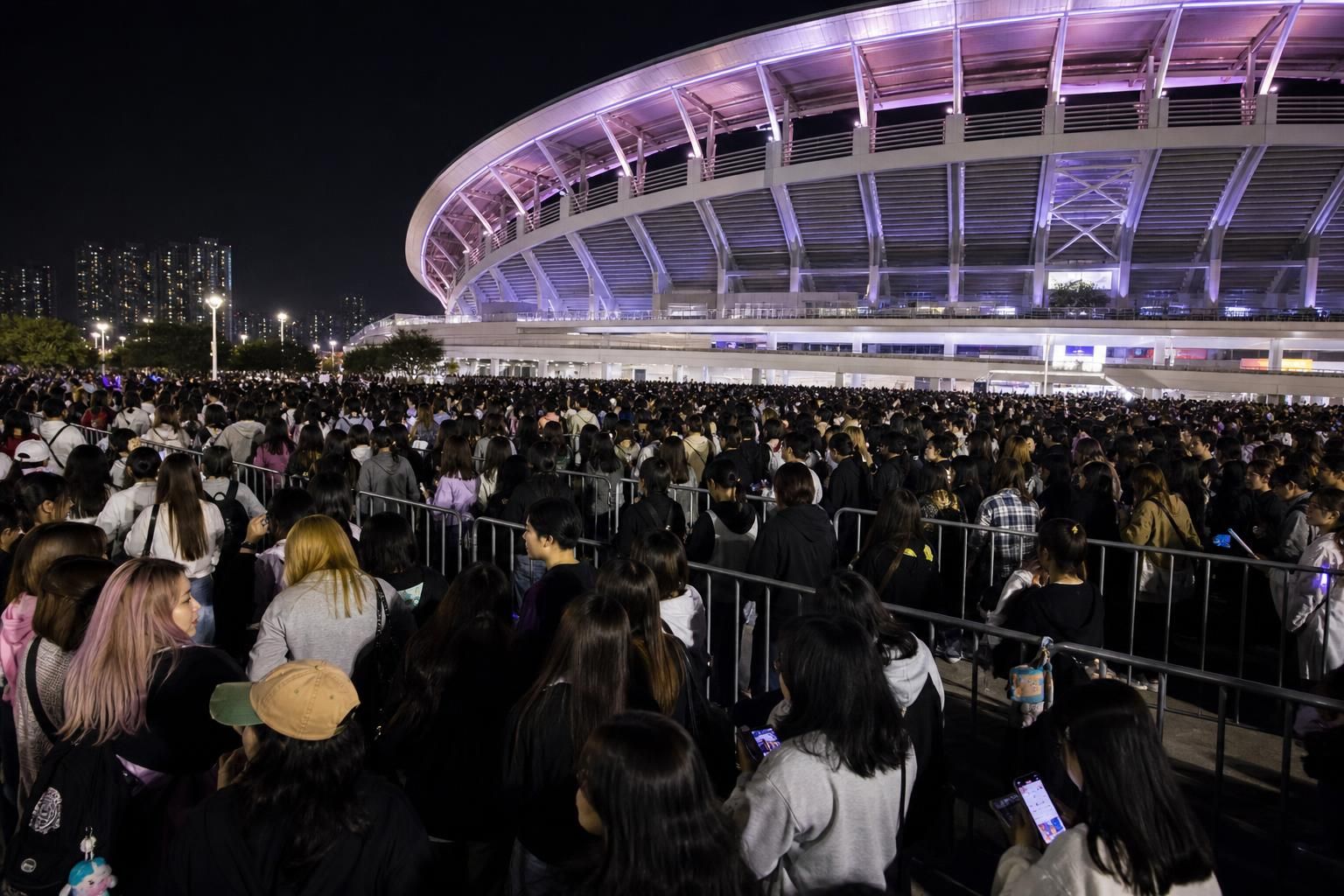
In posts circulating on social platforms, attendees claimed that lines outside the venue remained unusually long minutes before doors were expected to open efficiently. One user captured the atmosphere around 6:50 PM, describing the situation as “insane” and “so stressful,” including the need to walk around the stadium to reach entry points.
Another fan sentiment echoed a common theme: despite having tickets and arriving on time, many were still waiting while the performance clock kept moving forward. In the reporting shared by Koreaboo, several comments used sharply critical language, arguing that the management and staffing for the concert were inadequate given the scale of the audience.
BTS Appeared to Acknowledge the Delay Live
While the logistical issues were widely blamed on event organization rather than on the group itself, BTS members nonetheless appeared aware of the frustration. The article notes that members sent messages in the livestream chat, including assurances and lighthearted banter mixed with an apology for the delay.
According to fan-shared excerpts, the group suggested they had already been prepared since around 6:00 PM and that the start was being held up by the continuing entry process. The messages also signaled an attempt to calm the crowd—though fans interpreted the repeated acknowledgements as evidence the members themselves were affected by the longer wait.
Social reactions included speculation that the delay could reach around an hour, with one comment stating “it’s been an hour” of problems, while others counted the time remaining until the performance was meant to begin.
Fans Also Raise Wider Concerns About Busan Event Operations
Beyond the immediate queue issues, the backlash included references to prior controversy and dissatisfaction with how local organizers handled events. In the Koreaboo coverage, some commenters argued that Busan’s concert organization has a pattern of missteps—claiming, for example, that responsibilities were shifted onto BTS management in the past or that credit for certain projects was handled inconsistently.
In this latest incident, fans pointed to additional operational friction after entry—such as navigation challenges and restricted movement pathways within the stadium grounds. One attendee described being forced to complete a larger loop of the venue to reach basic locations, including after merchandise pickup, implying that flow control and signage were insufficient or confusing.
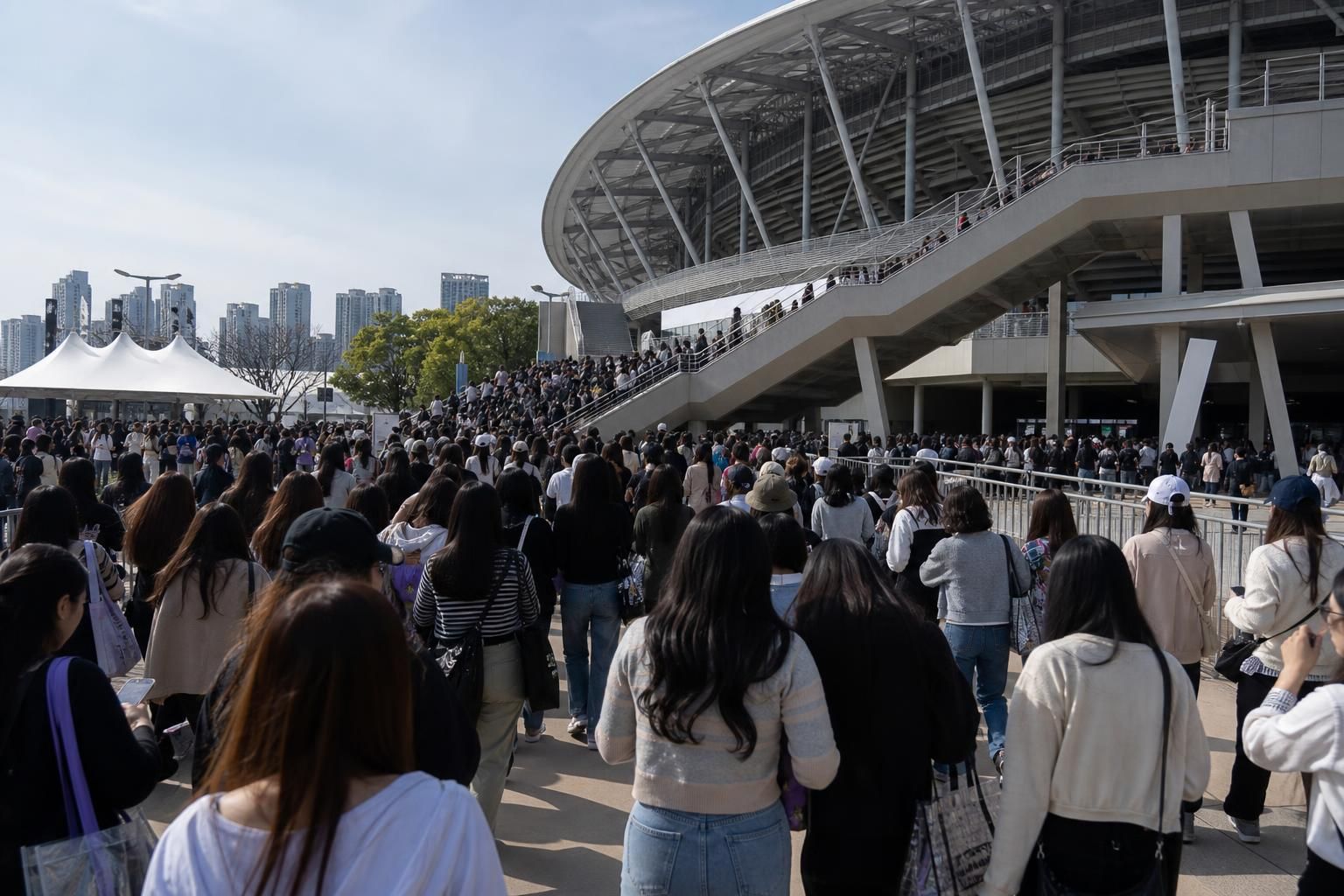
These claims, while coming from individual social media posts rather than official statements in the article itself, reflect a broader expectation among large-scale concert-goers: that venue staff should be able to manage stadium-level crowds quickly, transparently, and safely—especially for internationally known acts with global audiences.
What Happens Next: Pressure for Answers and Better Logistics
For BTS and their touring partners, the reputational impact may extend beyond this one show. Even though the group is likely not responsible for venue staffing decisions, incidents like this can influence public perceptions of how smoothly future dates are likely to run—particularly in cities where fans already report frustration. In the near term, ARMYs will likely continue demanding clarification about staffing, entry procedures, and timing accountability.
Organizers in Busan will also face scrutiny around whether they conducted adequate planning and crowd-management rehearsals for a major pop event. If delays recur—especially if they scale to a comparable magnitude—fans may shift from complaining about inconvenience to treating the situation as a recurring operational failure.
As the tour continues, the most important indicators to watch are whether subsequent shows show improved entry throughput, clearer guidance for attendees, and faster resolution of bottlenecks. BTS’s livestream messages suggest the group is monitoring crowd conditions; how organizers respond publicly—or implement operational changes—will determine whether today’s backlash leads to measurable improvements or becomes a lingering point of contention for future stops.



Join the Conversation
Log in to share your thoughts and join the conversation with other fans.
A story like this lands a little heavier. I hope people give it room for nuance before reacting.
This kind of update feels small at first, but the details make it way more interesting once you read through it.