

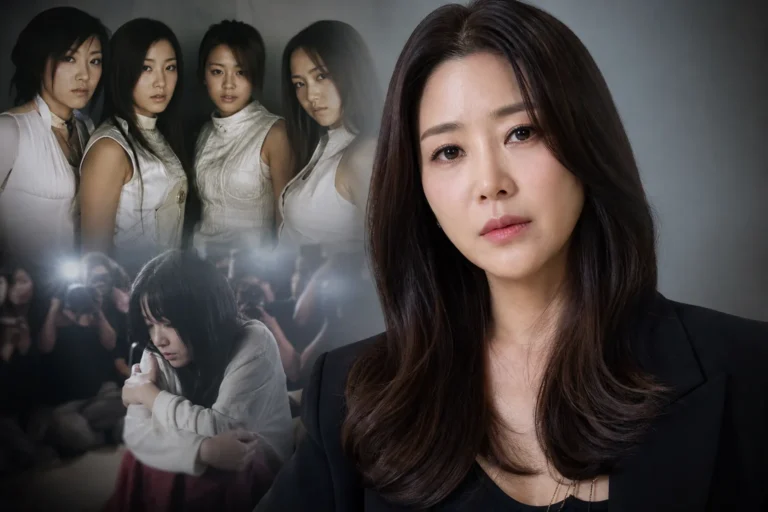
Kan Mi-youn has offered a stark reminder of how harsh early K-pop fan culture could become, reflecting on the trauma she experienced while promoting as a member of Baby V.O.X. The first-generation idol said the backlash she faced during the group’s peak left marks that extended far beyond the original controversy.
Her comments came during an appearance on Channel S’s Noldun Unnie 2, where she revisited the period when Baby V.O.X was one of the most visible girl groups in Korean pop. The conversation moved from nostalgia to a more difficult account of how public suspicion, rumors, and organized hostility shaped her memories of youth and fame.
A First-Generation Idol Under Intense Scrutiny
Baby V.O.X belonged to the era that helped define modern K-pop’s idol system, arriving before today’s global social platforms but during a time when fan communities were already highly organized. As the group rose, Kan became caught in a dating-related scandal involving H.O.T. leader Moon Hee-joon. The episode made her and the group a target of severe criticism from hostile fans.
The scale of the reaction has long remained part of first-generation idol history. Baby V.O.X was described as facing an enormous anti-fan presence, with Kan at the center of much of the anger. What is often remembered as a celebrity scandal now reads, through her recent remarks, as a case study in how young performers were asked to absorb public hostility with few visible protections.

Kan recalled that she was still a teenager during the worst of the backlash. She said that even seeing a school uniform could frighten her at the time, a detail that captures how closely the harassment became tied to ordinary images and settings. Her remark suggests that the pressure was not limited to concert halls or broadcast studios; it followed her into everyday life.
An Incident That Shows The Climate Around Baby V.O.X
Fellow Baby V.O.X member Kim E-Z also described one frightening incident from that period. She said she and Kan had gone to a store to buy a birthday present for their agency’s chief executive when more than 200 anti-fans surrounded the shop. The crowd reportedly tried to break through the doors and windows, leaving the members trapped inside a situation that went beyond verbal criticism.
The account underscores why the memories remain so painful decades later. For idols, anti-fan culture is sometimes discussed as a background feature of fame, but Kan’s experience shows how quickly it could become physical intimidation. A performer dealing with that kind of threat as a teenager would not simply be managing bad press; she would be living with a sustained sense of danger.
Kan then made one of the most striking comments of the discussion, saying that she has almost no memory of her 20s and 30s because of the trauma. The statement reframes the old scandal from a brief entertainment controversy into a long-term personal cost. It also raises a broader question about how much of K-pop’s early history was built on young artists silently enduring conditions that would now draw immediate scrutiny.

Why Her Remarks Matter Now
Her story arrives in a different entertainment climate, one where agencies, broadcasters, and fans speak more openly about mental health, malicious comments, and legal responses to harassment. Yet the underlying pressures remain familiar. Idols are still expected to maintain carefully managed public images, and online hostility can spread faster than it did during Baby V.O.X’s original peak.
What makes Kan’s reflection especially important is its focus on memory. Many public apologies or controversy retrospectives focus on who was right, who was wrong, and how a career recovered. Kan’s account instead points to the private aftermath: fear, lost recollection, and the difficulty of separating an artist’s working years from the stress that surrounded them.
Baby V.O.X’s legacy remains significant in K-pop history, and Kan has continued to be associated with that legacy despite the painful period she described. Her comments do not erase the group’s achievements; they add context to them. They show that the glamour of first-generation idol success existed alongside risks that were often minimized or treated as inevitable.
For today’s industry, the lesson is not only that malicious fan behavior can damage reputations. It can also shape the way artists remember entire chapters of their lives. Kan Mi-youn’s remarks turn a familiar name from K-pop’s early era into a current conversation about duty of care, fan responsibility, and the lasting human consequences of entertainment culture’s most hostile moments.



Join the Conversation
Log in to share your thoughts and join the conversation with other fans.