
Lee Jung Eun and Kong Hyo Jin Film The Journey to Gyeongju Sets August Release

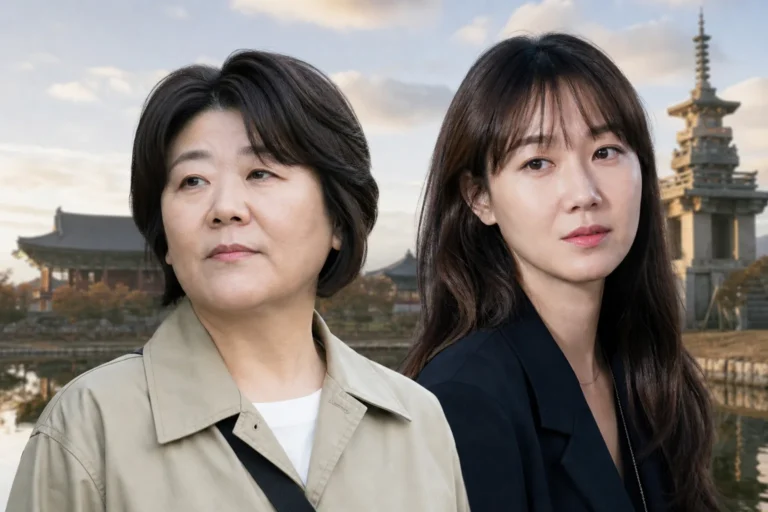
The upcoming Korean film The Journey to Gyeongju has confirmed its theatrical release date in Korea for August 26, giving audiences a clearer look at a project built around family grief, uneasy comedy, and revenge. The film drew fresh attention after unveiling its first posters, which introduce a mother and three daughters whose outwardly ordinary trip hides a darker purpose.
Led by Lee Jung Eun and Kong Hyo Jin, the movie centers on a family that has waited eight years for answers after the youngest daughter, Gyeong Ju, failed to return from a school field trip. Rather than framing the story as a conventional mystery, the early promotional material points to a charged road movie in which the women set out after the person they believe is responsible.
The premise is direct but unsettling: a mother and her three daughters begin what appears to be a family journey, while the trip itself functions as part of an alibi. The poster language makes the revenge angle explicit, signaling that the women have kidnapped the alleged murderer and that their route to Gyeongju is not simply about memory or mourning.
A Family Trip With A Darker Mission
The first poster places the four family members inside a yellow van, a familiar road-trip image that becomes more tense through the details around them. Lee Jung Eun’s character, Ok Sil, is shown praying with a rosary, suggesting fear, resolve, or both. Kong Hyo Jin plays eldest daughter Jang Joo, who sits behind the wheel while carefully watching the road and her surroundings.
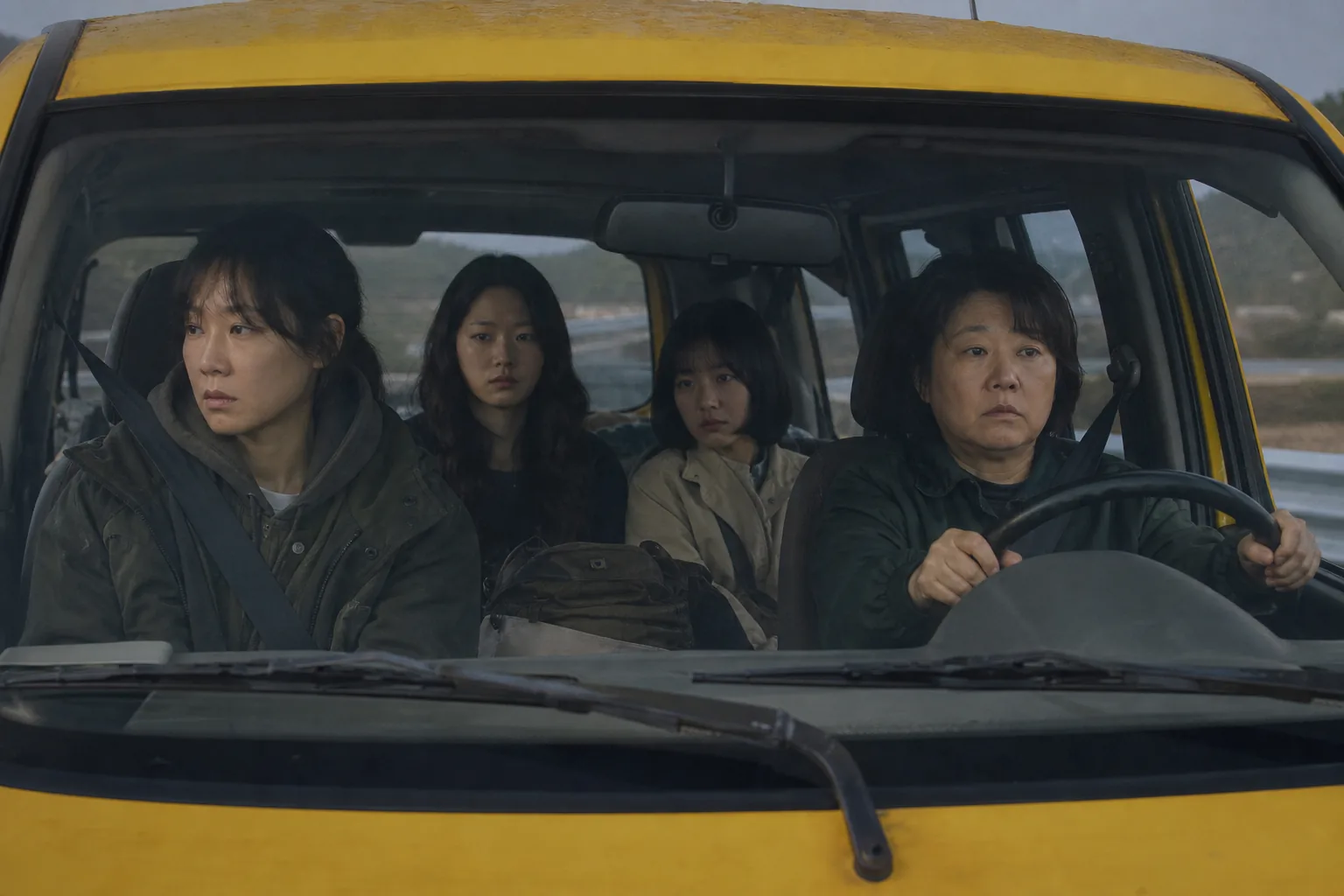
Park So Dam appears as second daughter Young Ju, who is linked in the poster description to a disposable camera intended to support the family’s alibi. Lee Yeon plays third daughter Dong Ju, whose peaceful sleep creates a sharp contrast with the atmosphere around the others. A red human-shaped silhouette placed among them undercuts the family tableau, making clear that the van carries more than grief and unresolved questions.
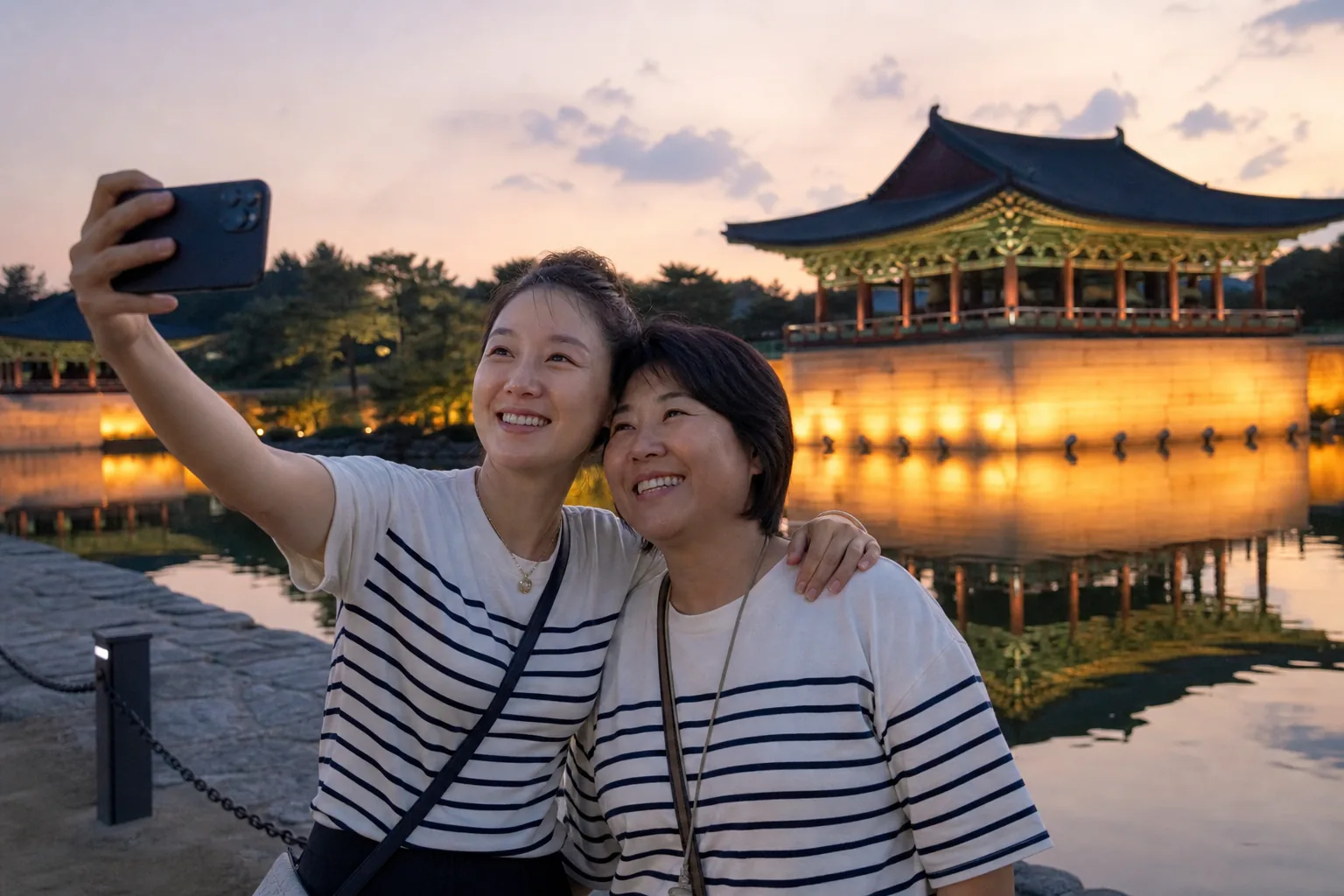
The second poster takes a brighter approach, showing the women smiling together for a commemorative photo at Donggung Palace and Wolji Pond, one of Gyeongju’s best-known historic locations. Their matching shirts and affectionate poses suggest a warm family outing, but the promotional copy ties that image to a mission planned over years.
Gyeongju As Both Destination And Disguise
That contrast appears to be central to the film’s identity. Gyeongju, often associated with heritage, tourism, and preserved history, becomes more than a scenic backdrop. In the story’s framing, the city is also part of the cover for a family operation shaped by loss. The trip gives the women a reason to move together, while the revenge plan gives the journey its tension.
The use of a famous historic site in the poster also helps position the film visually. A cheerful tourist photo can be read one way at first glance, then differently once the audience notices bloodstain imagery and the tagline about kidnapping the murderer. The marketing is leaning into that double reading: domestic warmth on the surface, criminal risk underneath.
The Journey to Gyeongju has already received international exposure before its Korean release. According to the report, the film was invited to major festival events including the Hawaii International Film Festival and the Florence Korea Film Fest. It also won the Audience Award at the 24th Florence Korea Film Fest, an early sign that its mixture of family drama and revenge-thriller elements has connected with viewers outside Korea.
For Lee Jung Eun, the film adds another family-centered role to a career known for emotional precision across film and television. For Kong Hyo Jin, whose screen image often balances warmth with sharp comic timing, the role of an eldest daughter steering a suspicious family mission could offer a pointed shift in tone. Park So Dam and Lee Yeon round out the central quartet, making the story dependent on ensemble chemistry rather than a single lead perspective.
The August 26 release date now gives the film a defined place on Korea’s late-summer theatrical calendar. Its early materials suggest a story designed to invite curiosity without revealing how far the family’s revenge plan goes or how reliable their belief about the culprit may be. With festival attention already behind it and a cast capable of handling tonal shifts, The Journey to Gyeongju is positioned as one of the more intriguing Korean film releases to watch as summer turns toward fall.

Join the Conversation
Log in to share your thoughts and join the conversation with other fans.
??topic??just went straight onto my watchlist ?렗 The setup sounds like it has exactly the right mix of character and momentum.