
Happy Together Returns With Strong Ratings for KBS Variety Relaunch


KBS2’s revived Happy Together has made a confident return to Friday-night Korean entertainment, opening with the strongest launch score for a KBS variety program in 2026. The new season, titled Happy Together: Because We Are Not Alone, premiered on July 10 and recorded a nationwide rating of 3.0 percent, with its highest moment reaching 4.8 percent, according to Nielsen Korea figures cited by Korean media reports.
The result gives the long-running brand an immediate foothold in a crowded variety landscape. Happy Together first became one of KBS’s signature entertainment franchises after launching in 2001, running through multiple seasonal formats until 2020. Its familiar name carries nostalgia, but the new version is not simply trying to recreate the old talk-show formula. Instead, the relaunch presents itself as a storytelling music audition built around companionship, personal history, and emotional performance.
The opening episode was anchored by what the program calls the “horn-rimmed glasses trio”: Yoo Jae-suk, filmmaker Jang Hang-jun, and singer-songwriter Yoon Jong-shin. Lee Hyori joined the premiere as the first special MC, adding another layer of star power to a format that depends heavily on hosts who can listen as much as they lead.
That tonal shift was visible in the structure of the first broadcast. Rather than centering only on celebrity banter, the premiere introduced five teams described as life companions, including friends, family members, colleagues, and musicians connected by shared memories. Their performances were framed through the relationships behind the songs, allowing the hosts to react to both the music and the stories that shaped each stage.
A Familiar Brand With a Warmer Mission
The premiere opened with a chorus team made up of veteran music-industry figures who had worked behind the scenes on major Korean hits from the late 1990s and early 2000s. Their appearance underscored one of the new season’s clearest aims: to put ordinary or lesser-seen contributors beside familiar stars and let the audience discover why their stories matter.

Other teams widened that emotional range. The episode featured close friends who met as parents and maintained a decade-long bond, the group Click-B appearing together after a long gap, singer Bang Ye-dam performing with his parents, and a mother-and-son team whose story centered on patience, growth, and mutual support. The show used music as a bridge between these backgrounds rather than as a simple competition device.
Lee Hyori’s presence also helped connect the new format to Korean pop history. As a singer who has lived through several eras of televised music and variety programming, she reacted not just as a guest host but as someone personally tied to the songs and memories being revisited. Reports highlighted her emotional response to the chorus team’s set and her encouragement for Click-B’s continued musical passion.
For KBS, the ratings are an encouraging start because the network is reviving a brand with unusually high recognition but also heavy expectations. A familiar title can bring curiosity, yet it can also invite direct comparison with earlier eras. The first episode’s 3.0 percent nationwide rating suggests viewers were willing to sample the new concept, while the 4.8 percent peak shows that at least some segments generated stronger live engagement.
Why the Opening Matters
The larger question is whether Happy Together can turn nostalgia into a sustainable weekly identity. Korean variety has changed significantly since the original show’s peak years, with clips, short-form reactions, streaming platforms, and fandom-driven viewing now shaping how programs travel beyond their broadcast slot. The relaunch appears designed for that environment: emotionally clear stages, recognizable hosts, and stories that can be understood quickly even outside the full episode.
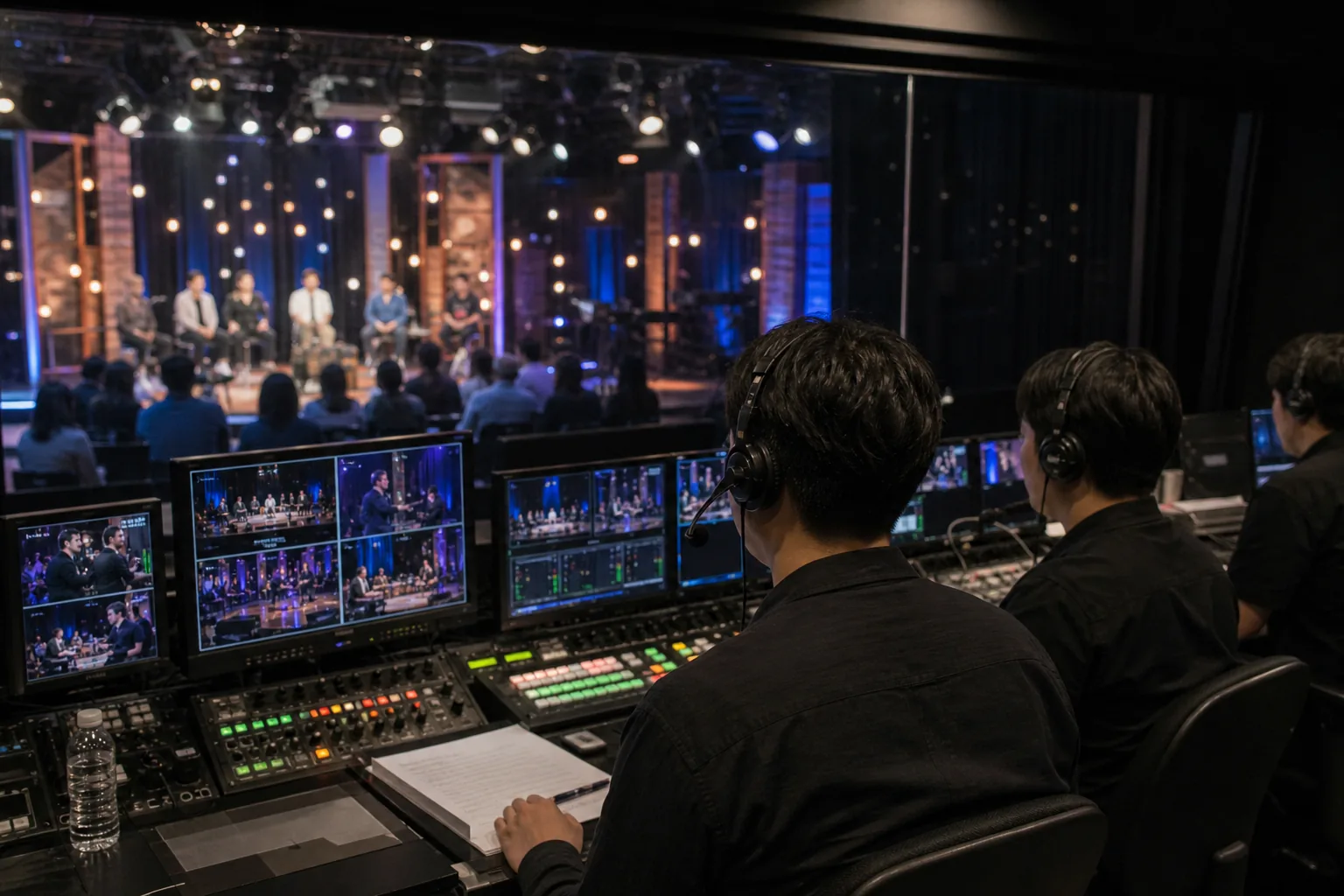
The pre-launch interest also worked in the show’s favor. A teaser-style preliminary video featuring the main trio reportedly drew more than one million views before the premiere, signaling that curiosity around the reboot was already building. That attention matters because a variety show no longer lives only by its overnight number; online clips can extend a broadcast’s life and help define which moments viewers remember.
Still, the format will need consistency. A first episode can benefit from novelty, famous hosts, and a carefully stacked lineup, but later episodes will have to prove that the emotional premise has enough range. If the show leans too heavily on sentiment, it may become predictable. If it balances warmth with humor, surprise, and strong casting, the revived Happy Together could become one of KBS’s steadier entertainment assets this year.
For now, the premiere gives the network a solid talking point: one of Korean television’s most recognizable variety names has returned with a clear concept and measurable viewer interest. The next test will be whether audiences continue to see the reboot not as a museum piece, but as a living Friday-night program with its own rhythm.


Join the Conversation
Log in to share your thoughts and join the conversation with other fans.