

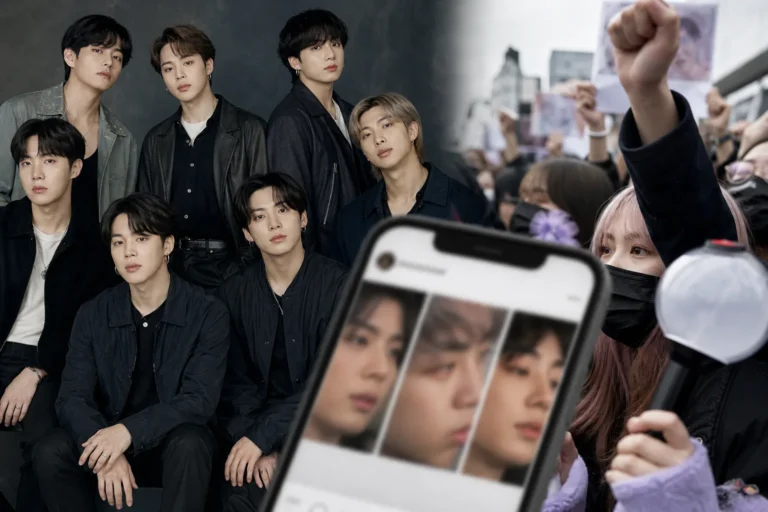
A viral social media post criticizing the natural appearances of several BTS members has triggered a new wave of debate among K-pop fans, with many pushing back against the language used and the expectations behind it.
According to Koreaboo, the discussion began after a post circulated with clips of BTS members and a caption calling the group the “ugliest boyband ever”. The post drew attention not only because of its harsh wording, but because it arrived amid an ongoing online pattern in which idol appearances are dissected through screenshots, candid clips, and unedited event footage.
The criticism quickly spread as some users amplified the attack with more comments about the members’ looks. But the backlash was just as visible. Fans and other observers argued that the clips showed the members in a more natural state, without the full styling, makeup, lighting, and professional editing often associated with K-pop schedules and promotional content.
Fans Reframe the Conversation
Supporters responded by saying the criticism reflected unrealistic expectations rather than anything meaningful about the artists themselves. Many framed the debate as a reminder that public images of idols are often shaped by heavy styling, controlled lighting, filters, and professional photography. When an idol appears barefaced or in a less polished setting, the reaction can reveal how narrow online beauty standards have become.
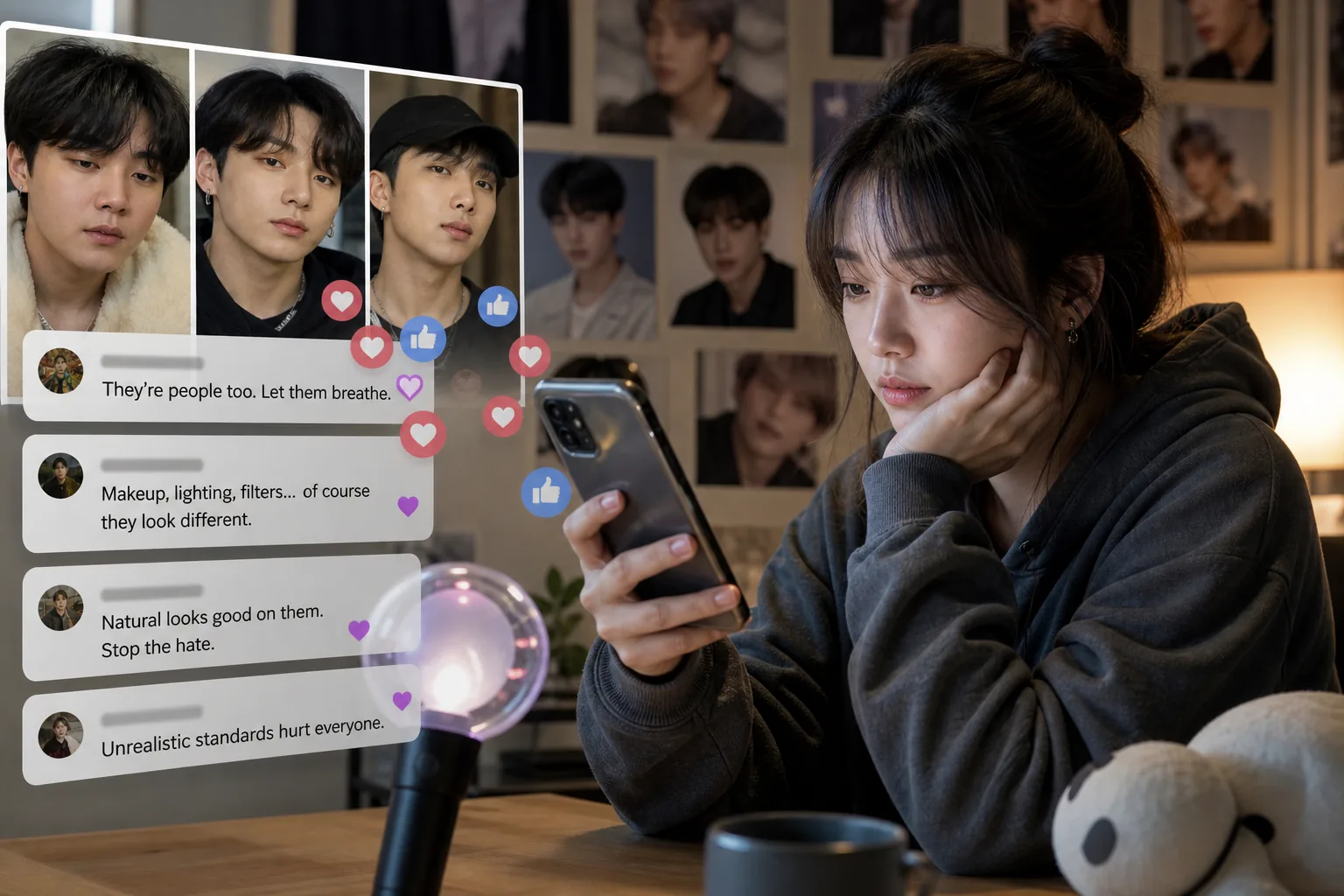
That point resonated because BTS has long occupied an unusual place in global pop culture. The group is one of K-pop’s most visible acts, and its members are frequently discussed not only as performers but as symbols of Korean entertainment’s international reach. That visibility can turn even minor clips into major talking points, especially when accounts with large followings use provocative captions to drive engagement.
The debate also highlights a familiar tension in K-pop fandom. Idol culture often celebrates highly refined visuals, but fans also value moments that appear more relaxed, candid, or human. In this case, many defenders said the backlash against BTS ignored the difference between stage presentation and everyday appearance. Their argument was simple: looking natural should not be treated as a failure.
Why the Debate Spread
Part of the reason the post traveled widely is that visual commentary remains one of the fastest-moving forms of K-pop discourse. A short clip or still image can be removed from its original context and judged instantly. That makes appearance-based criticism especially potent, even when it adds little to a serious conversation about music, performance, or artistry.
For BTS, the timing matters as well. The group continues to attract intense attention whenever older clips, new appearances, or fan-made edits resurface online. Because the members have spent years under global scrutiny, discussions around their image often become broader arguments about what fans should defend, what critics are allowed to say, and where ordinary commentary turns into personal attack.
The defense from fans focused less on denying that idols are public figures and more on challenging the tone of the criticism. In entertainment coverage, appearance is often treated as part of the public-facing package. But there is a difference between noting styling choices and using demeaning language about real people. That distinction became the center of the response.
The incident also reflects a wider shift in how fans talk about idol beauty. Younger audiences are increasingly critical of standards that treat cosmetic procedures, filters, and heavy makeup as default while mocking natural faces. At the same time, K-pop remains an industry where visual polish is part of promotion. Those two realities frequently collide online.
What makes this story notable is not that BTS received criticism; major artists do every day. It is that the response turned a negative viral post into a discussion about how online audiences evaluate celebrities when they are not presented through the most polished version of themselves. For many fans, the takeaway was that natural appearance should not be controversial at all.
As the conversation continues, it is unlikely to change the group’s public standing in any significant way. BTS has weathered far larger waves of online debate. Still, the episode shows how quickly K-pop discussions can move from a single post to a broader argument about image, authenticity, and the pressure placed on idols to look camera-ready at all times.

Join the Conversation
Log in to share your thoughts and join the conversation with other fans.