

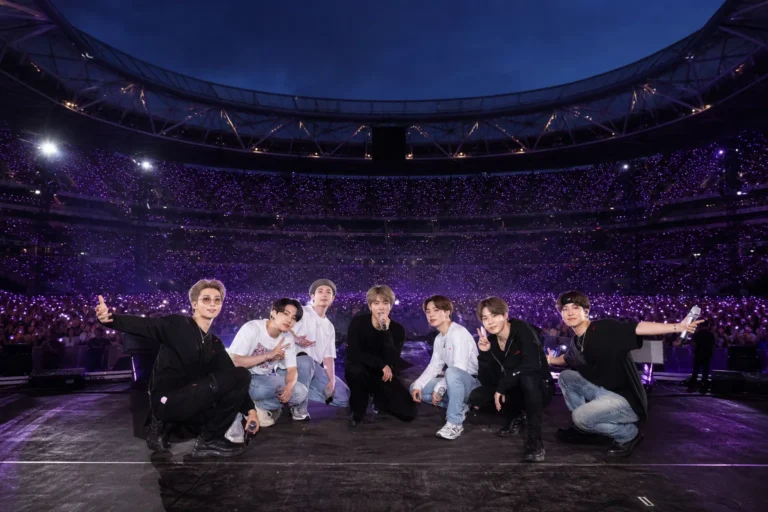
BTS returned to Britain as a full group with a stadium statement. The K-pop supergroup drew about 130,000 fans across two sold-out Arirang world tour concerts at Tottenham Hotspur Stadium in London, according to Yonhap News Agency, citing the group’s agency and promoter Live Nation.
The concerts took place on July 6 and July 7, 2026, marking BTS’s first full-group solo concerts in Britain since the members became the first South Korean act to headline Wembley Stadium in June 2019. About 65,000 people attended each night, a figure Yonhap reported as the highest per-show concert attendance at Tottenham Hotspur Stadium since the venue opened in 2019.
The result underscores the durability of BTS’s touring power after a long pause in full-group activity. The members had spent recent years navigating individual projects and South Korea’s compulsory military service system, making the London stop a highly watched test of whether the group’s global draw would return at its previous scale. The immediate sellout and reported attendance suggest the answer was decisive.
Tottenham Hotspur Stadium had listed the shows for Monday and Tuesday, July 6 and 7, with a center-stage setup and official ticketing, accessibility, hospitality, transport, and stadium rules built around an unusually large pop concert operation. For fans, the logistics were part of a wider event week rather than a single evening out, with London serving as a major European stop on the tour.
A Return Framed by Wembley History
The London concerts carried symbolic weight because of what BTS achieved in the same city seven years earlier. In 2019, their Wembley performances were widely treated as a turning point for Korean pop’s stadium ambitions in Europe. Returning to another landmark London venue in 2026 allowed the group to connect that history with its current era.
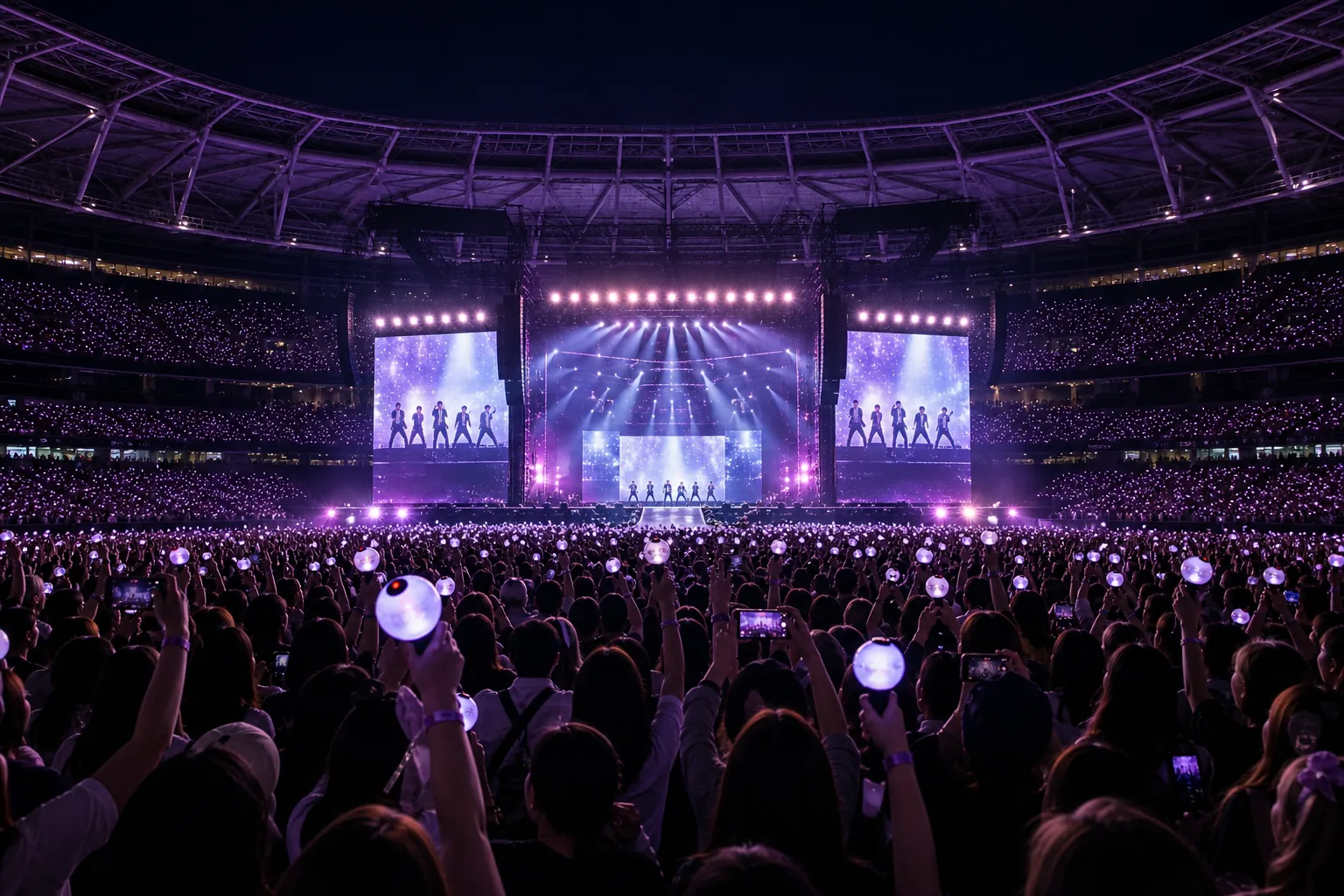
Through their agency, the members said the concerts reminded them of the emotion they felt at Wembley and thanked fans for their passion. That message matched the broader mood described in coverage of the first night, where the show was portrayed as a high-production return built around pyrotechnics, giant screens, synchronized staging, and a crowd that responded with constant noise and light sticks.
The set list mixed newer material from BTS’s fifth full-length album, including songs such as Hooligan, Normal, and Swim, with earlier hits including Idol and Fire. That balance gave the concerts two jobs at once: reintroducing the group’s present sound while reaffirming the catalog that helped turn BTS into a stadium act.
Reviews of the London stop pointed to the group’s range, moving from harder rap-driven sections to pop and ballad moments. The Guardian’s review of the July 6 show described a performance that gradually shifted from spectacle into a more communal atmosphere, with the audience’s singing and light sticks becoming central to the experience.
More Than a Two-Night Stop
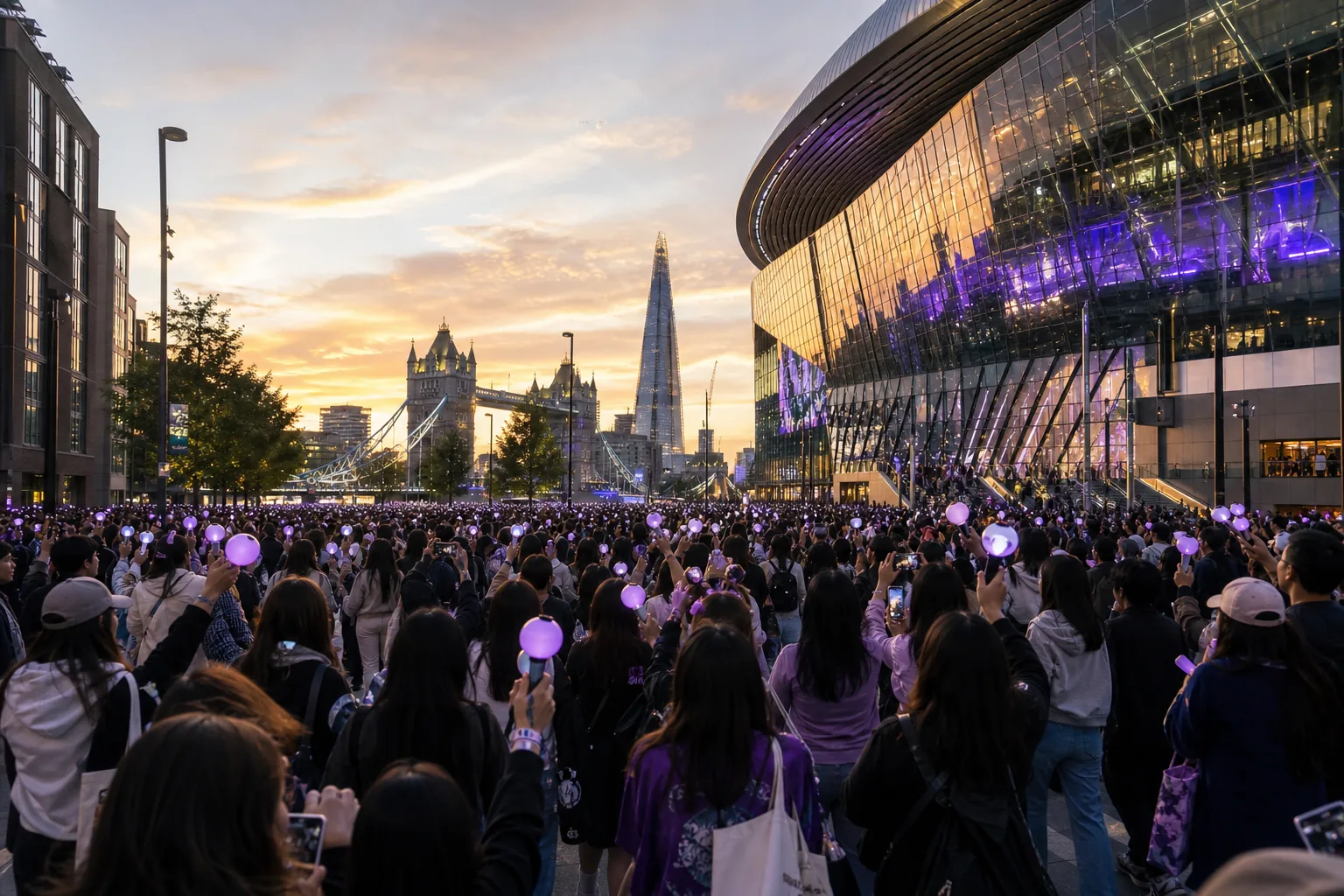
The London concerts also fit into BTS’s broader strategy of turning tour stops into citywide cultural moments. Ahead of the shows, related reporting noted the group’s The City concept in London, with fan-oriented installations and media experiences designed to stretch the concert atmosphere beyond the stadium gates.
That approach matters commercially and culturally. For a group with a global fandom as mobile and organized as ARMY, the value of a tour stop is not limited to ticket revenue. Hotels, transport, restaurants, merchandise, exhibitions, and local landmarks can all become part of the event economy, especially when fans travel internationally and plan several days around one concert.
The reported 130,000 attendance figure also arrives during a period when K-pop agencies are increasingly measuring success through touring resilience as much as streaming and album charts. BTS’s ability to fill a major London venue on consecutive weeknights reinforces its position at the top of that market, while also setting a reference point for other Korean acts pursuing large-scale European touring.
After London, BTS is scheduled to continue the European leg of the Arirang world tour with concerts in Munich. The momentum from Tottenham Hotspur Stadium gives that next stop an additional storyline: the group is not merely resuming activity, but testing how far the K-pop stadium model can expand across Europe in 2026.
For longtime fans, the London shows offered a reunion after years of waiting. For the wider music industry, they provided a clear data point: BTS can still translate anticipation into sold-out stadium nights, international travel, and a level of audience coordination few pop acts can match.



Join the Conversation
Log in to share your thoughts and join the conversation with other fans.