
MBC’s “Straight” Reports Alleged AI-Generated Voice Used to Extort Money in Kim Sae Ron Case

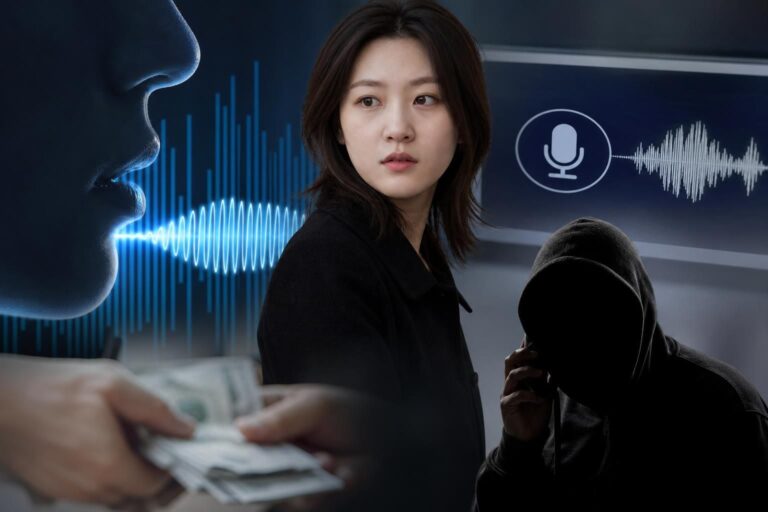
South Korean broadcaster MBC says a late actress’s voice—reportedly manipulated using AI—was used in multiple recordings to advance conflicting claims and demand money, according to an investigative segment aired June 14. The report centers on allegations involving Kim Sae Ron and the YouTube creator Kim Se Ui, who has been accused of using fabricated audio to pressure parties connected to the actor Kim Soo Hyun.
In the episode of Straight, MBC examined how several versions of audio surfaced online and were presented as authentic evidence of a relationship timeline involving Kim Sae Ron. The investigation claims that police have assessed the recordings’ credibility as low and determined that the voice used in at least some of the material had been manipulated, raising questions about extortion attempts and the broader spread of AI-generated misinformation.
Multiple “versions” of audio, each with different claims
MBC reports that Straight reviewed an audio recording released May 7 by Kim Se Ui, associated with the YouTube channel “Garo Sero Institute.” The segment says the recording purportedly included Kim Sae Ron saying she had dated Kim Soo Hyun while she was underage and he was an adult. However, the investigation claims authorities concluded the audio was AI-manipulated.
According to MBC, the informant who allegedly provided the recording to Garo Sero Institute had approached Kim Soo Hyun’s side earlier—about a month before—apparently with a different set of assertions. The production team told Straight that the informant allegedly attempted to sell another recording in which Kim Sae Ron purportedly denied dating Kim Soo Hyun while she was a minor, essentially offering contradictory “evidence” depending on which side the material was offered to.
The report also states that the informant reached out with money-related conditions and claimed the transaction did not require face-to-face contact—framing it instead as a deal where the informant would provide the audio and receive payment. Straight further reported that there were at least four known versions of the recordings, each with differing content.
What the investigation says police found
MBC’s Straight segment points to police assessments that the recordings were suspicious, noting especially the timing of the alleged recordings and the informant’s apparent early focus on whether the relationship involved underage circumstances—before the controversy became widely public.
In addition, MBC says it obtained comments from Kim Soo Hyun’s legal representative, attorney Go Sang Rok, who argued that the existence of multiple conflicting audio versions is circumstantial evidence they cannot be authentic. The attorney said there were several recordings with different content being claimed as Kim Sae Ron’s voice.
The investigation also references Kim Se Ui’s allegations that forensic verification was conducted by the National Forensic Service. Straight, according to the broadcast report, disputes parts of that claim and indicates that the request for examination did not proceed in the way Kim Se Ui suggested.
Alleged extortion scheme and the threat of escalation
The Straight report portrays a scenario in which an informant and a media-leaning YouTube actor both tried to monetize or leverage AI-manipulated “evidence.” MBC says the informant reportedly approached Kim Soo Hyun’s side about a month earlier, offering a recording that, in the informant’s narrative, would support a specific relationship claim. The segment then describes how the informant also supplied Garo Sero Institute with a contradictory recording, suggesting a pattern of using the same alleged “voice” to create different storylines for different audiences.
MBC also addresses claims made by Kim Se Ui beyond the authenticity question. The investigation says Kim Se Ui repeatedly asserted the recording’s authenticity had been verified and further alleged that Kim Soo Hyun’s side offered extremely large sums of money—“tens of billions of won”—for the audio file. The broadcast disputes that account and reported that Kim Se Ui later claimed unidentified individuals sent threats after the offer was rejected.
While details of the disputed claims are part of the broadcast’s summary, the central takeaway from Straight is that the audio evidence itself appears to have been handled in a way consistent with fabrication: different recordings, different claims, and an apparent reliance on AI voice manipulation.
Broader implications: AI audio, trust, and accountability
The MBC investigation arrives amid growing public concern over “deepfake” audio and other forms of AI-generated media. When voice cloning is possible at scale, claims can spread faster than they can be fact-checked—particularly if a manipulated clip is presented as verified testimony. In this case, Straight frames the controversy not only as a media manipulation problem but also as an alleged financial coercion effort.
Adding to the legal stakes, the report notes that an arrest warrant was issued for Kim Se Ui on charges including defamation connected to claims about Kim Soo Hyun dating Kim Sae Ron when she was a minor. The broadcast suggests that the extortion narrative and the defamation allegations are tied to the same ecosystem of AI-altered evidence, where “proof” can be generated and repackaged for maximum impact.
What happens next
With Straight airing these findings, attention is likely to shift to how prosecutors and courts evaluate the evidence chain—what was tested, how results were communicated, and which versions of the recordings can be attributed to AI manipulation with confidence. For those following the case, the key question is whether the alleged scheme involved only fabrication or also a coordinated attempt to extract money using the fabricated media.
Separately, the wider industry implications may include stronger scrutiny of audio content claims, more transparency around forensic verification processes, and additional pressure on platforms and creators to prevent AI-generated impersonations from being marketed as authentic testimony. As the case develops, investigators and media watchdogs will likely focus on both the technical provenance of the recordings and the human incentives behind their dissemination.

![[Jang Ki-ha, Yoon Gai] featured image - South Korean Singer Jang Ki-ha and Actress Yoon Gai Confirm Relationship as Rumors In...](https://d1ycet1ctov4dv.cloudfront.net/wp-content/uploads/2026/06/27150118/Jang-Ki-ha-Yoon-Gai-1782540077898-300x200.jpg)

Join the Conversation
Log in to share your thoughts and join the conversation with other fans.
A story like this lands a little heavier. I hope people give it room for nuance before reacting.
I can see why people would have mixed takes on this. The context makes it worth following.