
Singer Hareem Criticizes Condolence Wreath Protests Outside Seoul High School


Singer Hareem has weighed in on a controversy outside Seoul’s Paichai High School, criticizing the growing use of condolence wreaths and counter-wreaths as tools of public shaming and political expression. His comments, posted on Instagram on July 6, came after rows of wreaths appeared near the school following a dispute involving its baseball team and a chant that critics said mocked the May 18 Gwangju Democratic Uprising.
The issue began after Paichai High School players were accused of directing a chant toward students from Gwangju Jeil High School during the first round of the 81st Blue Dragon National High School Baseball Championship on June 29. According to Korean reports, the chant included a reference to Starbucks, which was interpreted by critics as a mocking allusion connected to the history of May 18. The reaction soon moved beyond the game itself, with wreaths appearing outside the school and the controversy spreading into politics and civic debate.
Hareem’s post focused less on the baseball team and more on the symbolism of the wreaths. In Korea, condolence wreaths are traditionally associated with mourning and funeral rites. The singer argued that using them against living people turns a symbol of grief into a public weapon. He described the ribbons attached to such wreaths as an offline version of comment sections, suggesting that a tool once tied to sympathy has become another surface for hostility.
From School Dispute To Public Symbol
The controversy around the school had already expanded before Hareem’s comments. Reports said both critical condolence wreaths and supportive wreaths were sent to the area near Paichai High School, turning the street outside the campus into a visible expression of competing political and social reactions. Local officials reportedly removed wreaths several times while citing student safety and public order concerns.
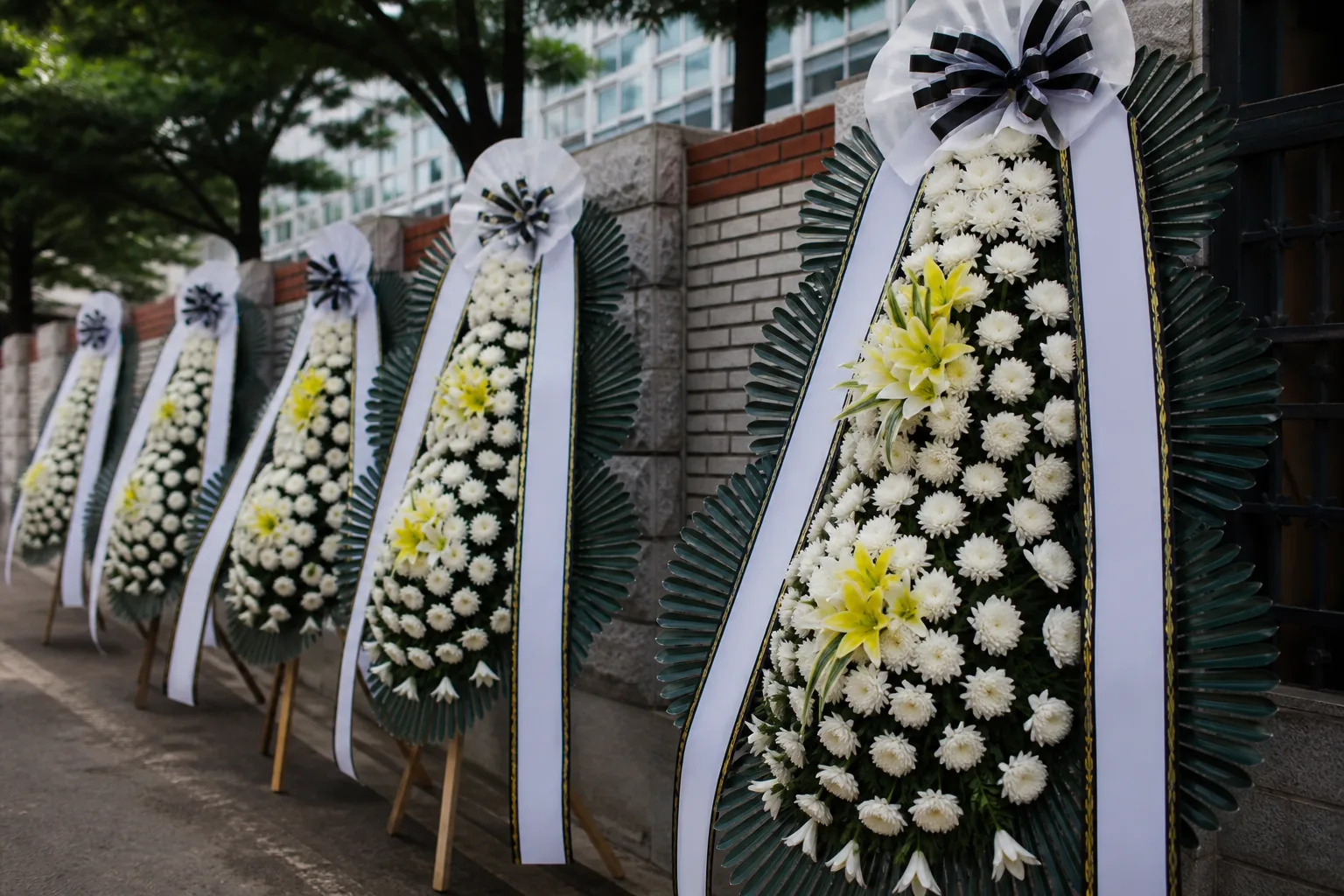
Hareem questioned why adults would send such displays to a school environment at all. His message framed the issue around the students who have to pass through the scene, regardless of who was responsible for the original incident. In his view, the constant exposure to hostile symbols may teach young people that public life is naturally built on anger, ridicule, and mutual dislike.
The singer also criticized supportive wreaths that attach themselves to political disputes. He argued that flowers should not be used to strike at people, whether the sender intends condemnation or encouragement. That distinction matters because the Paichai case has become more than a sports discipline issue; it now sits at the intersection of historical memory, political identity, and the way public outrage is staged in physical spaces.
Why Hareem’s Comments Resonated
Hareem is a recognizable figure in Korean music, and his remarks arrived as the story was moving across news and entertainment pages. His statement gave the controversy a cultural dimension: not simply whether the baseball players should be criticized, but whether Korean public culture has normalized symbolic punishment in ways that can spill into schools, streets, and everyday life.
The Hankyoreh reported that the baseball controversy had already drawn responses from political figures and civic groups. One lawmaker reportedly sent support wreaths with messages defending the students, while critics argued that doing so intensified social conflict and showed poor historical awareness. The result was a public scene where flowers, usually associated with respect or celebration, became markers of accusation and counter-accusation.
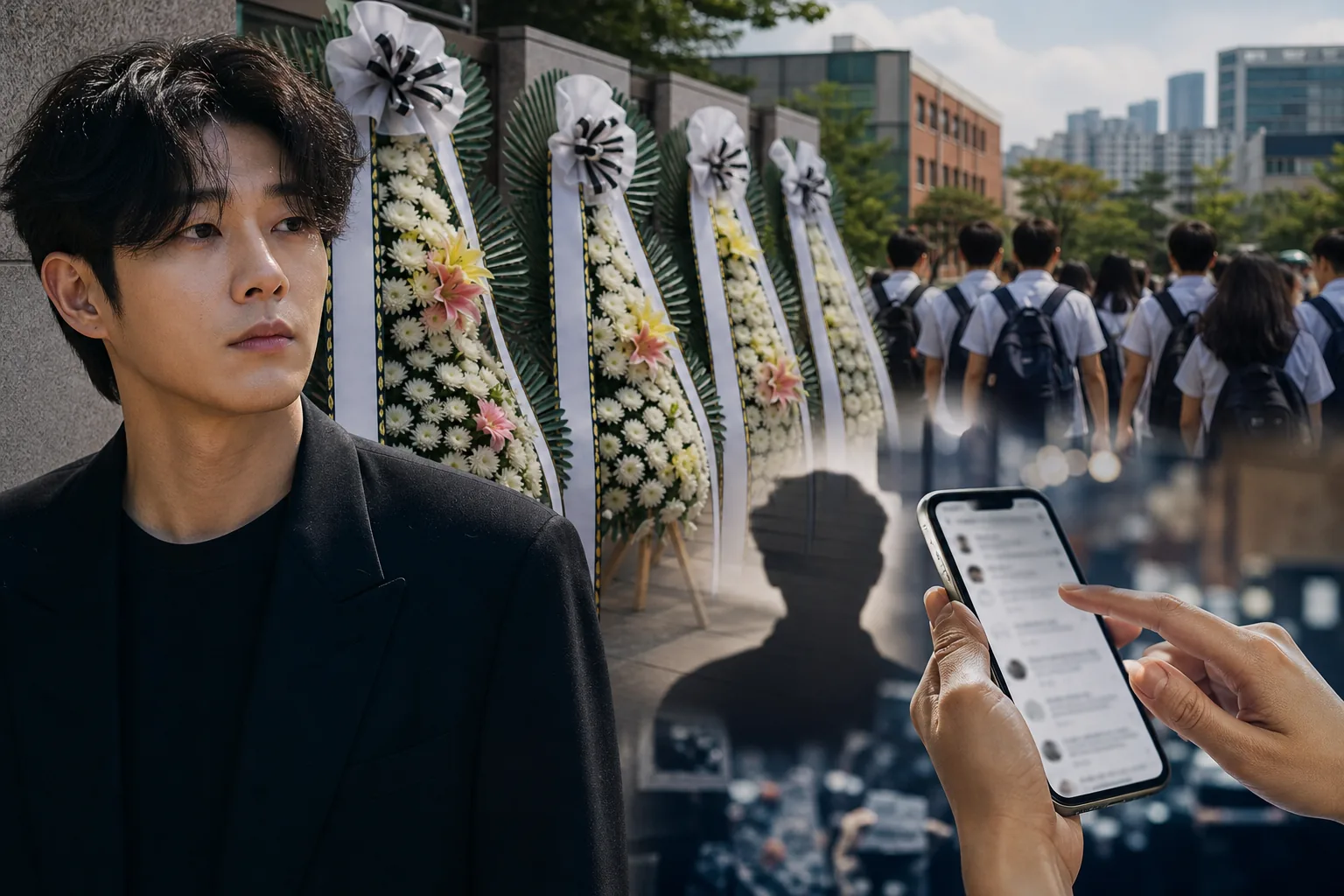
Hareem’s argument was ultimately about restraint. He did not deny that wrongdoing can be criticized, but he objected to the method of turning flowers into a spectacle of hostility. His post suggested that once condolence language is detached from mourning and repurposed for public humiliation, it loses the dignity that made it meaningful in the first place.
The debate also highlights a recurring pattern in Korean celebrity and entertainment news: public figures often become part of broader social conversations even when they are not directly involved in the original incident. Hareem’s intervention moved the story from a school sports controversy into a discussion about the emotional climate of Korean public life, including how quickly online anger can become a physical display outside real-world institutions.
For now, the school controversy remains tied to questions of history, discipline, and political response. But Hareem’s comments have added another question: whether public protest loses its moral force when its symbols are designed mainly to humiliate. In that sense, the wreaths outside Paichai High School have become a test of how South Korea handles conflict when memory, youth, politics, and performance collide.



Join the Conversation
Log in to share your thoughts and join the conversation with other fans.