Jennie Makes K-Pop History With Back-To-Back European Festival Headliner Stages

BLACKPINK’s Jennie became the first K-pop artist to headline both Denmark’s Roskilde Festival and Poland’s Open’er Festival on consecutive nights.
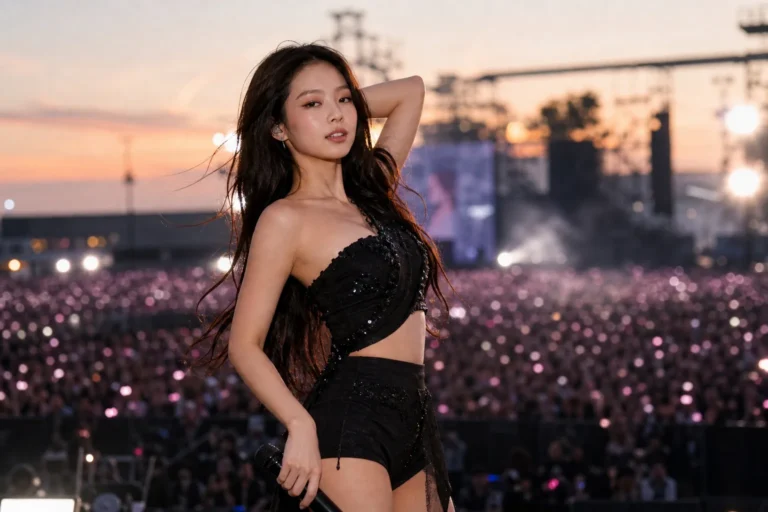
Jennie has turned a busy solo festival calendar into a milestone moment for K-pop. The BLACKPINK member performed as a headliner at Denmark’s Roskilde Festival on July 3 local time, then followed with a headline appearance at Open’er Festival in Gdynia, Poland on July 4. Newsis reported that OA Entertainment described the back-to-back bookings as a first for a K-pop artist at both major European festivals.
The significance is not only that Jennie appeared overseas. These were not fan-meeting stops, award-show cameos, or special K-pop showcases. They were headline appearances at established mixed-genre festivals where audiences gather for full lineups across pop, rock, electronic, hip-hop, and alternative music. For a Korean solo artist, that kind of placement carries different weight from a standard concert tour.
According to Newsis, Jennie’s Roskilde set included songs such as Mantra, ExtraL, Starlight, and other solo material, with the audience responding through sing-alongs and visible enthusiasm. The report framed the Denmark performance as part of a wider solo push that has moved Jennie from group-stage recognition into major global festival billing under her own name.
Why The European Dates Matter
Festival headline slots are a practical test of reach. A solo arena show mainly attracts fans who choose that artist in advance. A festival asks the performer to command a broader crowd, win over casual listeners, and hold attention in a setting where every act is competing with the scale of the event itself. Jennie’s Roskilde and Open’er stages therefore acted as both performances and market signals.
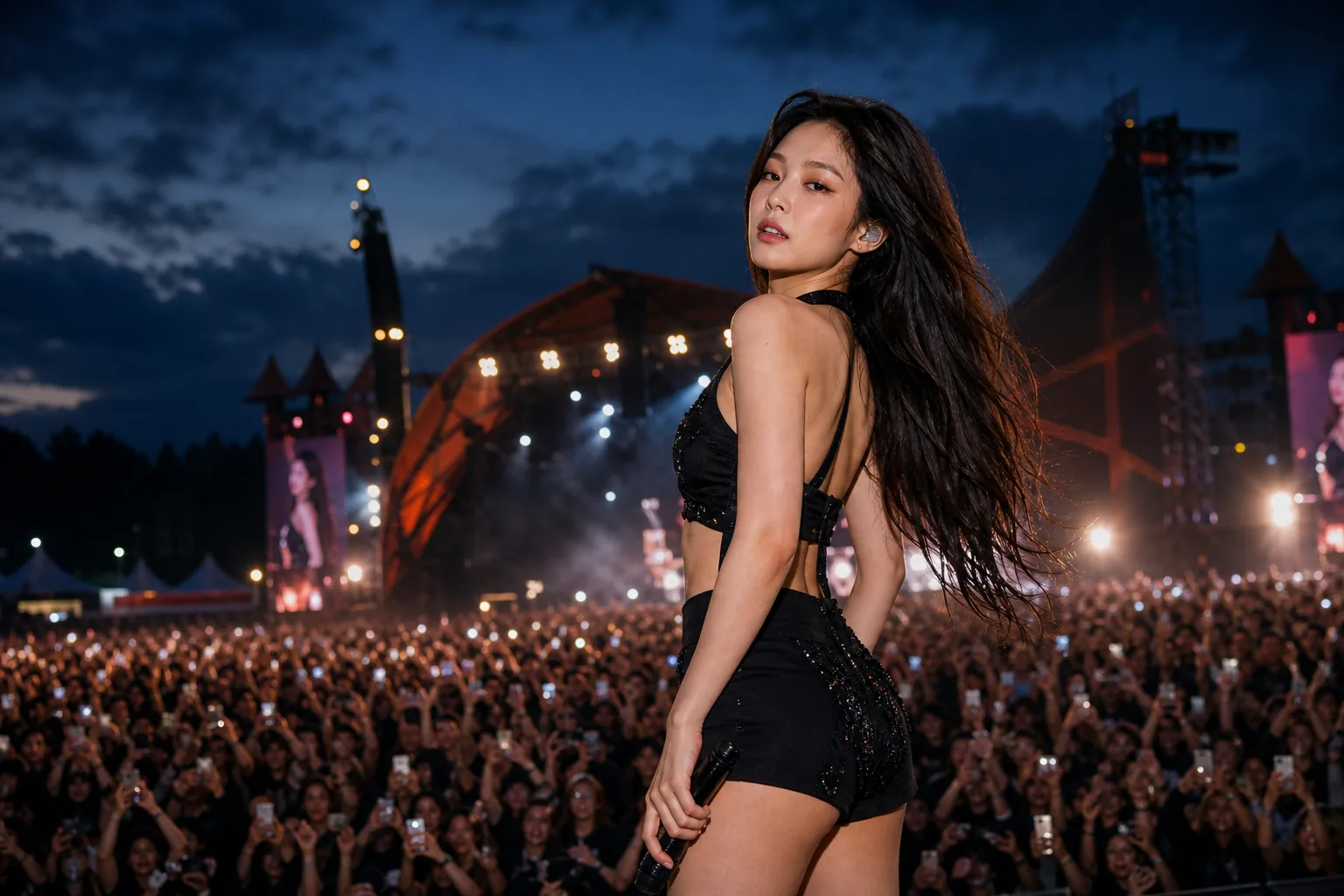
The Open’er appearance added another layer because it came the very next night. Moving from Denmark to Poland for another headline set required a fast turnaround and reinforced the idea that Jennie is being booked as a festival-ready global act, not simply as a K-pop celebrity making a symbolic appearance. That distinction matters as more Korean artists look for routes into mainstream festival circuits.
Jennie’s recent solo work has positioned her for that challenge. Her 2025 album Ruby broadened her performance vocabulary beyond the framework many listeners first associated with BLACKPINK. On festival stages, that matters because an artist needs enough material, pacing, and visual identity to hold a crowd that may include casual listeners as well as devoted fans.
A Solo Brand Beyond BLACKPINK
Jennie’s name remains inseparable from BLACKPINK, one of the most commercially successful girl groups in K-pop history. But these festival bookings underline how her solo identity has become more defined. Ruby gave her a larger set of songs to perform under her own name, while collaborations and international visibility have helped position her in the wider pop conversation.
Newsis also connected the festival run to Jennie’s broader 2026 momentum, including chart visibility for Dracula, her collaboration with Tame Impala. Chart attention does not automatically guarantee festival authority, but it helps explain why promoters can present her as a main-stage act with relevance beyond fandom metrics.
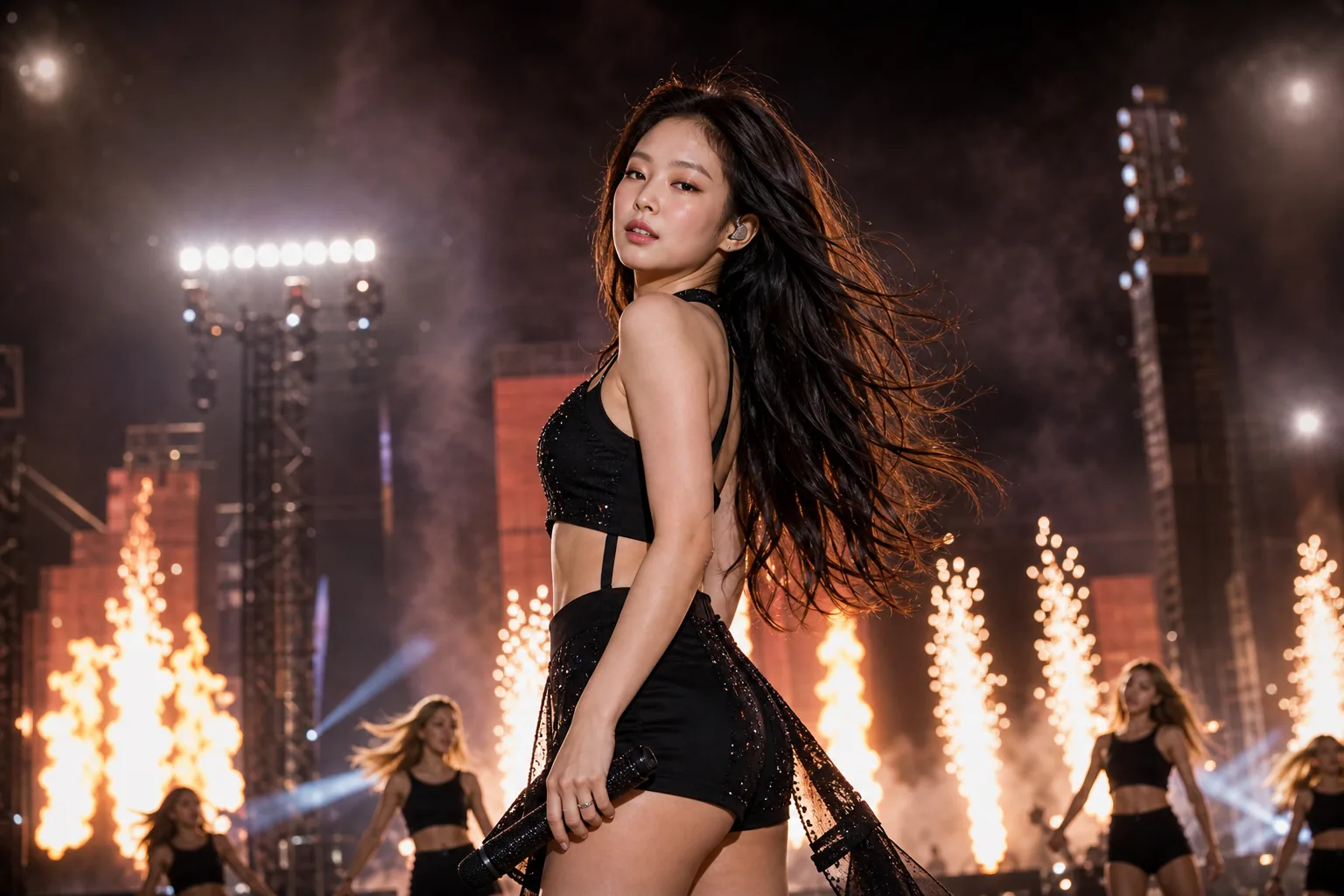
That broader visibility is important because festival audiences do not always behave like concert audiences. Some people arrive for the whole event rather than one performer, and others discover an artist through clips, crowd reactions, or the event’s top-line billing. Jennie’s task in Europe was therefore to make her solo identity legible quickly: polished visuals, tight choreography, recognizable hooks, and enough command to make a large outdoor stage feel centered around her.
For the K-pop industry, the headline run points to a wider shift. Korean acts have already proven they can sell albums, fill arenas, and dominate online fan culture. Festival headliner status is another benchmark because it places artists in front of mixed crowds and alongside global performers from many genres. Jennie’s two-night European milestone gives that shift a clear solo example.
There are still limits to how widely the model can be copied. Jennie benefits from BLACKPINK’s global recognition, her own fashion and pop-culture profile, and a solo catalog built for high-impact staging. Not every artist can immediately follow the same path. Still, the precedent matters because it expands what promoters and agencies may consider possible for Korean soloists.
For fans, the headline is straightforward: Jennie stood at the top of two major European festival bills on consecutive nights. For the industry, the message is broader. K-pop’s next global chapter will not be measured only by arena tours or chart peaks, but by which artists can step onto mixed-genre festival stages and make the booking feel natural.
What Readers Are Discussing
- “Seeing Jennie headline these festivals back to back feels huge for K-pop soloists.”
- “I like that she’s being treated like a global pop act, not only a K-pop guest.”
- “Ruby really gave her the material to carry these solo stages.”
- “This makes me wonder which Korean soloist could headline Europe next.”
Comments