
Jiyoon’s Refusal Of Viral AI Song Challenge Sparks Debate In K-Pop

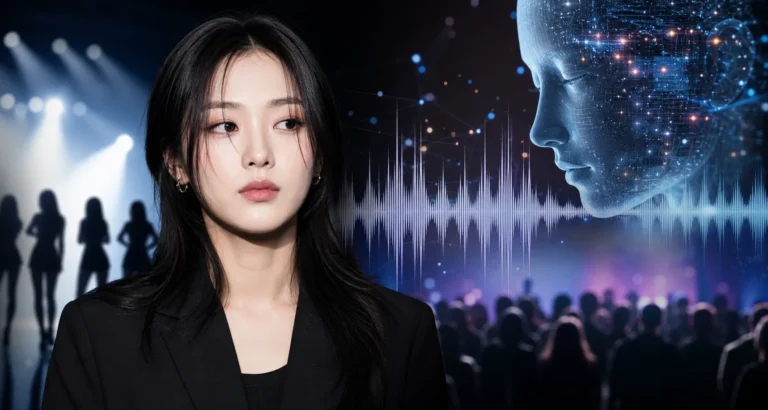
Former Weeekly member Jiyoon has become the center of a new K-pop conversation after refusing to take part in a viral dance challenge tied to an AI-generated song. The moment, which happened during a recent social media live broadcast, quickly spread among fans because her answer was brief, direct, and unusually firm for an idol-facing trend request.
According to the report, viewers asked Jiyoon whether she would dance to the trending track “GG EZ”, a song that has been used in short-form videos and dance clips across K-pop fan spaces. Several high-profile idols have already joined the trend, helping the song move further through algorithm-driven platforms where a few seconds of choreography can turn into a global talking point.
Jiyoon did not criticize the choreography itself. Instead, she reportedly said she would not participate because the music was generated by artificial intelligence. That distinction is what made her response stand out: she separated the appeal of the dance from the source of the song, making clear that the issue was not the trend’s popularity but the creative process behind it.
Why The Refusal Hit A Nerve
The reaction was immediate because dance challenges now function as a central promotional language in K-pop. Idols often join them to support friends, promote comebacks, maintain visibility, or simply stay connected to fans. When a challenge goes viral, participation can feel casual, but it also gives the song more reach, more legitimacy, and more chances to appear in feeds.
That is why Jiyoon’s refusal carried more weight than a simple no. By declining, she put attention on a question many fans may not have considered before pressing play: who actually made the song benefiting from the trend? Her stance suggested that idols are not only performers within these viral systems, but also creative workers who can decide what kinds of music they want to amplify.
The source article noted that Jiyoon has previously spoken about generative AI from an artist’s perspective. Her concern is not only that AI music exists, but that its spread can reduce opportunities for human singers, producers, composers, lyricists, and performers. In a field where trainees often spend years preparing for uncertain careers, that concern lands especially sharply.
Fans Reconsider The Trend
One reason the story traveled quickly is that many fans said they did not realize the song was AI-generated until Jiyoon’s comments circulated. For those listeners, the moment turned a light dance trend into a bigger discussion about transparency. If a track is created with AI, fans are asking whether platforms, creators, or trend participants should make that clearer before the sound is pushed into mainstream K-pop spaces.
Supporters praised Jiyoon for showing what they saw as professional awareness. Some argued that idols who have trained in singing and performance should be cautious about promoting music that bypasses human artists. Others framed the issue more broadly, saying the entertainment industry is still moving faster than its ethical guidelines when it comes to AI-made content.
There is also a practical side to the debate. K-pop has always absorbed new technology, from virtual avatars to augmented concert visuals and AI-assisted production tools. The tension comes when listeners cannot tell whether a tool is supporting artists or replacing them. Jiyoon’s response did not settle that debate, but it gave fans a clear example of an idol drawing a personal boundary.
The discussion also shows how quickly fan culture can change the meaning of a trend. A dance challenge may begin as a fun clip, but once questions about authorship, credit, and labor enter the conversation, each repost becomes part of a larger value judgment. For idols, that means a casual challenge request can carry reputational and artistic implications.
A Small Moment With A Larger Message
Jiyoon’s answer is unlikely to end AI-generated music in K-pop fan spaces, and it does not mean every idol who joined the challenge knew the track’s origin. But the response has made one thing clearer: fans are increasingly watching not only what idols perform, but what their performances help promote.
For now, the story is less about one dance challenge than about a shifting standard for digital-era pop culture. As AI-made songs become easier to produce and harder to identify, artists and fans may keep asking for more transparency, more credit for human creators, and more deliberate choices from public figures with large platforms.
Join the Conversation
Log in to share your thoughts and join the conversation with other fans.