
Denise Opens Up About Bleeding Through a White Skirt During a Music Show—And How Her Stylists Saved Her

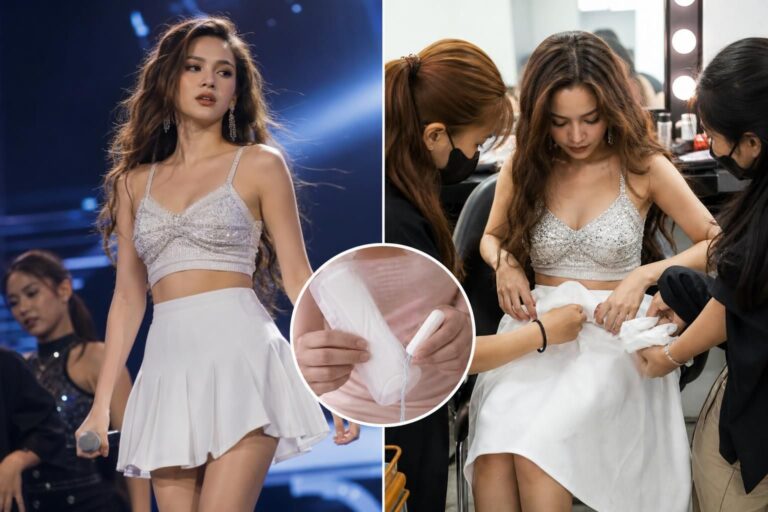
Denise, a former member of K-pop group SECRET NUMBER, has shared a behind-the-scenes story that put the spotlight on a problem many performers face but few discuss publicly: how quickly menstrual accidents can collide with high-pressure stage schedules. In a recent account of a music-show day, Denise said that after taking a nap following a performance, she discovered she had bled through the white skirt she was wearing—prompting an urgent, on-the-spot cleaning effort by her stylists before she had to return to the stage.
A nap, a styling decision, and an emergency in the bathroom
Denise explained that during promotions on a music show, the group had little downtime—enough time only to recover and wait for announcements and follow-up filming. After performing earlier in the day, she said she was exhausted and “knocked out” on a couch during the break while the team awaited the winner announcement.
When she woke up, she went to get ready for the next segment. However, she was wearing a white skirt that day, and because it was part of her styling, it could not simply be changed without risking delays. Denise said the situation became obvious when her stylist reacted with visible alarm. According to her account, the stylist quickly suggested they go to the bathroom together, where Denise realized the stain was already visible in the mirror.
In Denise’s telling, the moment was alarming enough that her stylist hugged her from behind and immediately moved into crisis-management mode. Denise described seeing what she called a “fat-ss red dot” in the reflection—an image that underscores how quickly a routine wardrobe can become a public vulnerability for performers, especially when they’re fatigued.
Stylists take control: fast cleaning instead of a full costume swap
Rather than replace the skirt, Denise said her styling team treated the problem like an urgent field operation. She described the head stylist stepping in as the decision-maker, ordering cold water and soap, enlisting help from others, and even calling for a hair dryer to speed up drying. Denise said the team removed the skirt and scrubbed it repeatedly in the bathroom, moving quickly enough that the solution had to work without losing time for stage arrival.
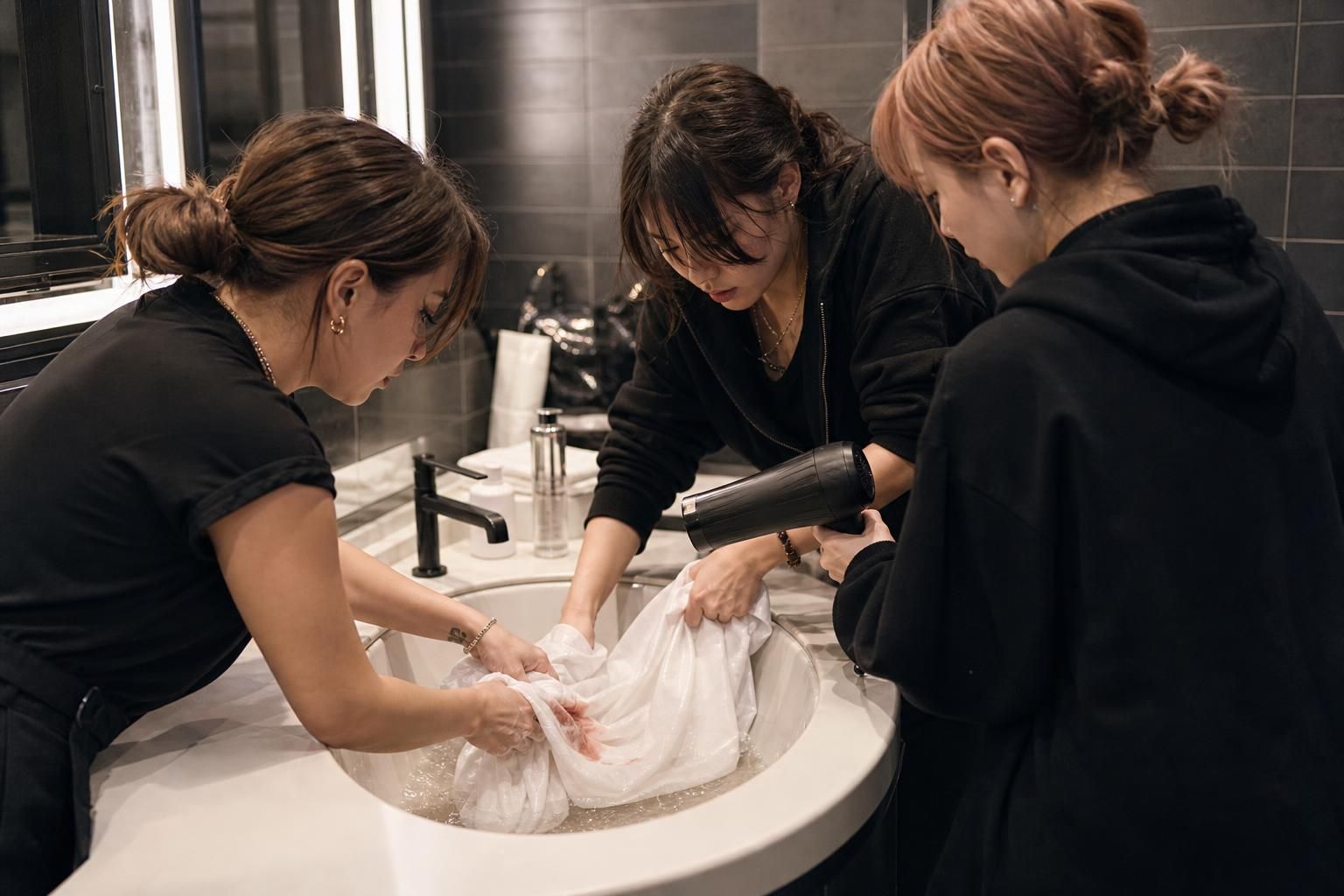
“Cold water, soap, someone grab a hair dryer, let’s go, chop-chop! Skirt’s off, they’re scrubbing, they’re doing all that,” Denise recalled, while she stood off to the side apologizing for the situation. She emphasized that the response was coordinated and immediate—less a discussion and more a rapid execution.
For many fans, the story is notable not only because of the personal embarrassment that can accompany such accidents, but also because it highlights how much labor and logistical pressure rests on the backstage staff. In a system where performers can’t step away for long, the difference between staying on schedule and falling behind can hinge on a few minutes of effective crisis handling.
Why it became so stressful: the clock, the stakes, and performer inexperience
Denise said the incident didn’t have to be as intense as it felt in the moment—especially once the team got to work—but the overall environment made everything harder. She pointed to sleep deprivation and high tension around music-show outcomes as the amplifying factors. When the stakes are high and everyone is exhausted, she said, even a manageable problem can feel like it might derail the entire day.
She also noted that she and her group were relatively new at the time, suggesting that they weren’t positioned for maximum visibility on stage—meaning the immediate fear of being seen from the wrong angle was somewhat reduced. Still, the situation was stressful because no performer can control when they will be examined by cameras, lighting, or choreography coverage.
Denise’s account, while framed as a memory, echoes a broader reality in idol culture: performers often have limited control over their bodies during promotions, from wardrobe constraints to demanding schedules. When styling choices meet biological realities, the result can be a sudden emergency rather than a planned adjustment.

A reminder about menstrual health in entertainment—without stigma
Although menstruation is universal, public discussion about it—especially in highly curated entertainment spaces—remains limited. Denise’s choice to speak openly therefore lands as more than a dramatic anecdote; it functions as a direct challenge to the stigma that can prevent performers from describing ordinary health issues.
Her story implicitly raises questions that fans have debated for years in idol communities: why wardrobe concepts sometimes ignore menstruation-related needs, how quickly idols are expected to return to work after physically demanding moments, and what support systems exist behind the scenes when accidents happen. By describing the incident matter-of-factly, Denise also shows that the “solution” often involves teamwork and backstage knowledge rather than self-blame.
What’s next: more transparency—and pressure on styling norms
Denise’s post arrives at a time when K-pop audiences are increasingly attentive to performer welfare and behind-the-scenes labor. Her story could encourage more idols to share similar experiences, especially about menstrual health, wardrobe flexibility, and the realities of performing while dealing with bodily changes.
For production teams and stylists, the incident may also reinforce a practical takeaway: having contingency options for period-related emergencies—whether through backup garments, quick-change protocols, or more inclusive wardrobe planning—can reduce stress for performers and improve consistency during live broadcasts.
In the meantime, fans will likely continue to view Denise’s account as a rare, human glimpse into the pressures of stage life—one where even something as common as a period can become a high-stakes moment, and where backstage teams can mean the difference between panic and a timely return to the camera.



Join the Conversation
Log in to share your thoughts and join the conversation with other fans.
This feels simple at first, but there is enough emotion in the details to make it linger.
This has a more emotional pull than the headline first suggests. The small details make it feel human.