
JYP Entertainment Partners With Xiaomang to Expand Official Merchandise in China

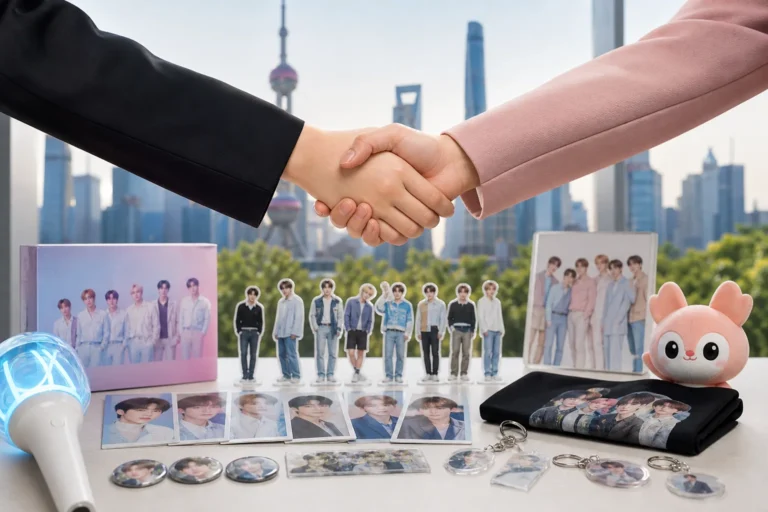
JYP Entertainment is moving to strengthen its China-facing merchandise business through a new partnership with Xiaomang, an IP commerce platform connected to Hunan Broadcasting and Film Group. The agreement centers on official artist intellectual property, licensed goods, and distribution channels for fans in China.
According to the report, JYP said the collaboration was created to expand official merchandise opportunities and give local fans a more reliable way to purchase goods based on the company’s artist IP. That wording points to a practical business goal: making the buying path clearer in a market where demand for K-pop products often moves through a mix of official shops, resale channels, group orders, and platform-specific promotions.
A merchandise deal with a wider media backdrop
Xiaomang is not only a commerce name. It is affiliated with Hunan Broadcasting and Film Group and operates in a space that links content, fandom activity, and shopping. The platform is also backed by the broader influence of Mango TV, one of China’s major entertainment streaming brands, and the source article notes a user base of about 200 million.
For JYP, that makes the deal more than a simple retail arrangement. A licensed merchandise partnership can turn artist IP into a controlled consumer experience, from product planning to fan access. It also gives the company a way to build around legal, official goods rather than leaving demand to unofficial sellers or fragmented distribution routes.
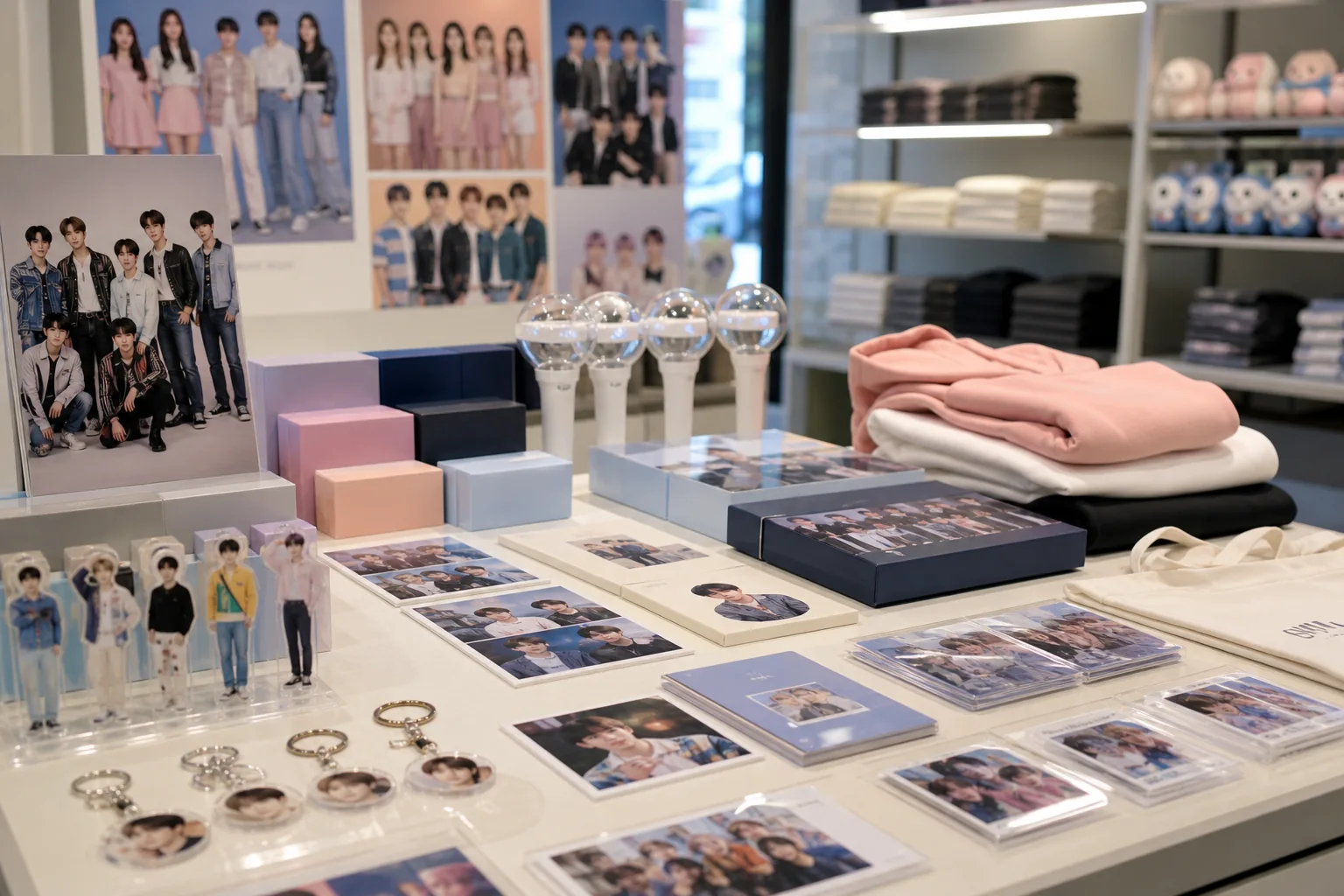
The company’s current roster gives the agreement a broad potential footprint. JYP’s lineup includes founder and producer J.Y. Park as well as 2PM, DAY6, TWICE, Stray Kids, BOY STORY, ITZY, NiziU, Xdinary Heroes, NMIXX, NEXZ, GIRLSET, and KickFlip. Not every act will necessarily be used in the same way, but the range of artists gives JYP multiple fan demographics to work with.
The China angle is especially notable because several JYP artists already have meaningful regional recognition. Stray Kids and TWICE remain global tentpoles, while BOY STORY was developed with the Chinese market in mind. A better official merchandise pipeline could help JYP serve fans who are already active online but may not have consistent access to domestic Korean releases or concert-linked goods.
Blue Garage joins the distribution side
The agreement also involves Blue Garage Co., Ltd., a JYP subsidiary that will work on Chinese distribution for officially released domestic merchandise. That detail matters because distribution is often where international fandom commerce becomes difficult. A product can be popular globally, but fans still need reliable inventory, localized purchasing options, reasonable delivery, and confidence that the item is genuine.
By placing a subsidiary into the distribution side, JYP appears to be separating two related tasks: licensing artist IP with Xiaomang and building a practical route for goods that have already been officially released in Korea. If executed well, that could support both new China-specific merchandise projects and more formal access to existing products.
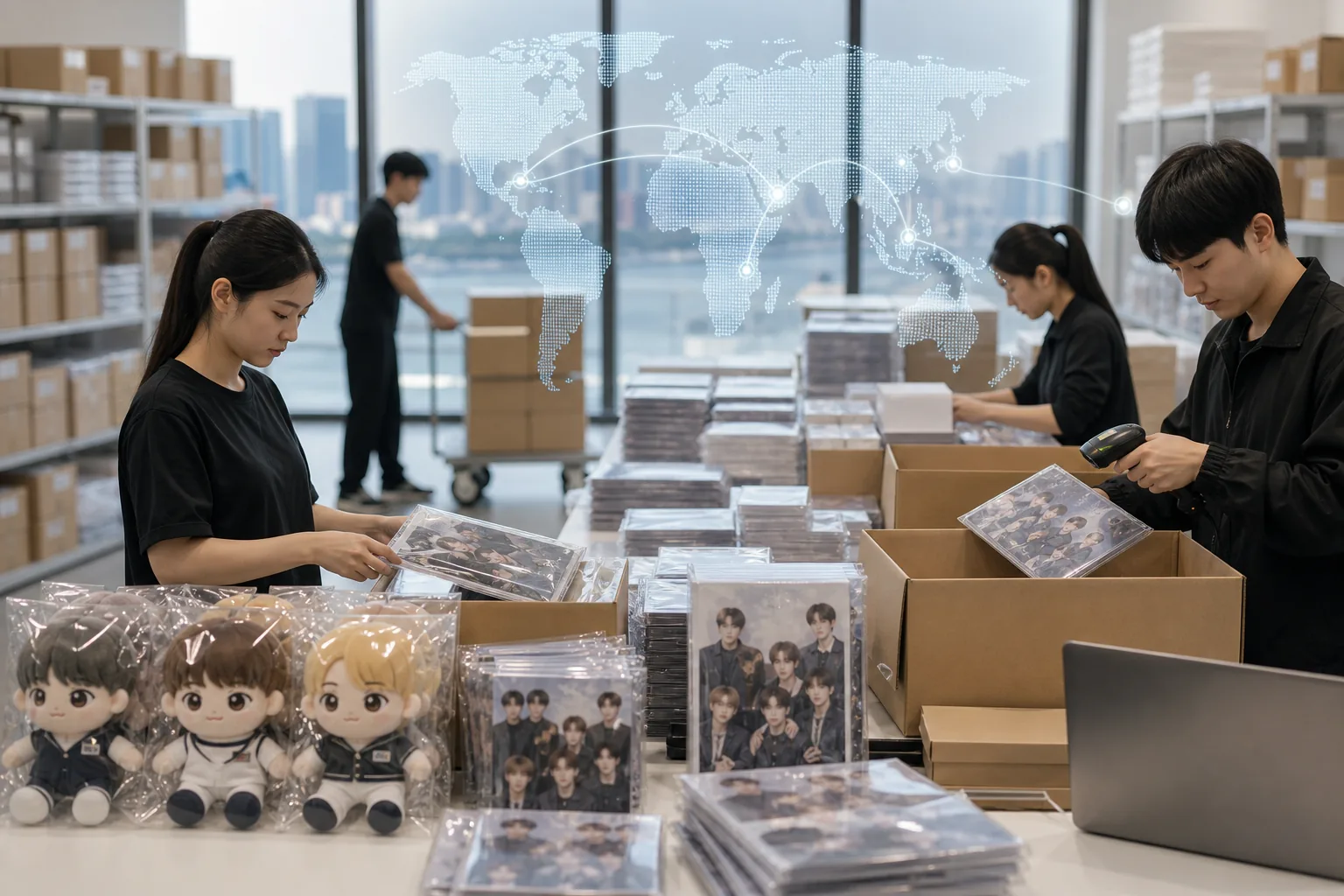
The partnership also reflects a broader shift in K-pop business. Album sales and touring remain central, but agencies increasingly treat merchandise, character goods, pop-up stores, and fan-commerce platforms as part of the main revenue engine. The most valuable IP is no longer limited to music videos and stage performances; it extends into items that let fans display affiliation in daily life.
China remains a complicated but important entertainment market for Korean companies. Political, regulatory, and platform conditions can change quickly, so agencies tend to move carefully. A merchandise-centered partnership may offer a narrower, commercially focused route compared with large-scale promotional activity, while still keeping artist brands visible to fans.
Why fans may notice the change
For fans, the most immediate impact would be felt if official goods become easier to find and verify. That could mean fewer concerns about counterfeits, clearer release information, and a more direct path from a JYP artist’s Korean merchandise cycle to Chinese buyers. It may also reduce the gap between fans who can access official channels and those who depend on third-party resellers.
Still, the announcement is an opening step, not a full product roadmap. JYP has not yet detailed which artists will be prioritized, what merchandise categories will launch first, or whether the collaboration will lead to platform-exclusive items. Those details will determine whether the deal becomes a visible fan experience or mainly an industry-facing distribution upgrade.
The timing is significant because K-pop companies are looking for growth beyond traditional album metrics. Official merchandise is easier to scale when it is tied to a trusted platform, and a partner with media-commerce infrastructure can help connect fan attention to purchasing behavior. For JYP, Xiaomang offers a way to test that model in one of Asia’s largest entertainment markets.
The partnership’s success will likely depend on consistency: whether products arrive through official channels, whether pricing feels fair, and whether fans see enough artist-specific value to shift away from informal buying networks. If those pieces align, JYP’s deal with Xiaomang could become a meaningful part of the company’s wider China strategy.


Join the Conversation
Log in to share your thoughts and join the conversation with other fans.