
BTS’s Jungkook Sets Clear Boundary Over English Requests During Live Broadcast

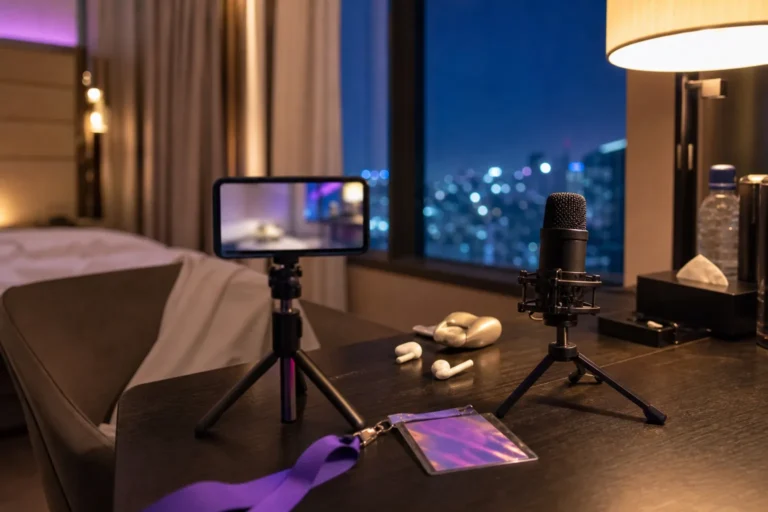
BTS member Jungkook has turned a routine live-broadcast exchange into a pointed reminder about language expectations in global K-pop fandom. During a June 28 broadcast from his hotel room after BTS’s show in Spain, the singer responded directly to viewers who were asking him to speak English. His answer was affectionate toward fans but firm about the pressure placed on Korean artists to shift languages on command.
The moment circulated quickly among fans because it touched on a recurring tension in international fandom spaces: many idols use live platforms to speak casually and spontaneously, while viewers from around the world often request English in the comments. In Jungkook’s case, the request came during an informal broadcast where he was talking to fans after a major overseas performance, a setting that made the exchange feel less like a press event and more like a personal conversation.
A Firm But Lightly Delivered Message
According to fan translations shared from the broadcast, Jungkook told viewers that he had already said he could not speak English comfortably and encouraged them to use Korean if they wanted to communicate with him more directly. He also said he studies English at his own pace and would like to speak other languages, including Spanish, but cannot do everything immediately. The comments were not framed as a rejection of international fans; rather, he emphasized that he loves them while asking them not to keep demanding English.
That balance helped the moment spread. Jungkook did not present the issue as a confrontation between Korean and overseas fans. He made it about basic consideration, reminding viewers that he is Korean and that communication requires effort from both sides. His delivery also included humor, which softened the exchange without weakening the message.
After the statement, Jungkook appeared to notice more Korean-language comments in the live chat and reacted positively. He praised Korean as a language capable of expressing a wide range of feelings, adding another layer to the discussion: for many fans, the broadcast was not only about English requests but also about valuing the language in which the artist naturally thinks, jokes, and responds.
Why The Exchange Resonated
The response from Korean online communities was largely supportive, with many commenters saying idols should not be treated as if English were an obligation. Some pointed out that translation tools already exist on fan platforms, while others argued that fans who follow Korean artists can also make an effort to learn basic Korean. The larger sentiment was that asking once may be understandable, but repeatedly instructing an artist to change languages during a live broadcast can come across as dismissive.
The issue is especially visible for BTS because the group has one of the world’s largest international fan bases. BTS members have worked across languages for years, giving interviews, preparing global releases, and communicating with audiences far beyond Korea. But the scale of that success also means their casual interactions are watched by millions of fans with different expectations, cultural habits, and levels of language access.
Jungkook’s remarks highlight a distinction that can get blurred in global pop: professional promotion is not the same as an unscripted fan chat. In formal schedules, artists may use prepared English, interpreters, subtitles, or translated posts. In a late-night broadcast after a concert, the appeal often comes from immediacy. Fans tune in to see the artist speak in a relaxed way, and forcing that moment into another language can change the tone entirely.

A Broader Fandom Etiquette Question
K-pop’s international expansion has made translation part of everyday fandom. Clips are subtitled within minutes, fan translators provide context across platforms, and official services increasingly offer automated captions or paid translation features. Those tools do not solve every barrier, but they do reduce the need to put the full burden on the artist in real time.
The conversation also reflects a shift in how fans talk about respect. In earlier phases of K-pop’s global growth, English access was often treated as a sign of inclusion. Now, more fans are questioning whether constant English demands can unintentionally center one audience at the expense of the artist’s own language and comfort. Jungkook’s broadcast gave that debate a clear, high-profile example.
For international fans, the takeaway is practical rather than punitive. Learning Korean is not required to enjoy K-pop, and many fans depend on translations. But live comments are part of the artist’s immediate environment. A flood of demands to speak English can feel less like a request for access and more like pressure to perform differently.
Jungkook’s message landed because it was simple: he wants to communicate, he is learning at his own pace, and fans can meet him partway. In a fandom built across borders, that may be the most realistic form of connection: not one language replacing another, but a shared willingness to listen with patience.



Join the Conversation
Log in to share your thoughts and join the conversation with other fans.