
South Korea’s KOSPI Slump Triggers Circuit Breakers as Investors Reassess Risk

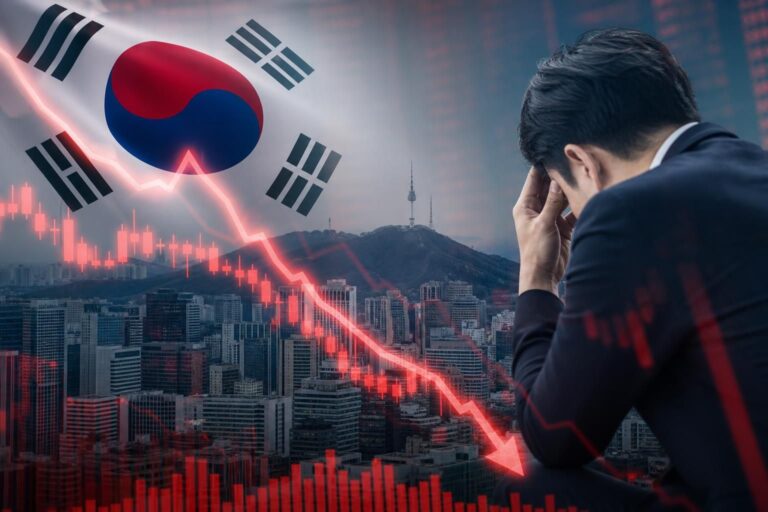
South Korea’s stock market saw sharp selling pressure on Black Friday, with the KOSPI dropping roughly 8% and circuit breakers being triggered for the week’s first major shock. Several reports in the past day pointed to a combination of global rebalancing activity by foreign investors, profit-taking, and renewed caution around the outlook for artificial intelligence (AI)-related equities.
According to coverage summarized by Korean financial news outlets and aggregators, the index’s steep decline quickly pushed trading to levels where automated market-stability mechanisms kicked in. The reports also noted that the episode was unusual in its frequency, describing it as the first time the circuit breaker was triggered twice within a single week, underscoring how quickly sentiment deteriorated.
Why the selloff accelerated
While the immediate trigger was market-wide risk reduction, the reporting points to multiple overlapping drivers rather than a single headline event. One theme was foreign investor position adjustments, with commentary suggesting that global investors may have been engaged in interim rebalancing. In this context, even stocks that had been holding up—particularly those priced for continued growth—became vulnerable to rapid de-risking.
Another factor highlighted in the digest was profit-taking. The language in the coverage—describing the move as a period where investors were “locking in gains” and expanding volatility—suggests that after prior rallies, some participants chose to reduce exposure as broader risk appetite faded.
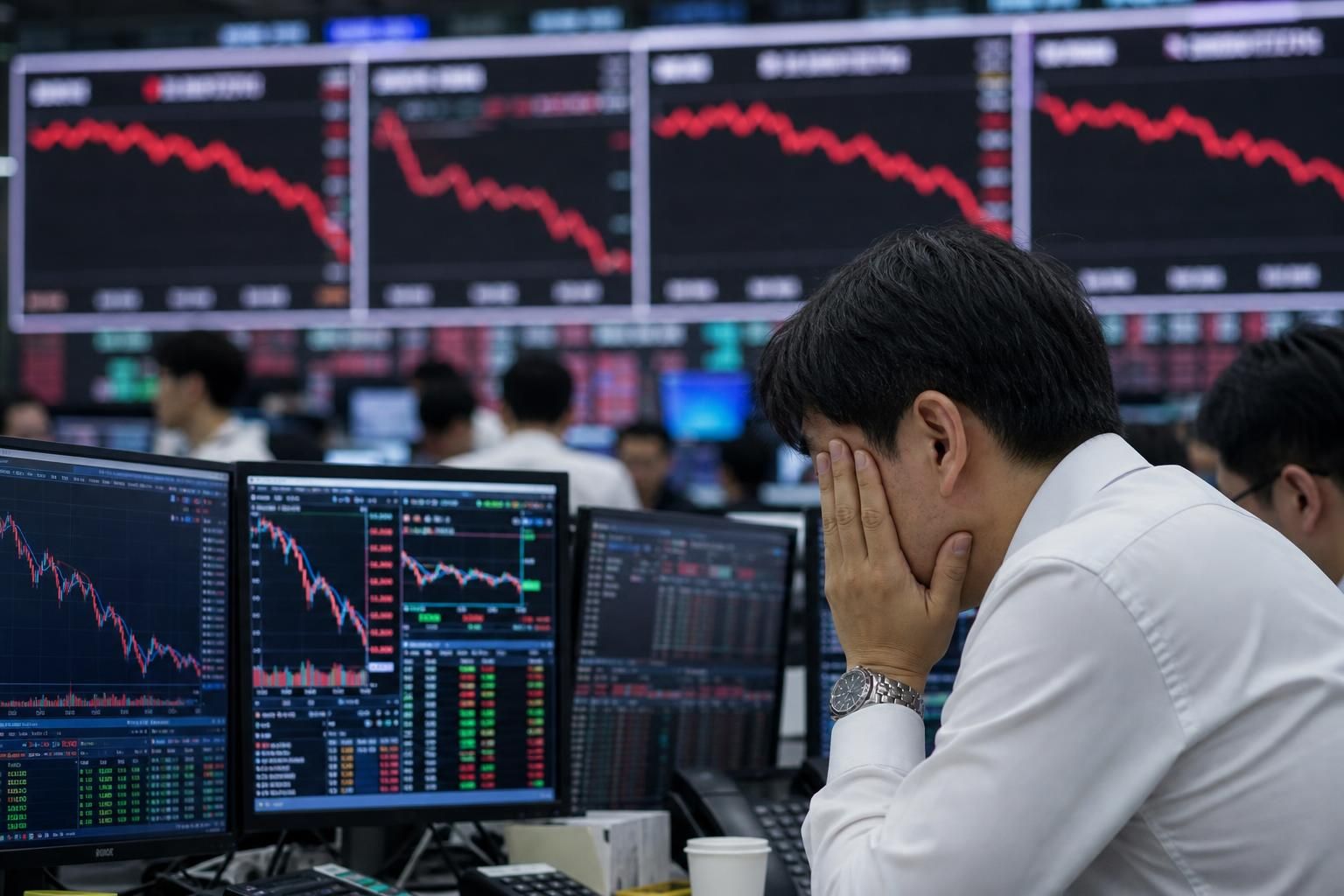
Finally, market observers in the coverage linked part of the caution to AI investment sentiment. AI-related equities and infrastructure supply chains have been among the most watched growth themes in recent quarters, but the digest indicated concerns that AI-driven investment expectations may soften, at least temporarily. That would naturally weigh on high-beta segments when the broader market turns risk-off.
What the circuit breaker means for traders
Circuit breakers are designed to pause trading when the market falls (or rises) too rapidly within a short period, giving investors time to absorb information and reducing the chance that liquidity evaporates during panic selling. In practice, they can also become a signal in their own right: when triggered, they reflect that automated systems and human trading behavior are both reacting to a sudden shift in perceived risk.
Notably, the digest emphasized that this week’s volatility was already high enough for another intervention earlier, making the “twice in a week” detail stand out. That suggests a market that may be struggling to find consistent footing even after attempts at stabilization.
Investor interpretations: “Not a long-term issue” vs. “Higher volatility ahead”
Different reports offered different framings of what this move represents. One view described the episode as consistent with routine adjustments—arguing it likely would not be a prolonged structural problem and framing foreign rebalancing as the dominant explanation.
However, other coverage warned that volatility could remain elevated in the near term. That distinction matters: if the selloff is largely mechanical (rebalancing and re-pricing), the market may stabilize relatively quickly. If instead the underlying concern is fundamental—such as a recalibration of AI demand expectations or a wider tightening of global liquidity—investors may continue to price downside risk for longer.
How the market could respond next
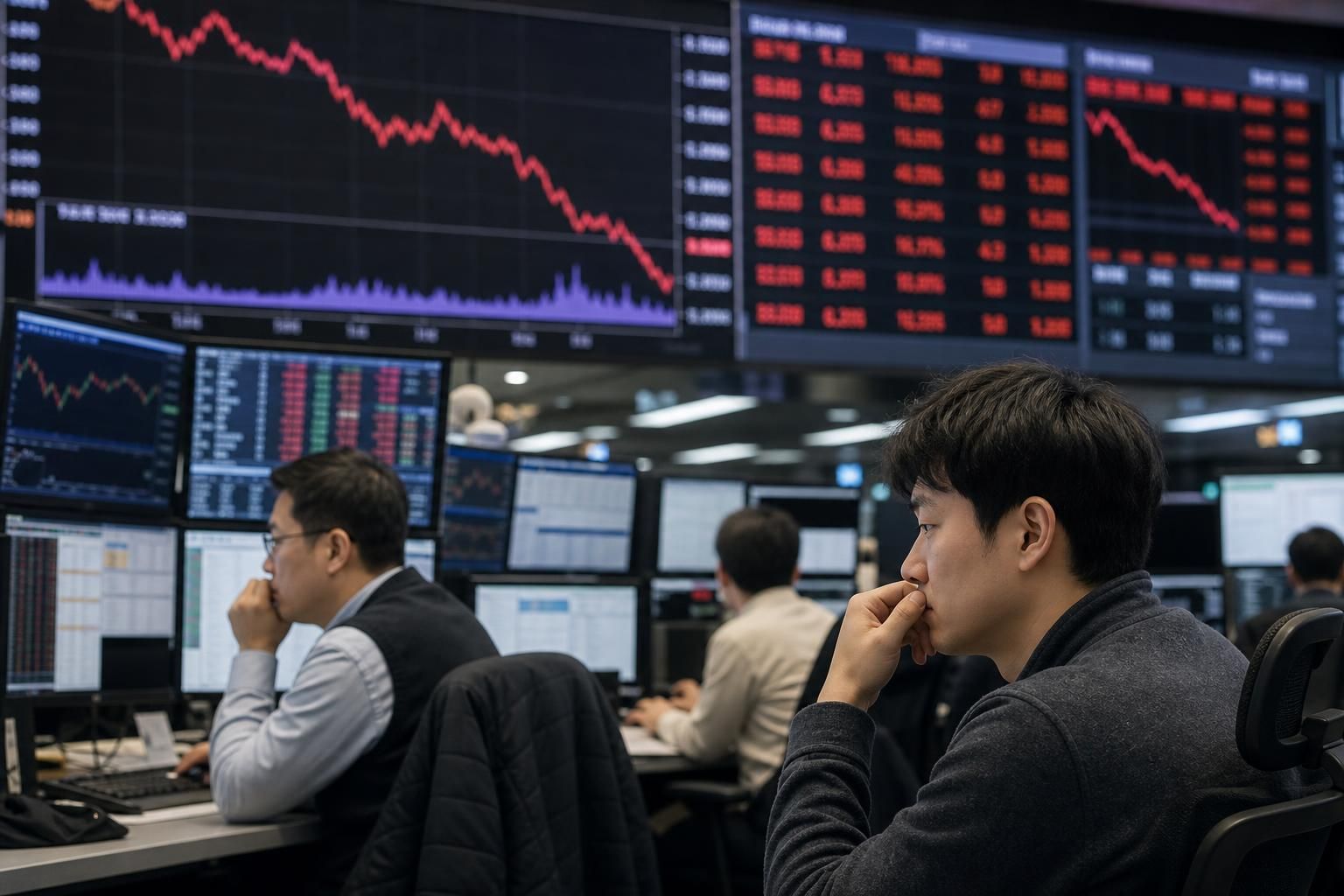
In the immediate aftermath of circuit-breaker pauses and sharp index declines, traders typically watch three areas: whether liquidity returns smoothly, whether follow-through selling continues once trading resumes, and whether any specific sector or theme—particularly AI-linked stocks—experiences outsized drawdowns compared with the broader market.
The digest’s emphasis on AI sentiment and foreign positioning implies that the next few sessions could hinge on updated commentary and new positioning data. If foreign flows stabilize and the market interprets the drop as largely “resetting” rather than “breaking,” the downside may cap quickly. If not, the market could remain susceptible to repeated bouts of rapid selling.
What to monitor: foreign flows, AI guidance, and risk controls
For investors and observers, the most actionable indicators are likely to be: foreign net buying/selling trends following the selloff, company-level updates that affect AI investment expectations (such as guidance on capex and demand), and whether KOSPI declines again approach thresholds that force further trading pauses.
More broadly, the episode is a reminder that even in markets with deep liquidity, coordinated risk management—by global investors and by exchange mechanisms—can amplify day-to-day moves. Over the coming days, the key question will be whether this latest volatility represents a temporary recalibration or the beginning of a longer stretch of cautious pricing.
![[Jang Ki-ha, Yoon Gai] featured image - South Korean Singer Jang Ki-ha and Actress Yoon Gai Confirm Relationship as Rumors In...](https://d1ycet1ctov4dv.cloudfront.net/wp-content/uploads/2026/06/27150118/Jang-Ki-ha-Yoon-Gai-1782540077898-300x200.jpg)

Join the Conversation
Log in to share your thoughts and join the conversation with other fans.