
BTS’ “THE CITY BUSAN” Wraps Up After Drawing Over 200,000 International Visitors via Multiple Stops in South Korea

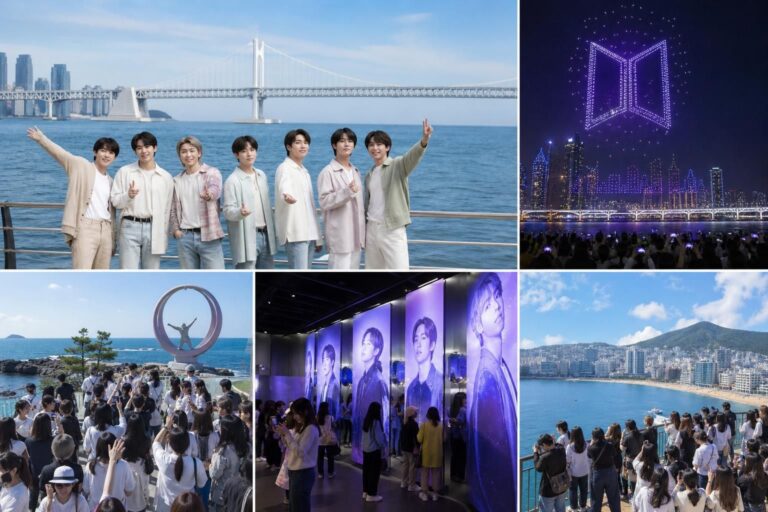
South Korea’s Busan tourism push tied to BTS has concluded, after official coverage indicated more than 200,000 visitors passed through “THE CITY BUSAN,” a fan-oriented itinerary and experience program designed to showcase local attractions. According to reports carried in the Korean press roundup, the event helped concentrate international interest in the region—building a short-term boost to local spending and travel activity.
The final figures place “THE CITY BUSAN” among the most visible examples of how K-pop-related travel campaigns can rapidly scale into measurable economic and mobility impacts. Media outlets referenced the event’s ability to draw visitors not only to Busan proper, but also to surrounding transport and hospitality nodes connected to BTS-related routes.
International fans followed a BTS-shaped route across the country
While Busan remained the focal point, the coverage also described how overseas fans extended their travel beyond the city—stopping in other major hubs and, in some cases, traveling to additional regions linked with BTS members. Reports noted that international fans “went through Busan” and also visited places such as Daegu, which is associated with members’ hometowns. The pattern underscores a broader trend: modern K-pop fandom increasingly behaves like a travel network, with fans coordinating itineraries around cultural touchpoints rather than traditional tourist schedules.
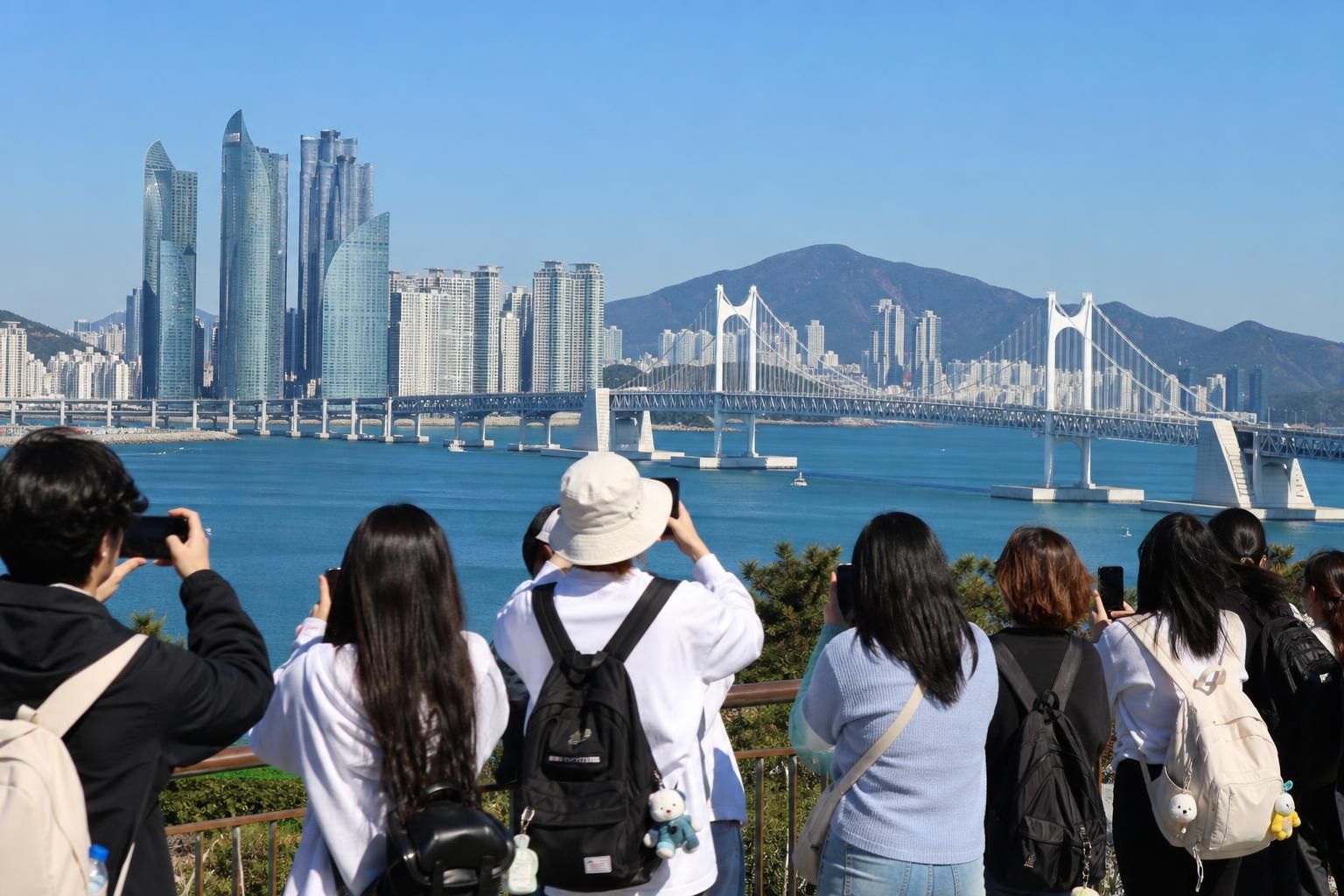
In addition, the reporting highlighted the scale of air travel connected to BTS performances and events. One cited claim emphasized the volume of foreign arrivals at Gimhae Airport, suggesting that the influx wasn’t limited to a single narrow window of local sightseeing. Instead, it appeared to be supported by sustained international mobility during the event period.
More than sightseeing: a tourism and local-economy multiplier
Beyond attendance, the key story for tourism officials and local businesses is what visitors do once they arrive. According to the roundup description, the event was framed as contributing to the activation of regional economic activity. Campaign organizers and local stakeholders typically measure such outcomes through indicators like hotel occupancy, restaurant and retail sales, transportation usage, and event-linked bookings.
“THE CITY BUSAN” fits that logic by offering an organized, fan-friendly way to engage with the city—effectively bundling tourism into a ready-to-use plan. For international attendees, that reduces friction: fewer decisions about where to go, where to eat, and how to navigate unfamiliar neighborhoods. For local vendors, it provides predictable demand tied to a large, enthusiastic audience.
How BTS fandom turned local attractions into an international stage
The reports also reflected a shift in how global audiences experience K-pop. In earlier eras, fandom-driven travel often centered on distant concerts or media-related landmarks. Today, events like “THE CITY BUSAN” translate global attention into day-to-day city engagement: visitors can treat music-related moments as catalysts for discovering food streets, waterfront districts, cultural venues, and transport connections.
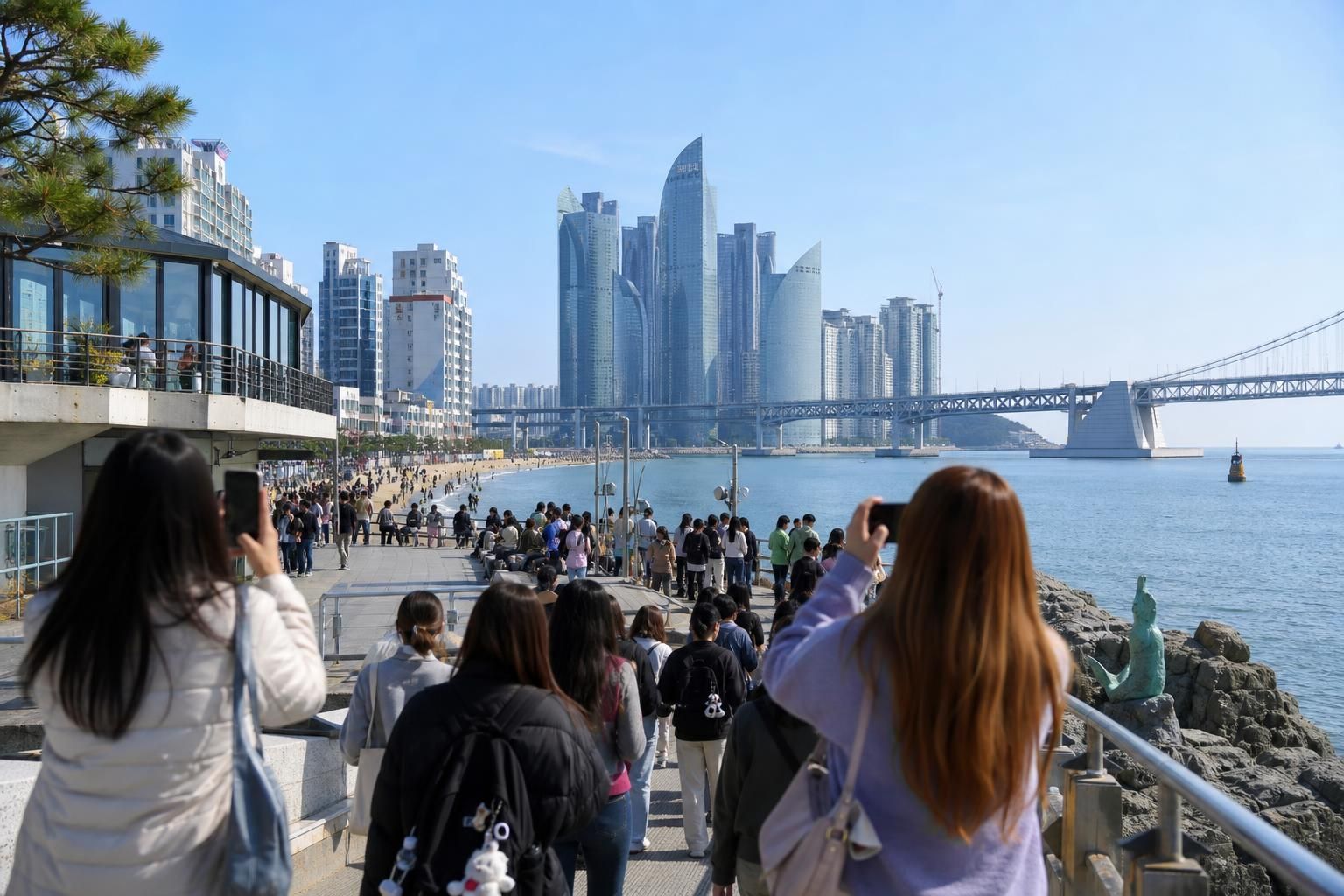
In that sense, the conclusion of the program is not only an end point—it’s a case study. If “THE CITY BUSAN” achieved its reported scale, it suggests that future K-pop-aligned tourism initiatives may increasingly rely on member- and fan-culture cues to design experiences that are both emotionally resonant and logistically efficient.
What’s next for Busan and for overseas fan travel
Even after an event wraps, the downstream effects can linger. Local tourism boards often look to convert short-term spikes into longer-term interest through post-event content, repeat visitation incentives, and continued marketing that draws on the same global audience the original program targeted.
For overseas fans, the next steps typically involve planning around future announcements—whether additional BTS-related activities, similar K-pop city experiences, or other large-scale cultural events. Based on the reporting pattern, it’s likely that some travelers will continue to treat Busan as a gateway, using it as a hub for multi-city journeys across South Korea.
For Busan in particular, the headline takeaway is clear: when fandom becomes an organized travel engine, international attention can be translated into measurable visitor volume and regional economic momentum. The success—reported as surpassing 200,000 visitors—will likely shape how local authorities and cultural operators design the next wave of fan-centered tourism campaigns.



Join the Conversation
Log in to share your thoughts and join the conversation with other fans.