

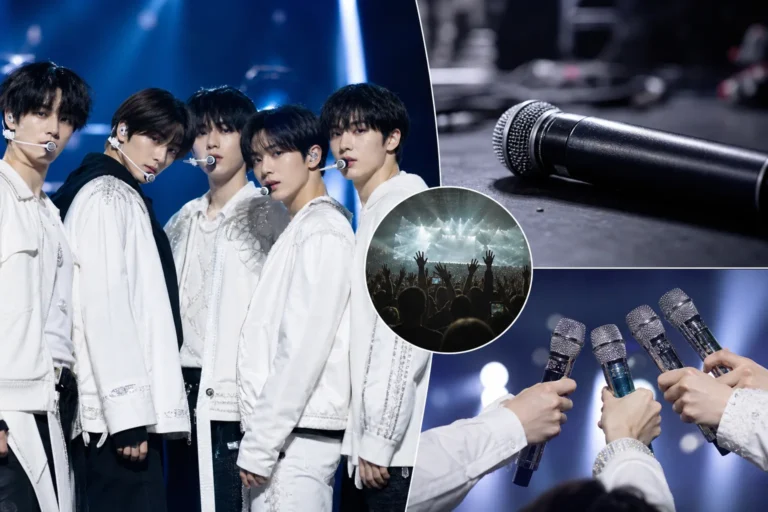
TXT’s latest award show appearance has become the center of a heated K-pop discussion after the group accepted a top honor and performed an encore stage at the 2026 KM Chart Awards.
The ceremony, which drew attention for recognizing several high-profile and rising Korean music acts, included four Grand Prize categories. TXT received Artist of the Year, placing the group among the night’s most prominent winners. BTS, Hwasa, and CORTIS were also named in Grand Prize categories, giving the event a lineup that reflected both established star power and newer momentum in the industry.
After TXT’s win, the group returned for an encore performance, a familiar award show tradition in which artists often sing in a looser, less choreographed setting. Encore stages are usually treated as celebratory moments, but they can also become unusually revealing because they place attention on a group’s live vocals without the full structure of a standard broadcast performance.
Encore Stage Draws Scrutiny
Clips from TXT’s encore quickly circulated online, where viewers debated the steadiness, audibility, and overall impression of the performance. Some comments criticized the vocals as unstable, while others suggested technical issues, including microphone volume, may have affected how certain members sounded in the footage. Huening Kai was singled out by some viewers as a member who handled the stage comparatively well.
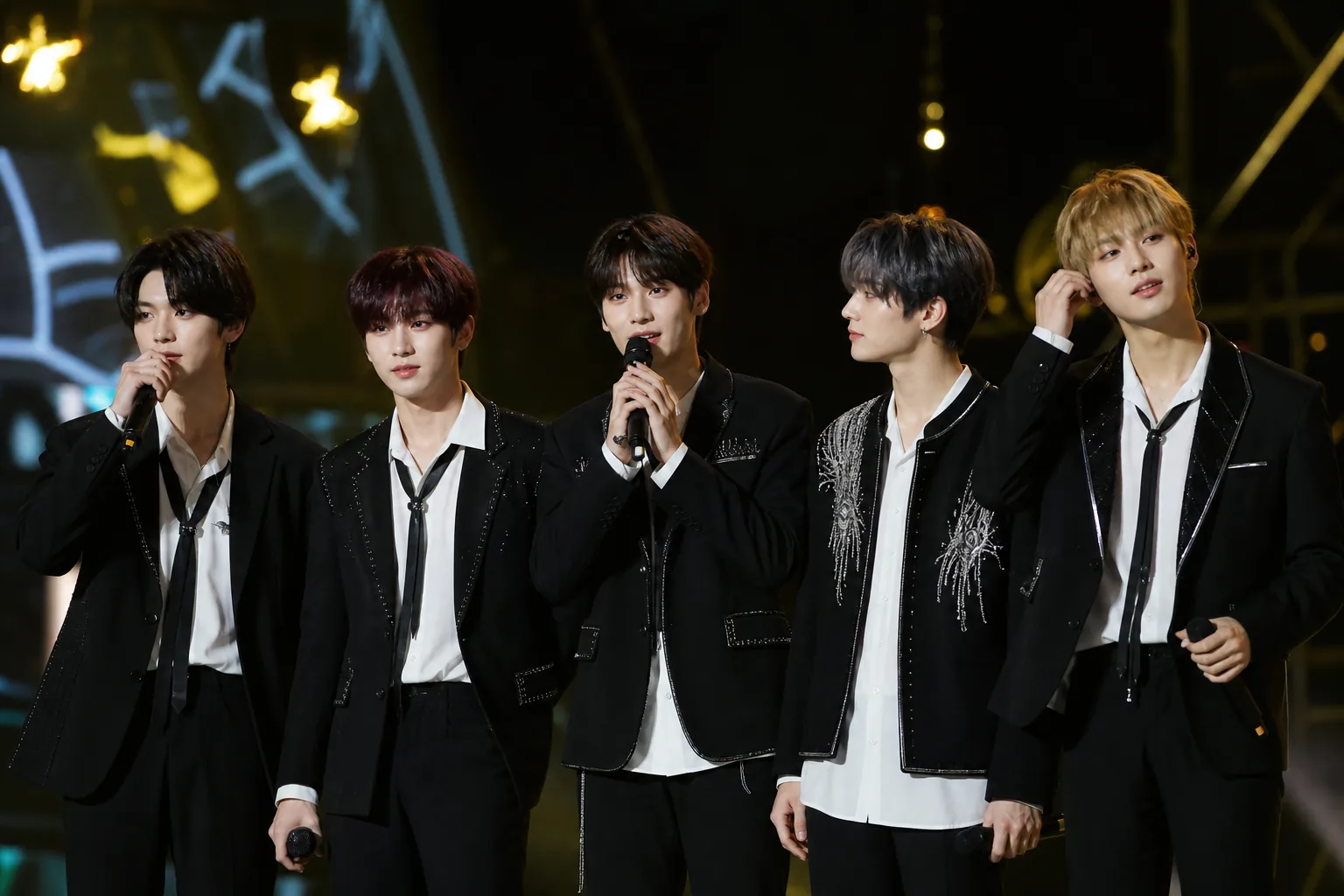
The discussion intensified because the performance followed a Daesang-level recognition. For critics, the contrast between a major award and a vocally uneven encore raised questions about how award show honors are judged and what level of live singing audiences expect from top-tier acts. For supporters, the response showed how quickly a brief, informal stage can be stripped of context and used to make broad claims about a group’s ability.
Encore performances have become one of K-pop’s most closely watched pressure points. In an industry known for highly polished music videos, precise choreography, and carefully produced broadcast stages, encore clips often function as a public stress test. They are short, widely shared, and easy to compare across artists, which can turn a few minutes of live audio into days of debate.
A Familiar K-Pop Flashpoint
The TXT reaction also reflects a larger conversation about fairness in how idols are judged. Online commenters argued over whether male and female idols face the same level of criticism for vocal mistakes, with some claiming girl groups would receive harsher backlash for similar performances. That argument has appeared repeatedly in recent years as fans and casual viewers scrutinize encore stages, festival clips, and music show wins.
At the same time, vocal criticism in K-pop rarely stays limited to technique. It often expands into arguments about popularity, agency reputation, fandom size, and award legitimacy. Because TXT are one of HYBE’s most visible boy groups, their performance was not assessed only as a single stage. It was also folded into broader debates about major-label influence, public expectations for established idols, and what should define an Artist of the Year winner.
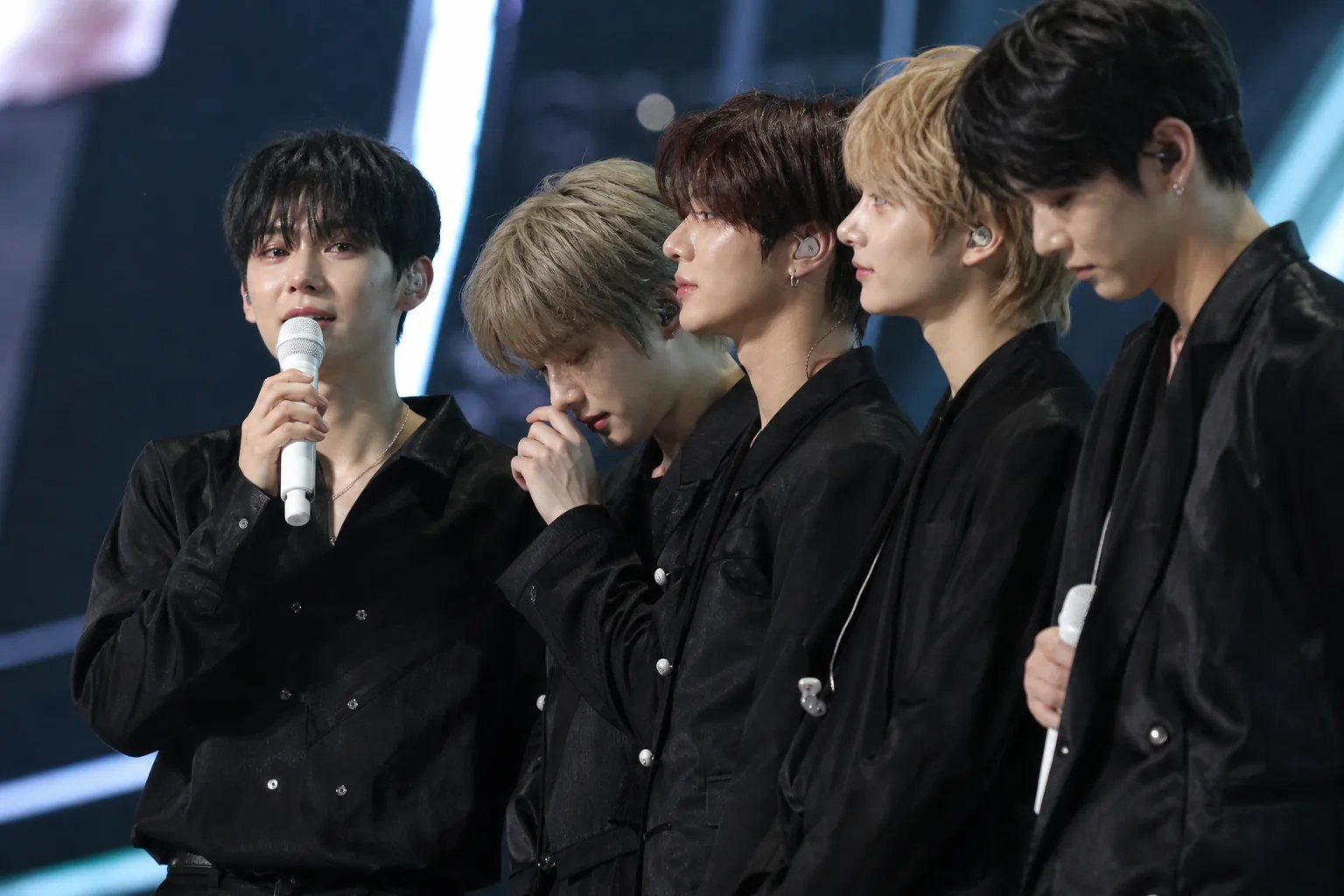
There is also a practical tension behind the backlash. K-pop groups are expected to deliver choreography-heavy performances, maintain demanding promotional schedules, and still sound strong in spontaneous or lightly supported moments. Audiences increasingly value live singing as proof of artistic credibility, but the conditions of award shows and encores can vary widely, making individual clips an imperfect measure.
For TXT, the controversy arrives at a moment when every high-profile appearance is likely to be amplified. The group has built a major international fan base, and that visibility makes both praise and criticism travel faster. A single performance can become a referendum on a group’s reputation, even when the available evidence is limited to audience recordings and broadcast snippets.
What Comes Next For The Discussion
The debate is unlikely to change the result of the KM Chart Awards, but it may shape how fans discuss TXT’s upcoming live stages. Strong future performances could quickly shift attention back to the group’s music and touring momentum, while additional shaky clips would likely revive the same criticism.
More broadly, the reaction shows that live vocals remain one of K-pop’s most sensitive standards. Fans may disagree on whether an encore stage should be judged like a formal performance, but the expectation that top acts can sing confidently in unscripted moments continues to grow. For award-winning groups, that means the celebration does not end at the trophy. The microphone that follows can become just as important.

Join the Conversation
Log in to share your thoughts and join the conversation with other fans.