

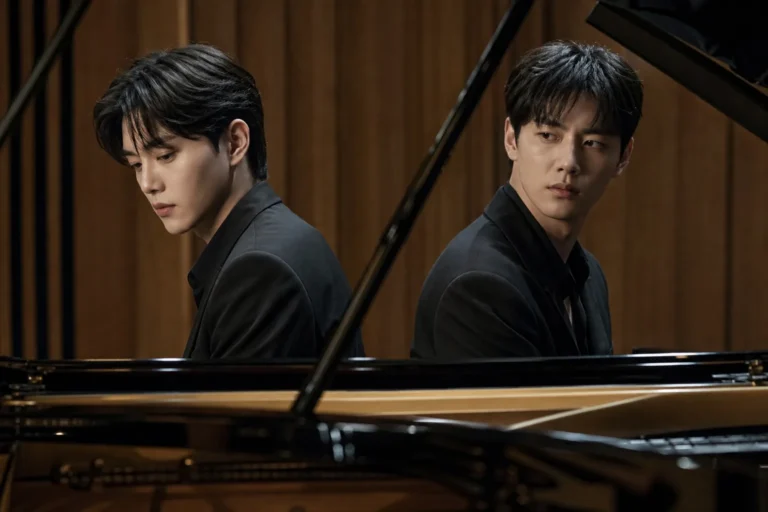
Song Kang and Lee Jun Young are set to anchor one of tvN’s late-summer drama offerings with Four Hands, Two Sonatas, a youth music series built around ambition, competition, and the fragile trust required to create art with another person. The drama is scheduled to premiere on August 29 at 9:10 p.m. KST, placing it in a prominent weekend slot for viewers looking toward the next wave of character-driven Korean dramas.
The title refers to a piano technique in which two performers play a single piano together, a setup that also functions as the story’s central metaphor. Rather than focusing only on individual genius, the drama follows young musicians who must learn how rivalry, friendship, affection, and professional growth can exist in the same narrow space. Its story begins at an arts high school and follows the characters into adulthood as they pursue careers as pianists.
Song Kang plays Kang Bi Oh, a next-generation pianist whose reputation has been built through relentless discipline. The character is described as a hard-working genius who has protected his place at the top through 10 hours of practice each day. That routine gives Kang Bi Oh a clear identity: he is not merely talented, but someone who believes excellence must be defended through constant effort.
Lee Jun Young plays Choi Jung Yo, a transfer student whose natural musical instinct immediately changes the atmosphere around him. His arrival challenges Kang Bi Oh in a way the latter has not experienced before. For a student who has measured success through consistency and control, the appearance of someone with striking innate talent forces an uncomfortable confrontation with limits, insecurity, and the possibility that hard work alone may not always define the field.
Rivals Drawn Into the Same Musical Space
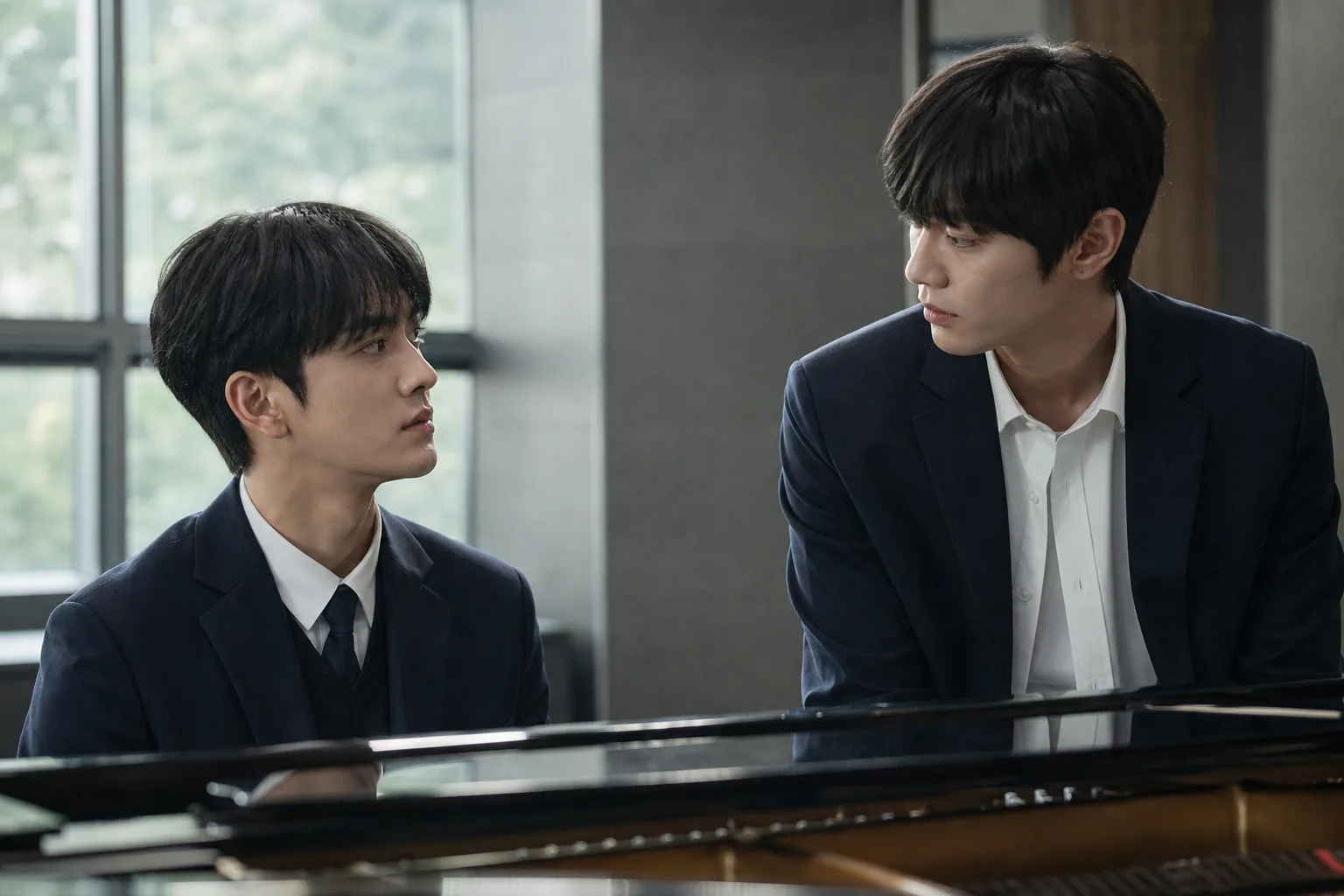
The drama’s newly previewed stills emphasize the shifting emotional line between the two leads. One image places Kang Bi Oh and Choi Jung Yo face to face in a classroom, their expressions tense and guarded. The moment signals the first stage of their relationship: two young musicians studying each other not as friends, but as competitors who could disrupt everything they thought they understood about talent.
That conflict is especially important because the two characters begin from different relationships to music. Kang Bi Oh has already been recognized for his promise, while Choi Jung Yo is portrayed as someone whose dream is reawakened after hearing Kang Bi Oh play. The detail gives their rivalry a more complicated shape. Choi Jung Yo is not only an opponent; he is also someone whose renewed sense of purpose is tied to Kang Bi Oh’s performance.
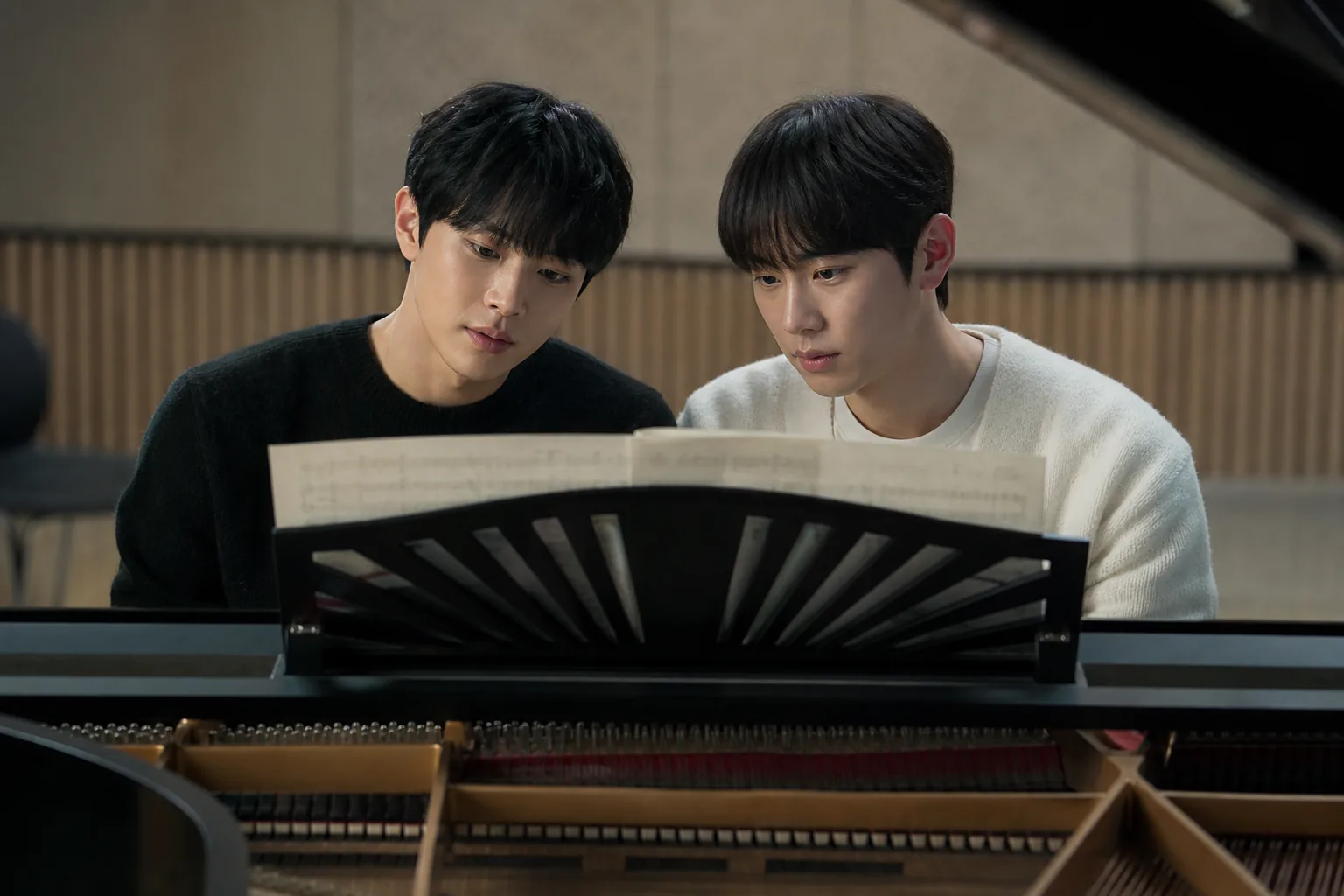
As the story develops, the previews show the two sitting at the same piano and looking at the same sheet music. The visual shift is simple but pointed. The cold distance of the classroom gives way to a quieter kind of closeness, suggesting that the characters gradually learn how to listen to each other. In a drama centered on piano performance, that ability to listen may matter as much as technique.
The final previewed stage places them at their respective pianos with solemn expressions, hinting at a more mature partnership. By then, the characters appear to have moved through suspicion, friendship, and collaboration toward the possibility of performing as duo partners. The setup asks whether two people who began as threats to each other’s confidence can ultimately create harmony together.
A Youth Drama With a Performance Core
Four Hands, Two Sonatas arrives with a premise that combines familiar youth-drama themes with the formal demands of classical performance. Arts-school stories often turn practice rooms and competitions into emotional pressure cookers, and this drama appears to use piano training as a way to examine how young people build identities under expectation. The question is not simply who plays better, but how ambition changes when it is reflected back by someone equally driven.
Song Kang’s role as Kang Bi Oh gives the series a protagonist whose discipline could be both strength and vulnerability. A character defined by 10-hour practice days may inspire admiration, but such a life can also narrow a person’s emotional world. Choi Jung Yo’s presence, by contrast, introduces spontaneity and disruption, making him the kind of figure who can unsettle a carefully managed path.
The drama’s growth arc will likely depend on how convincingly it develops the pair’s transition from rivals to collaborators. A four-hands performance requires two players to share rhythm, space, and timing with unusual precision. That makes the central musical format a natural test of the characters’ emotional progress: if they cannot trust each other, the performance itself cannot work.
With its August 29 premiere date now set, Four Hands, Two Sonatas is positioning itself as a polished youth melodrama with a distinctive musical hook. For viewers, the appeal will rest on the chemistry between Song Kang and Lee Jun Young, the authenticity of the performance world, and the drama’s ability to turn competition into something more layered than a simple battle for first place.



Join the Conversation
Log in to share your thoughts and join the conversation with other fans.