


Click-B member Kim Sanghyuk has drawn new attention after revealing that his off-stage businesses now appear to earn more than his work as a celebrity once did. The singer and television personality discussed the scale of his current ventures during a recent appearance on Channel A’s Groom Class Season 2, where viewers saw a different side of a figure whose public image has long been tied to both early K-pop fame and a major controversy.
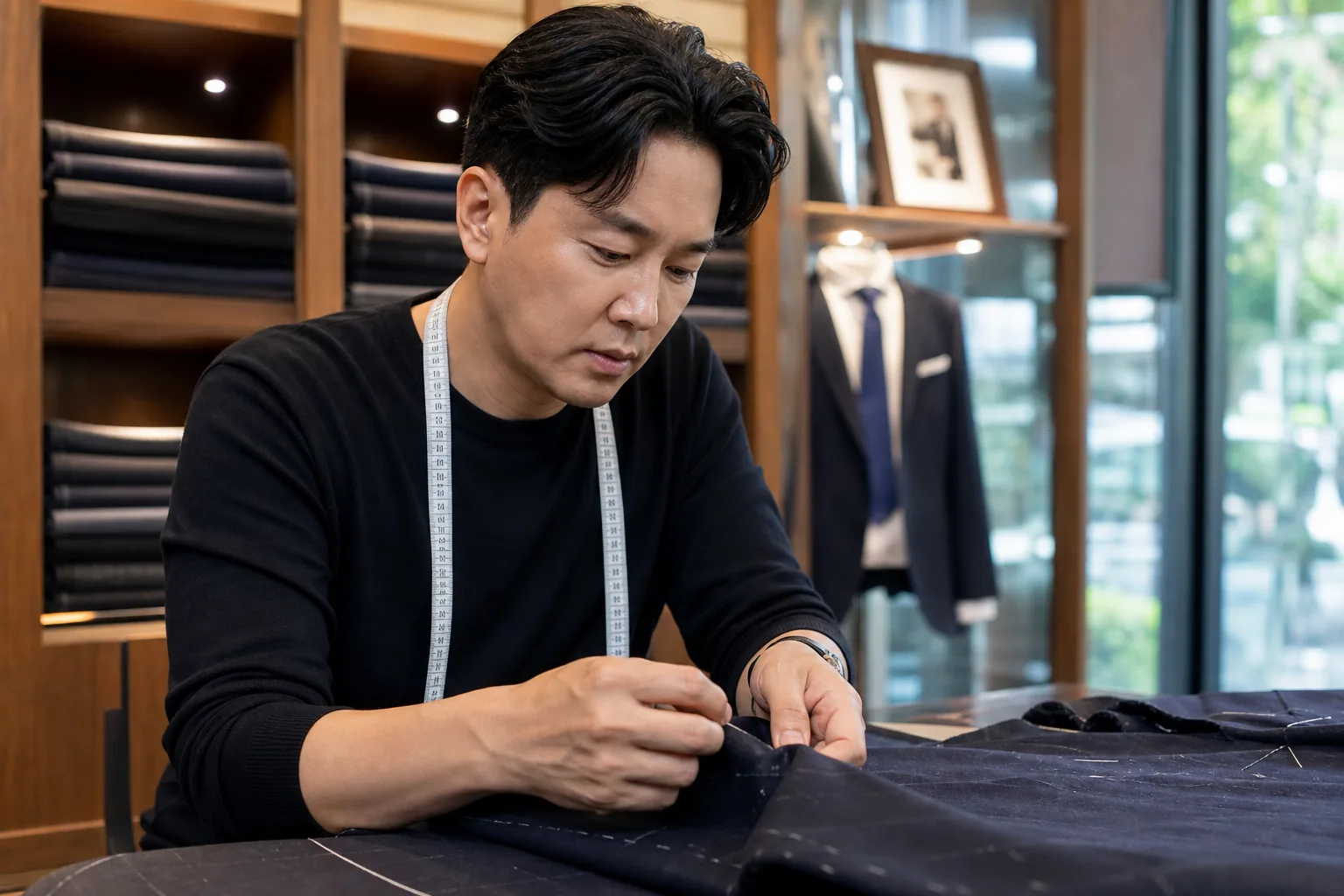
Kim appeared on the July 16 episode as the program’s first divorced cast member. Rather than focusing only on his personal life, the broadcast followed him into his everyday business routine, including a visit by scooter to a tailor shop he operates. The segment presented him not simply as a former idol looking back at the past, but as someone who has built a working life around design, retail, and product development.
According to the report, Kim said he is directly involved in clothing design at the tailor shop. He also shared that one of the suits worn by Rain in a music video had been made through his work, a detail that connected his current business activity back to the entertainment world without making it dependent on his own performances. For a former idol, that distinction is important: he remains close to the industry, but his income now appears to come from creating and selling products rather than standing on stage.
From Idol Work To Product Design
The tailor shop is only part of Kim’s broader portfolio. He also mentioned ventures involving health patches and bags, suggesting that his post-idol career has developed across several consumer categories. On the broadcast, singer Lee Seung Chul was reportedly surprised to learn that Kim had designed bags he had already purchased, underscoring how some of Kim’s products have circulated beyond the public’s awareness of his name.

The most striking moment came when Kim was asked about revenue. He said his businesses bring in an amount that exceeds the annual salary of someone working at a major corporation. The report interpreted the comment as suggesting that his monthly business revenue may be comparable to, or higher than, what a well-paid corporate employee earns in a year. Kim did not frame the number as a one-time windfall; instead, the exchange emphasized how substantial his off-stage earnings have become.
For fans who remember Click-B’s late-1990s debut, Kim’s remarks highlight how much the economics of a celebrity career can change over time. Click-B debuted in 1999, during an earlier generation of idol promotion, when television appearances, album cycles, and public recognition could create intense visibility but not always lasting financial security. Kim’s comments suggest that he learned to treat fame as unstable and to build income streams that did not rely entirely on casting calls, broadcasts, or music schedules.
A Career Shaped By Instability
Kim connected his business drive to anxiety about the unpredictable nature of entertainment work. He said that after experiencing periods without celebrity jobs, he felt he had to prepare continuously for the future. That explanation gives his business expansion a more practical meaning. Rather than presenting entrepreneurship as a branding exercise, he described it as a response to uncertainty in a field where public attention can disappear quickly.
His story also carries the weight of a past scandal. In 2005, Kim’s career was seriously damaged by a drunk-driving and hit-and-run case. He was accused of leaving the scene after a traffic accident and reporting to police roughly 11 hours later. He later received a 10-month prison sentence suspended for two years, along with 120 hours of community service. A widely criticized remark he made while trying to distinguish between drinking and driving under the influence became attached to his public image for years.
That history is part of why the new television appearance has generated interest. Kim is not simply a former idol announcing a side business. He is a public figure whose entertainment career was interrupted by controversy, and who has now reappeared with evidence of a financially significant life outside the celebrity system. The contrast between public setback and private business growth makes the story more complicated than a typical success update.
At the same time, Kim’s comments should be read carefully. Revenue is not the same as personal profit, and the broadcast detail cited in the report does not disclose expenses, ownership structure, or exact figures. Still, his statement signals that the businesses are large enough for him to compare their performance with high corporate earnings, which is notable for an entertainer whose most active idol years began more than two decades ago.
What The Reveal Says About K-pop Careers
Kim Sanghyuk’s case reflects a broader reality in Korean entertainment: visibility can open doors, but it does not guarantee long-term stability. Many idols eventually move into acting, variety shows, production, restaurants, fashion, beauty, or other businesses. Some do so while still famous; others make the shift after the spotlight fades or after controversy limits their options. Kim’s latest appearance shows one version of that transition, built through hands-on product work rather than a purely image-based endorsement role.
For the public, the reveal may also reshape how his post-Click-B years are understood. His past controversy remains a defining part of his record, but his current businesses show that his career did not end with that episode. More than 20 years after debuting, Kim is presenting himself as a designer and entrepreneur whose income no longer depends primarily on celebrity work. In an industry known for short promotional cycles and intense reputational pressure, that kind of reinvention remains newsworthy precisely because it is difficult to sustain.



Join the Conversation
Log in to share your thoughts and join the conversation with other fans.
I can already tell ??topic??will keep the timeline busy today ?쁾 There is a lot here for people to discuss.